In our first ever episode we talk about international controversy after a small Pride event in Glasgow instituted a ban on drag performers at their event (which was later overturned).
Ben and I look at the response, and ask what it means to distinguish drag as an act of
performance from gender as an identity.
Please excuse some of the technical quality — we are still learning. We will also be getting this feed up on iTunes as soon as we can. But we hope you enjoy. Please provide us any comments!
It was probably the most anticipated book release ever. Literally. I cannot think of another book that has had so much expectation and excitement build around it. And yesterday, one week after its release I finished off Go Set a Watchman.
Image by Mark Hillary (https://www.flickr.com/photos/markhillary/19069224923/)
Following on from Harper Lee’s To Kill a Mockingbird it was always inevitable that Go Set a Watchman would be compared to the early classic. And in doing so I think the book was always set up to fail — not just because of its expectations but also because of the nature of the work. While billed as a sequel Watchman was actually written before Mockingbird — it was Lee’s first draft of the original book. Sent back to her with requests for changes, Lee then went back to the drawing board, spending two more years to write the book we all love today.
So Watchman was already at a disadvantage. It was not a sequel, but rather Mockingbird’s first draft. And as all good authors know, first drafts are rarely the things you want published.
I feel this context is important because most of the reviews I’ve read of Watchman have lamented the differences between it and Mockingbird. The book is clearly not as polished, is in a different voice (third instead of first) and there are significant changes to the two major characters (ones I’m not sure people will ever get over). While I think these comparisons are interesting however (a little more on that later) I think it is worth reading Watchman on its own as well.
Warning: Spoilers from here on in
Watchman follows Jean Louise (or Scout as most of us know her) as an adult returning back to Maycomb County in Alabama for holiday. Grown up, Jean Louise now lives in New York and visits her father Atticus, aunt Alexandra and potential suitor Hank on regular holidays (for those who have read Mockingbird Scout’s brother Jem has passed away in this book).
This visit is set in the mid fifties in the wake of the Brown vs. Board of Education Supreme Court decision that invalidated the ‘separate but equal’ argument that allowed Southern States to get away with racial segregation. You can feel the tension in the community, which Lee draws out particularly well in a scene in which Jean Louise finds herself estranged with her former maid Calpurnia.
It is in this setting that Jean Louise finds herself shocked as she sees Atticus and Hank attend a local meeting opposing the Supreme Court’s decision. In the meeting a man gets up and spews a whole lot of racist materials and Jean Louise sits stunned as her father listens attentively.
Watchman is a book about a child finally realising her father is not as ideal as she once thought. It is about her realising that he is complex, a little hypocritical and not as virtuous as she once thought. In this way Watchman presents a really interesting and complex story set in a really and complex backdrop.
The problem is though that I don’t think Lee fails to bring the reader on this journey. The writing, and in particular the dialogue, is often a little stilted and the explanation for Jean Louise’s thoughts and actions, to me, are often unconvincing. She seems to swing from one idea to the next with little reasonable explanation as to what is going on.
For me this is because I think Lee’s main characters — Jean Louise, Atticus, and to some extent Hank, are deeply undeveloped. Jean Louise in particular to me remains unconvincing, and I often saw her more as a child than a grown woman. That is how a lot of other characters still speak to her, and it is how I saw her. I could not picture her driving or smoking cigarettes for example. Part of this, I think, is because I still see Scout in Mockingbird (it’s impossible to get your mind off the original), but also I think it is because of Lee’s writing. It is no wonder that Lee’s original publisher came back and suggested she write the book set twenty years earlier where Jean Louise is actually a child.
The other problem I have is with the flashbacks. In numerous occasions Lee takes us back to Jean Louise’s time as a child. In many ways this is some of her best writing, but the scenes seem out of place and don’t connect with the story we are being told right now. You would, for example, expect a flashback about the rape case Atticus defends while Jean Louise is a child (which becomes the centre of Mockingbird) as that gives us a picture of the image Jean Louise has of her father. But we only get that in passing, instead seeing scenes of Scout playing with Jem and their friend Dill. I found myself wanting to skip ahead to get to the substantive story.
I feel awful saying all of this because I love Mockingbird. It is a cliche to say it but it is definitely one of my favourite books. Given this in some ways I can see why people are upset about Watchman.
But here’s the thing. Despite my critiques above, Watchman is not a bad book. It was a really enjoyable read and the context and story were fascinating. For a first draft I am a little blown away.
That is why I value Watchman’s release. I am fascinated by Lee’s process from Watchman to Mockingbird. Why did she change her voice, and the perspectives of the characters and how did she develop the unique voice she gave her characters?
Watchman is a fascinating study in the progress of a book and how work, editing and publishing can make something so very different. As someone drafting a book myself it is a process I am going through myself and one I loved to explore reading Watchman. So Watchman has a dual purpose — not only is it a good read but it is a fascinating study in the creation of literature. Lee has literally published her first draft of a book and in doing so we can see the insides of publishing in ways we rarely get to. For that fact alone Watchman is worth it.
US President Barack Obama says his country’s criminal justice system ‘isn’t as smart as it should be.’ It’s time to look at ours, too.
US President Barack Obama
Last week marked the first anniversary of the murder of Eric Garner by New York City Police. Garner’s death, followed by that of Michael Brown in Ferguson in August, sparked a national movement of reform for the US justice system.
A year on it looks like the call for change is finally being heard. Now it is worth asking, should Australia follow?
Reform in the US justice system is very much needed. The US ranks high on all of the worst sorts of statistics — from civilians being killed by police to their prison population. These numbers are heavily skewed to blacks and latinos, who both face higher chances of being killed by the police and entering jail than their white counterparts.
A year after Garner’s death and it looks like some change to address these issues may be about to be made. President Barack Obama recently became the first ever sitting President to visit a federal prison, using the opportunity to outline a number of reforms he is using as a key part of his plank for his final years in office. Obama’s plans include restoring voting rights for ex-criminals, reducing and/or eliminating mandatory minimum sentences for drug-related crimes and tackling the extremely high rate of black and hispanic incarceration. And the President is getting support from across the political spectrum, with even the Republican Speaker of the House of Representatives lining up to support the changes.
These changes can only be seen as extremely positive. Given that it is worth us opening the discussion of whether Australia should look at similar changes. While not facing anywhere near the same problems as the Americans, the Australian justice system is heading in a very worrying direction.
Statistics from the Australian Bureau of Statistics for example found that while Australia’s prison population is much lower than in the US it is climbing. 2014 marked a ten year high in incarceration rates, and a 10% increase over the past year. These increases are largely due to what Ross Fitzgerald calls the “law and order” auctions at state and federal level — successive Governments trying to outdo each other on tough on crime measures. A key part of this problem has been non-violent drug offences, which are increasingly putting Australians being put behind bars for longer periods of time.
Similar issues with Australian police can also be found. Recent legislation for the Brisbane G20 and Sydney APEC meetings for example have raised genuine concern over the level of power given to our forces. Incidents of police violence, from attacks on revellers at Mardi Gras, the death of a Brazilian teenager in Sydney who was tasered multiple times and the shooting of two indigenous teenagers in Sydney all feel unfortunately similar to what is happening in America.
Yet, it is in the area of race where the Australian justice system looks far too alike to the US. While overall Australian rates of incarceration are much lower than in the states, this is not true for indigenous Australians. While only making up 3% of Australia’s population, indigenous Australian’s represent 28% of our prison population. These incarceration rates are increasingly significantly — a 57% increase in the past 15 years to be exact.
On top of this, indigenous Australians continue to face high levels of violence while in the “care” of our system. High levels of Aboriginal deaths in custody resulted in a Royal Commission in the 1990s, yet numbers continue to rise. Too often these deaths could be avoided, occurring either because of a system that lacks accountability and proper safeguards, or in the worst instances due direct abuse by officers. Indigenous Australians are increasingly being put behind bars an face a growing threat of dying while inside.
A year on from Eric Garner’s death and changes are finally being made in the US justice system. While Australia’s level of incarceration is no where near as high, our problems are slowly becoming just as bad. Indigenous Australians in particular still face extreme rates of incarceration and violence.
It is easy to look across the Pacific Ocean and wonder how the US justice system got so bad. Yet, if we are not careful Australia faces the threat of heading down the same direction. We should take Barack Obama’s lead and fix it before it becomes even worse.
Welcome to the sixth and final blog in the Sex and Society series.
Over the past five blogs we’ve looked at the growth of the nuclear family, its connection to class society, and how the oppression of women and queers manifest today. Last time we looked at love and marriage —how our modern manifestations of love continue much of the oppressive nature of the nuclear family.
Today we’re going to end by looking at the challenges to these structures. If, as I’ve argued, the nuclear family is an oppressive norm, what are the alternatives?
***
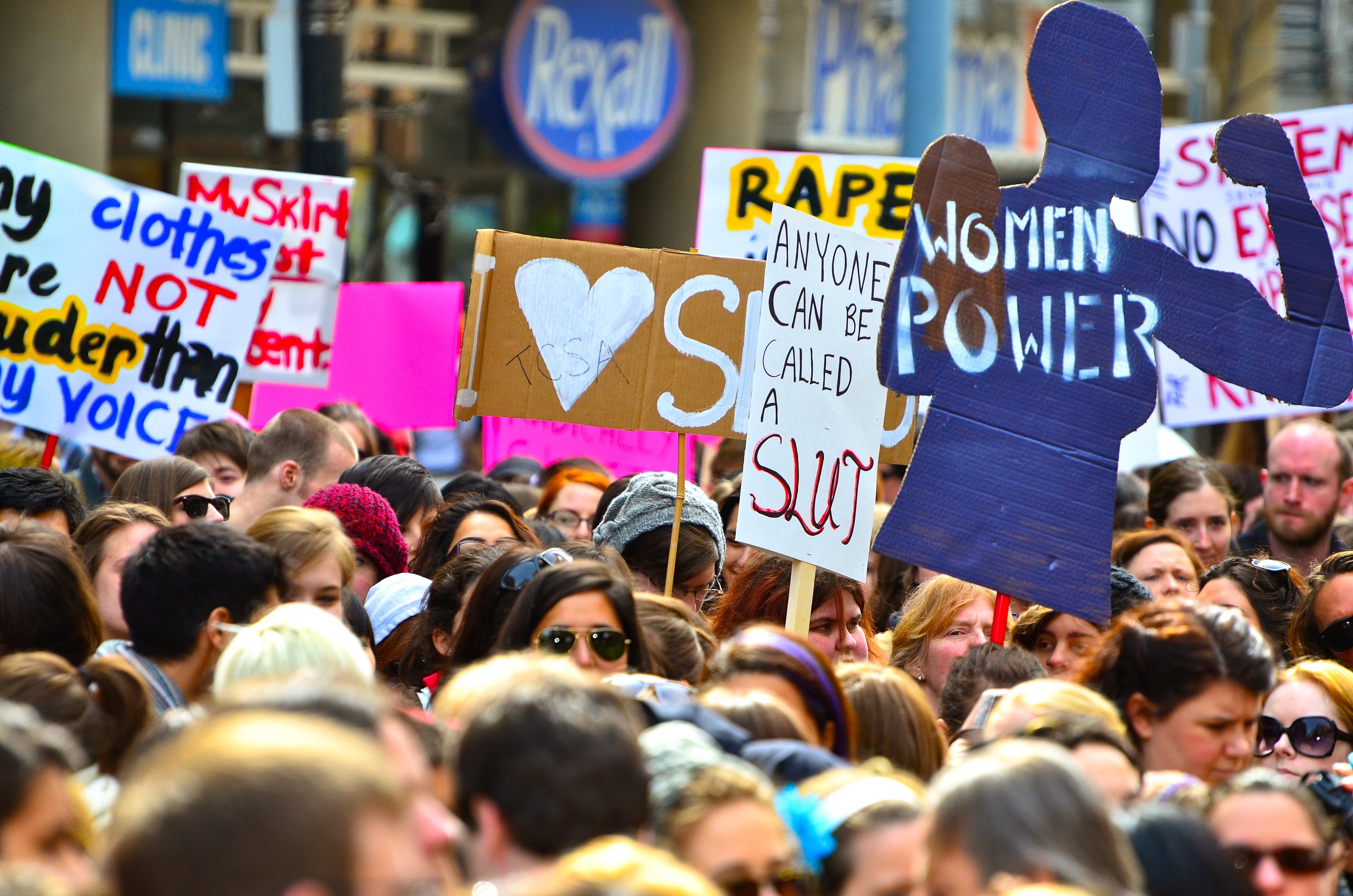
The Toronto Slutwalk
There have always been those who have questioned our norms of sex, gender and the family. Recently for example I came across the story of Fanny and Stella, two pioneering trans* activists from Victorian-era England who faced court for engaging in “immoral behaviour”.
Yet, for the purpose of this blog we’re going to start in the 1960s and 70s, and two key movements — for gay liberation and feminism. Of course these two are interlinked, but let’s look at them both individually.
The roots of the modern gay movement are often placed in 1969 at the Stonewall riots. Here, a group of drag queens, trans* people, gays and lesbians began rioting after they became fed up with the oppression of police. Stonewall immediately gave extra life to an international movement, and in particular the birth of the highly influential Gay Liberation Front (GLF). GLF took a distinct liberationist approach to its politics, one that challenged what they called the “gender roles” of our society. The root of oppression for gay people, they argued, lay in the family, and it was through challenging the family that gay liberation was possible.
Much of the work of the GLF lined up with similar feminist critiques of the family at the same time. The second-wave feminist movement of the 1960s and 70s focused much of its critique on the family and, in particular, marriage. Second-wave feminism is probably most famous for the slogan “the personal is political,” and this in many ways encapsulated much of what we’ve spoken about. This was a direct challenge to the “standard narrative” we spoke about at the start of the series — a narrative that stated women were destined to fulfil their role as being lower in society.
Both of these movements brought significant critiques to the nuclear family as it was understood at the time. The gay liberation movement saw the nuclear family as the major institution that oppressed queers, while feminists argued marriage and domestic life were the primary social arrangements through which women are oppressed. And a clear part of this critique was a challenge to much of the capitalist underpinnings of these institutions. Marxist feminists for example drew on socialist ideals to argue for a greater influence to be placed on domestic work — both through the proper sharing of housework but also through wages for the activity.
Both the feminist and gay movements have achieved huge success ever since. Homosexuality for example has now been legalised across the western world, while women have entered the workforce in force and are increasingly being represented in higher levels of power in our society. But how deep is this success?
Underlying these wins there is an unfortunate reality. While gays for example can now marry around the world, many others still face significant poverty, discrimination and violence. While some woman are reaching the top of our power structures, the wage-gap remains seemingly intractable, violence against women takes lives every day of the week, and restrictions remain on abortion rights in most of the world.
The question we have to ask is, is this just the cost of slow progress, or are we not tackling the issues in the way in which we need to?
I argue that it fundamentally comes down to the latter.
There has been a major shift in the direction of the gay and lesbian movements in recent decades. In both mainstream organisations and even grass-roots activists, early ideas of liberation have been replaced with a mantra of equality. This pervades our movements — from campaigns for same-sex marriage to the feminist arguments for equal representation on boards or in Governmental cabinets. While we can all argue that equality is a good thing, this shift goes well beyond just that basic principle. Equality has not only begun to absorb all of our resources, but has shifted our mindsets as well. Marriage equality advocates for example have argued that we are out to “queer marriage”. Yet the reality is that it has in fact straightened us, whether it is through campaign imagery built around pictures of the “white wedding” or advocates embracing the virtuousness of monogamous relationships.
Perhaps the clearest indication of the perverse nature of the equality agenda has been the way the capitalist and political classes have adopted so much of it with fervour and excitement. I have noted this in the past looking at the acceptance from many conservatives for same-sex marriage — a welcoming of gays into the norms of the nuclear family and an expectation we will live up to all of the responsibilities of taking on those roles.
But this expands to even some of the least controversial elements of the progressive agenda. The best example is female representation in the workforce. One of the key demands of the second-wave feminist movement was, rightly, that women should have equal capacity to enter and succeed in the workforce. While of course initially resisting, capitalists slowly society began to adapt. In a growing neoliberal economy in fact women became essential — they provided a significant increase in capacity to boost profits even more. But this seeming equality, achieved solely within the capitalist system, occurred almost entirely on capitalist terms. While women entered the workforce they were expected to continue their familial roles — whether it be the exception to have many children or their continued domination of domestic duties. When society needed it women were expected to stay at home, with the wage-gap that came with that entrenching itself almost indefinitely.
Here is the dilemma. Capitalism has proved itself to be excellent at adaptation, and it has done an excellent job at adapting to the demands of the gay and feminist movements. It has slowly, but surely, provided space for new entrants to the economic system and the nuclear family, as long as the bounds of the system are not broken.
This is the challenge we can lay out at the end of this series. I named this series “Sex and Society” as an acknowledgement that these two are inherently linked. Sex impacts our society, but more important than that how our society is structured impacts how we have sex. To demand equality without questioning the fundamental nature of our society is therefore a very difficult position to uphold.
We have to go deeper than equality. Some are doing this, whether it is those talking about queer theory, or the activists of “Against Equality” in the United States. But these connections are thin on the ground and must be made stronger.
I cannot tell us how to do it. One person cannot instruct us on how to build a social movement. I just know that we are not doing it now.
I am a regular listener of the podcast So You Want to Be a Writerwhich features Alison Tait and Valerie Khoo from the Australian Writers Centre. It is a really good podcast about all things writing and I really enjoy listening to it.
I’m running a little behind at the moment but in the last podcast I listened to (number 64), from probably about a month ago, they spoke to the historical romance author Anne Gracie. There was a lot of really interesting stuff in the interview, and I particularly like listening to authors of genres I rarely or never read. And Gracie made me think about reaching out into some romance to see what it is like.
But one of the best gems for me was when Gracie spoke about the value of the story in a novel.
Gracie used the example of 50 Shades of Grey. Now, I have some major issues with this book — primarily because I believe it is a story that glorifies domestic abuse. In doing so it gives S&M, a community I believe has a huge culture of consent, a bad name. But moving beyond that there have been lots of writers, and non-writers alike, who have been stunned that a book of such poor writing has managed to be so popular.
I’ve had similar feelings about other popular books as well. Recently I started the book Still Alice after I saw, and loved, the movie. Yet, as I started reading it I found the writing clunky and hard to get into. I haven’t gone very far but it feels a little too descriptive, lacking the emotional pull I really wanted.
When I read this stuff, I tend to think, “how they hell did they manage to be so popular?” How can poor writing become so immensely popular?
I think Anne Gracie has a really good point. In the podcast, talking about 50 Shades of Grey, she says that when you think about that book you have think not what about E L James hasn’t done (written the book well), but what she has done. And what she — and Lisa Genova (the author of Still Alice) has done — has been to write great stories.
This is a really important lesson. I’ve definitely noticed that as I write more I become more of a perfectionist. I spend more time worrying that this sentence doesn’t read quite well, or that that sentence could have a better word in it.
It’s important, but at the same time it’s not important enough. The most beautifully written boring story in the world is never going to be as well received as a slightly clunky extremely beautiful story. The writing is important, but the story is more important.
This is the same for non-fiction as well. I like to read Žižek for example — he’s an amazing philosopher. I do this even though sometimes I find his writing very difficult. Žižek is hard to get through. But I keep going because the ideas he brings up are amazing. Sometimes he blows my mind and that is worth plugging my way through.
Would I prefer his writing was a bit more comprehensible? Of course. The same as I would love for every author to have beautiful prose and be able to write stories with perfect sentences.
But in the end that doesn’t matter. It is the stories — or the ideas — that count. You can write as much as you want but if you have no stories, then what does it matter?
For me, this means thinking a bit more about focusing some more of my time on how I shape my stories rather than how I shape my sentences. Give some energy to that element and I hope I can come out with some winners.
Over the past decade the idea that we are “born this way” — or that our sexuality is genetic — has become increasingly important. The mantra has become a political strategy, in particular for gay and lesbian communities, who see it as a way to protect themselves from discrimination. The movement has spawned blogs where people show pictures of their childhood to highlight the innate nature of their sexuality, and attacks on those who have questioned the theory.
But do the politics match the science?
People have been searching for biological explanations for sexual desires for centuries — primarily as a way to try and find a “cure” for “perverted desires”. In the most horrible of examples, the Nazi regime in Germany invested significant resources in attempts to find the reasons for homosexuality in attempt to cure it.
In recent decades the search for a “gay gene” has intensified. In 1991, for example, Simon LeVay released a study that suggested small differences in the size of certain cells in the brain could influence sexual orientation in men. In 1993 this research turned to genetics, when Dean Hamer claimed that markers on the X chromosome could influence the development of same-sex orientation in men. The issue hit the headlines again last year after the release of a study from Dr. Alan Sanders. Sanders studied the genes on 409 pairs of gay brothers, finding they may share genetic markers on the X chromosome and chromosome 8.
With each study, confidence in the gay community about a genetic link to our sexuality has become stronger. It has become generally assumed that a gay gene must exist. But take look at the actual science, and the history of sexuality, and you will find serious problems with the theory.
First, all of the recent studies searching for a gay gene have significant issues. For example, as Samantha Allen notes, biologist Anne Fausto-Sterling “tore LeVay’s original study to shreds, noting that there is substantial overlap between the cell cluster size ranges of gay men and straight men in his sample.” There has been significant criticism in scientific fields over Sanders’ study as well, with many scientists arguing the results were not “statistically significant” (while that may sound like a mild criticism that’s a big deal in the science community). While news headlines promote each study as a “confirmation of the gay gene”, the reality is very different.
These issues highlight a fundamental problem that goes well beyond the peculiarities of these particular studies. Scientists are asking whether homosexuality is natural when we can’t even agree exactly what homosexuality is. Homosexuality, as with all sexualities, is a social construction.
What does that mean? In his book The History of Sexuality Michel Foucault charted a major shift in our construction of sexual desires over the past few centuries. There are two important changes. First, we have developed the idea that our sexual desires reveal a fundamental truth about who we are, and second we have created a conviction that we have an obligation to seek out that truth and express it. As Jesi Egan argues, “within this framework, sex isn’t just something you do. Instead, the kind of sex you have (or want to have) becomes a symptom of something else: your sexuality.”
Instead of just being a thing we do, therefore, sex has become an essential part of our identity. Hence the creation of the terms “homosexuality” and “heterosexuality” — terms which were never related to physical truths, but instead to social truths. This picture of sexuality is where we stand today: our sexual desires help construct our social identity, one which we believe tells a fundamental truth about who we are.
To understand this a bit more it is worth looking at past expressions of sexual desire.
Ancient Greece is usually noted as one of the most open societies when it came to male homosexual acts, which were seen by some as “the most praise-worthy, substantive and Godly forms of love.” Greece’s ancient culture is known to include a form of relationship called pederasty, a socially acknowledged and acceptable form of erotic love between an adult male and a younger man.
Or what about the Sambia in Papua New Guinea? Believing it possesses “masculine spirit”, boys in the Sambia are required to ingest semen as part of a ritual to allow them to mature to men. All boys go through a period in their life where they are required to perform regular oral sex on older members of society. When they become men themselves they then repay the favour by offering their semen to boys wishing to become men.
These sorts of examples are not just related to homosexual acts either. Look at the different perceptions of female beauty throughout the ages. In the Renaissance period for example more voluptuous women who had large breasts and hips were portrayed as beautiful, whereas in Victorian England women’s beauty was based around an hourglass figure created by corsets designed to cinch a waste as tightly as possible. These are both very different to mainstream perceptions of female beauty today, which are (controversially) based heavily on an ideal of model-type thinness.
This is the major problem that advocates of a gay gene face. Our sexual desires and ideals change based on our society at any given time. Do proponents of the gay gene believe that those in Ancient Greece or in the Sambia had/have a greater prevalence of a gay gene than we do today? Do our perceptions of female beauty change over the times because of shifts in the genes of straight men?
Of course this still doesn’t answer the question of where our sexuality comes from. When faced with this criticism, proponents of the gay gene ask the question, “why would people be choose to be gay in a world where homosexuality is so persecuted?” We live in a society where non-heterosexual sex is still highly discriminated against, so why are there homosexuals in this world?
The answer is complex, and we don’t really know all the factors involved. But look at the current research and you can see that social conditions still play a major role.
For example, whilst almost all of the focus of research into the gay gene has focused on gay men, research into female sexual desires has continued as well. In 2006 for example, Linda Garnets and Anne Peplau presented research they described as a “paradigm shift” into female sexuality. Their research found that women’s sexual orientation is potentially fluid, shaped by life experiences and can change over the course of a life span. Of particular importance they found that female sexual orientation is “shaped by such social and cultural factors as women’s education, social status and power, economic opportunities, and attitudes about women’s roles.”
Sexual desire is due to a range of different factors — including biology, a person’s upbringing and education and social constructions at the time. Whilst female sexual “fluidity”, for example, can be linked to social acceptance of that idea (based on male desires) that one social construction does not tell the story for everyone. Our sexuality is due to a range of factors we not fully understand.
Where does this leave us? Clearly we do not know how sexuality is created and why some people end up with different sexual desires than others. But if we look at our history it is clear that it is not due to some inherent genetic marker. Jenny Graves at La Trobe University in Australia suggests that what is likely is that both men and women will inherit genetic varients leading to them being “somewhere between very male-loving and very female-loving”. Or, as I would describe it, we have human-loving genes. Homosexuality therefore is not due to genes, but develops, as Julie Bindel says, due to “a mix of opportunity, luck, chance, and, quite frankly, bravery.”
That doesn’t mean that gays and lesbians are less deserving of political rights. Queer relationships should be embraced, not because homosexuality is genetic, but simply because there is nothing wrong with them. While gay gene arguments may seem like a way to push the rights agenda forward it can actually have the opposite effect — limiting the debate solely to those traits and behaviours seen as genetic. There is no genetic evidence for much of our behaviour. Does that mean, even when we are not creating harm, we have less of a right to engage in those acts than others?
On the other side of the coin, does it signal support for those who conduct ‘aversion therapy’ in order to cure people of their homosexuality? Those practices are wrong, particularly when used against those who are under the age of 18, not because they don’t work (which they normally don’t), but because they perpetuate a homophobic ideology that causes significant harm to queer people. We’d be much better off fighting that ideology than trying to use “born this way” arguments to convince people to stop these practices.
When it comes to our sexuality it is very unlikely we are “born this way”. While biology obviously has a role it is our social conditioning that seems to be largely behind our sexual desires. And just like any other social conditioning, this is one that, if we really want to, we can break. If that is what we want to do, why not?
The last couple of weeks have thrown a little bit of turmoil, but even more clarity, when it comes to writing my novel.
As I said recently I have started to work on my first complete edit of my novel. I finished a first draft and my aim is to get a full edit, ready for people to read, done by the end of the year. So, I started right at the start, and as I began re-editing I decided to take my newly redone old chapters to the writing group I go to every week.
Two weeks ago I took along my third chapter, hoping that my vast re-edits would prove worthy.
The news was positive and negative. People said they loved what I was doing with characters — I was getting the emotions and actions right and they could see my characters acting in the way that I am making them act. In other words they thought I was creating a compelling story. BUT they said that while they love what is happening, the way I was writing it was not compelling enough. My writing did not have enough emotional pull. The emotions I were describing were good, but the problem was that I was describing them — not showing them to the reader.
In doing so one person suggested I switch my point of view.
I’ll explain that a bit. In my current draft everything is written in third person. I describe my characters with a “he” or “she” or “they” lens. I am an overarching narrator who can see everything that is happening to a character, including what is going in their minds. Third person is great for this sort of narration — you can create an entire picture for a character that explains exactly what is going on. Yet, at the same time it can be difficult to get into a character’s mind. While you can definitely do it it is harder to express their internal thoughts — to really create a picture of what they think is going on.
But my friend suggested I switch to first person. First person, told entirely through the lens of the character, is far more personal. You live entirely in someone’s head, and therefore can only tell the story through that lens. That makes it hard sometimes — if there is something the character does not know you cannot include it — even if it is important to the story. More than that, some people find first person claustrophobic. You cannot escape your characters’ mind, potentially making you feel trapped inside.
When I started my book I got caught wondering which of these voices I should use and reading a lot I decided on third person because, at least according to most blogs, it seemed like the most common and easiest way to write. It is the standard form.
But in trying first person over the last few weeks I have realised that doesn’t matter. I gave a few chapters a shot in first person and felt almost released. The words flowed much easier and more importantly I was able to tap in to the minds of my characters. I can hear their voices in my headand it is much easier to get them down on paper.
Now, to be sure, I am slightly terrified about this shift. This is a complete re-write of my book and I am worried that part way through I will realise it isn’t working. Or is it a quick fix in my head? Am I facing the big challenge of re-writing and thinking that this is just some easy way out of the difficulties of that work? When working on the novel that is sometimes how I feel — it is a task that feels so huge that sometimes it feels nice to try and find the easy way out.
But at the moment, I don’t think this is the case. I actually think this is harder, but it is something that works much easier. I have passed my first person chapters around to a number of people have have universally been told it works much better. I think it is just that I have finally found my voice.
Anyway, I have rambled. More work to do! To the writing!
At a meeting in Sydney over the weekend Labor’s left faction was unable to finalise a position on asylum seeker boat turn backs to take to the upcoming ALP National Conference. As one senior left source was quoted to say, “It’s fair to say no position was agreed to. Discussions are going to continue right up to the national conference.”
I just have to repeat myself one more time: how is this even a question?
Here’s a really quick hint. The answer is actually quite simple.
No.
No to boat turn backs.
No to legislation that imprisons doctors for reporting child abuse.
It is not a strategy I agree with, but it is one I understand and can try to respect. At least people are trying to do the right thing. With factional numbers shifting left at this year’s national conference, it even looked like it could finally be bearing some fruit. Maybe, we could at last see some change?
But now it is clearer than ever that it is all just a farce.
The left of the ALP have always justified their position by stating they were stuck supporting bad policy because that was what the party mandated. Change the party though at that would no longer be the case. But now they’ve even given up on that. For the first time in years the left potentially has the numbers at the ALP national conference. Instead of using those numbers to overhaul the party’s policies they are still debating whether or not they should support one of the worst elements of the Coalition’s agenda.
The left have ceded the ground to Tony Abbott, turning away from the principles of compassion and care for those in need, the free movement of people and a Government that doesn’t lock up people indefinitely and for no reason. Worse than that they’re not doing it because they think it’s right, but because they fear they are going to lose. That is not a movement of people trying to make progressive change. That is a movement of people interested in gaining power, no matter what the cost.
The left of the ALP have always been complicit in the atrocities of our asylum seeker policy. They were complicit when they voted with their left-wing hero Julia Gillard to reintroduce mandatory offshore detention. They were complicit when they campaigned with Kevin Rudd to introduce the PNG solution. They were complicit a couple of weeks ago when every ALP left Senator voted against the mandatory reporting of child abuse inside detention centres.
But now they are no longer just complicit. They are becoming active accomplices. And in doing so they are becoming just as bad as Tony Abbott.
Boat turn backs: it should not even be a question.
The fact the Left are struggling to come up with an answer shows how redundant they have become.
Last week I took a holiday to visit some old friends in Stockholm. I lived in Uppsala in Sweden for a year in 2009, and this is only my second visit back in the six years since then.
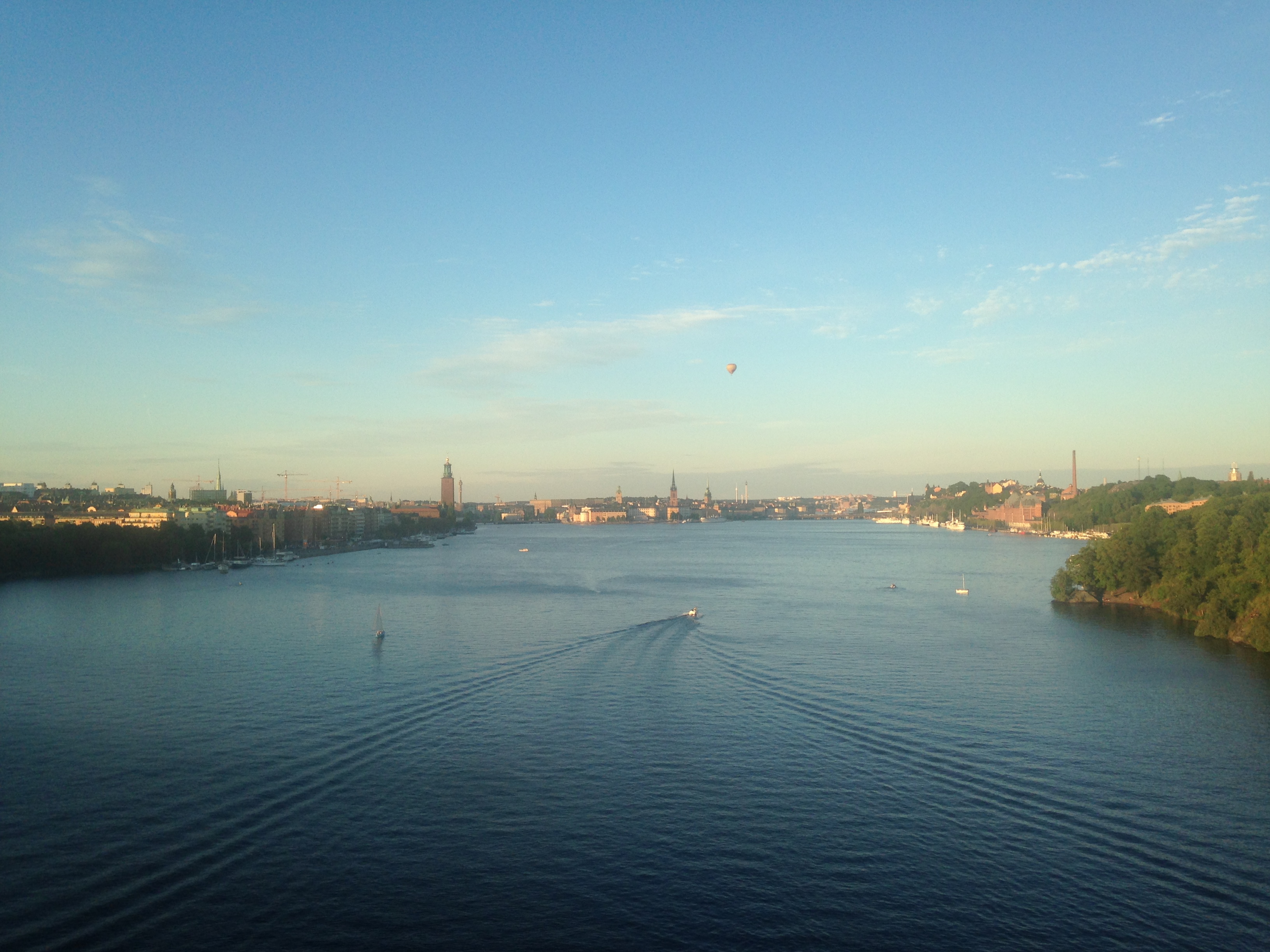
Stockholm is beautiful in Summer.
I love Sweden. Even though I didn’t go to Uppsala this time there is something about Sweden that makes it feel like a 2nd home to me. I cannot even put it in to words what it is — it just calls to me (as do so many other places).
In some ways heading back to Sweden can be difficult. My year in Uppsala was life changing. It was not only an amazing year away, but I also think it was the time and place where I grew up a lot. I was 21 at the time and it was a year that turned me into an adult.
For that reason Sweden will always have an important place in my heart, and in many ways I absolutely miss it to death. I often think back about that year and in some ways wish I could relive it.
This is not me saying that I was happier then than I am now. Quite the opposite. I feel, in many ways, like I have become a better person and gotten happier with every year that I have grown older. I am happily in love, have great partners and friends, love my work and love every bit of travel I do. But somewhere deep inside part of me wants to relive that transformation — go back and experience that time that had such an impact on my life.
I felt this especially heading back this time. Last time I went to Sweden I went with my partner James. Even though James visited me while I was living in Sweden, traveling with him there again made it feel like a bit of a new adventure. We were exploring the country ourselves and in our own way. And it was really great.
But heading back myself felt like I was returning to that year I lived in Uppsala. And in doing so it felt like I’d lost something. I lived in Sweden six years ago, and I am now so different to the person who lived there. The place has changed, I have changed, even my friends (who I had an amazing time visiting) have changed.
In some ways that realisation was tough but in others it was refreshing. It sounds really corny but I tend to think that life happens in chapters. Some are good, some are bad, all are transformational in some way or another. And visiting Sweden again it was nice to finally, in some way, be able to close that chapter. That’s not saying I will never go back. I hope to go back many many times. I have great friends in Sweden and I just love going there.
But I’ve managed to get to the point where I’ve realised that the year I lived in Uppsala is long gone. I will not relive that, nor am I likely to live in Sweden any time in the near future. But that is okay. It was an amazing chapter in my life, but all the chapters afterwards have all been just as amazing in their own way. And now I can see Sweden in a different life — part of new chapters, not just a place where I long for ones past.
After some discussions over the past couple of months, my friend Ben Riley and I decided to start up a podcast on all things lesbian, gay, bisexual, transgender, intersex and queer. The podcast came after some frustration at the lack of good podcasts on these issues, so we decided to do one ourselves!
Our podcast is going to cover two topics each time; one political and one cultural.
So, here it is. In our first go we talked about the SCOTUS marriage decision, and Ben brought us a new, semi-erotic gay dating video game to chat about.
This is our first go, so please excuse the quality as we get going. I will have to do some more work on editing and styling etc. but the conversation is good, so please listen on!
HELP US
But, please help us. We need a name! As I said this podcast is all about queer politics, so something in that area. Something short and snappy, and it must involve either the work “queer” or “gay”. If you have an idea, please post it in the comments or tweet us @simoncopland or @bencriley