The SCOTUS decision was a win for marriage, not for love

The SCOTUS decision on marriage equality has been heralded as a win for love. But is it really?

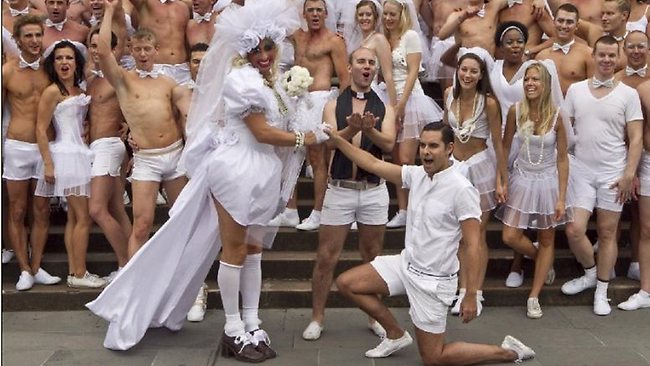
(Image http://junkee.com/wp-content/uploads/2015/06/GettyImages-478679354-768×512.jpg)

Originally published in Junkee.com, 30 June, 2015.

#Lovewins.

From marriage advocates to the President of the United States, that was the message from the Supreme Court of the United States’ (SCOTUS) decision on same-sex marriage on Friday. In fact, the message came straight from the horse’s mouth:  the Court itself. Justice Anthony Kennedy, the author of the court’s decision, wrote what some described as “a love letter to marriage — and gay marriage”. Kennedy’s final passage was shared widely throughout social media, reading:

“No union is more profound than marriage, for it embodies the highest ideals of love, fidelity, devotion, sacrifice, and family. In forming a marital union, two people becomesomething greater than once they were. As some of the petitioners in these cases demonstrate, marriage embodies a love that may endure even past death. It would misunderstand these men and women to say they disrespect the idea of marriage. Their plea is that they do respect it, respect it so deeply that they seek to find its fulfillment for themselves. Their hope is not to be condemned to live in loneliness, excluded from one of civilization’s oldest institutions. They ask for equal dignity in the eyes of the law. The Constitution grants them that right.”

A Brief History Of Love And Marriage

For many, Kennedy’s ruling was a beautiful passage that highlighted everything good about marriage. But for me, it highlighted every reason we need to radically overhaul this archaic institution.

It’s worth, for a minute, thinking about the history of love and marriage.

Up until about the 19th Century, love had nothing to do with marriage. Marriage was entirely an economic institution, designed to further the economic interests of families and the state. It was a contract, one in which women traded their fidelity for economic security. Men could guarantee their inheritance would be passed on to their children instead of another man’s (a system that was essential in the new world of private property), while women were given the means to survive. This is the oppressive history of the nuclear family — a system constructed to benefit men and, more broadly, the ruling classes.

Yet in the 19th and 20th Century, things began to change. As people moved into the cities and started working in factories, they became more economically independent. They could throw away the old bonds of marriage and start entering the institution for love instead. This was true for both men and women.

But it created a problem. Monogamous marriage was still needed for our economic system to work, in order to both continue the passage of inheritance (which was essential to continue the passage of wealth between generations), and to ensure people continued breeding to provide workers for growing industry. Many in the ruling classes saw love as a threat; it was far too volatile for an institution as important as marriage.

In doing so a new norm of love was created, one based on fidelity and sacrifice. To love, women in particular were told to devote themselves entirely to their “other half”. This charge was lead by Queen Victoria, who in 1840 famously set the trend for the white wedding, and for female puritanism. The Queen pushed a norm of fidelity, framed largely around the desexualisation of women, that ensured the continuation of the nuclear family (and the economic necessities behind it).

Marriage — Abolish It

And herein lies the problem.

Marriage is without doubt an expression of love for many of us. But that is not what it was designed for. When it comes to the law, love actually has nothing to do with it — hence why people can get married in Las Vegas to a person they’ve never met, and enjoy the legal benefits. Marriage is a contract, simple as that.

And as a legal institution, marriage is broken. It has been designed around particular economic needs — needs that can oppress women, and leave many others out in the cold. While gays and lesbians are able to access the benefits of marriage in Australia through de facto relationships, there is an increasing array of people in different relationships who are missing out. This includes people in polyamorous unions (like mine), open marriages, friends living communally and sharing finances, couples and their sperm donors raising children together, and single people living happily alone. This system, along with continuing the oppressive nature of the past, does not meet the realities of relationships as they exist today.

So I think we should abolish marriage. But what does that actually mean?

I’m not suggesting we abolish the ideas of monogamy and force everyone into a world of polyamory (although I  do think that more free love would be great for our society). But the state should not be backing up this one form of love as the epitome of relationships.

Marriage, as a social and religious institution, needs to be disconnected from our law. You could still have your white wedding in your church if you wanted, but this would not come with a legal backing. It would be a social and/or religious institution, as it should be.

How would the state be involved? Rights and responsibilities around relationships need to be treated as exactly what they are: a contract. As with other contracts, we should — as consenting adults — be able to enter into them with whoever we want, and with as many people as we want.

At the same time, a lot of the benefits provided by marriage should be decoupled from relationships. One of the big issues spoken about in the same-sex marriage campaign, for instance, has been around hospital visitation rights. We’ve heard awful stories from people who have not been able to sit by the bed of their dying partner because their relationship is not legally recognised. But why should this right be limited to family and partners in the first place? As an adult why should I not be able to decide who does and doesn’t get to visit me in hospital, whether they are a loving partner, a family member, or simply a good friend?

Another good example is immigration. Many of our immigration benefits are connected directly to relationships; it’s far easier to immigrate to most countries if you are married to a citizen of that country. I’m not saying we should deny these people the right to immigrate, but we should question why these rights are only open to those who are monogamous? The case for open immigration is extremely clear: immigration provides significant economic and social benefits to a society and, despite the scare tactics of groups like UKIP in the UK, open immigration does not lead to economic ruin. So why not decouple these rights from relationships, and make them available to everyone?

These examples highlight the significant problems with marriage as we know it today. As Hugh Ryan argues in The Guardian, marriage allows the state — i.e. our society — to stop caring for people, and places that responsibility in the hands of a partner. I would much rather a system that provides care for everyone, whether coupled or otherwise.

This is not just about law, either. We also need to break down the norm of monogamous relationships as being the epitome of relationship structures. This not only leaves people in alternate relationships open to discrimination, but also places huge pressure on those who do try and fit. The global rates of infidelity remain quite high, suggesting the norm of monogamy just doesn’t work for everyone. Wouldn’t we be better questioning that norm, rather than pushing people into something many don’t want to do and facilitating pain in the process?

A Win For Marriage And Equality, But Not A Win For Love

I don’t think love won last week. In fact, I think it lost. The SCOTUS decision defined love even more narrowly than before, and brought more people into the fold of a limiting and outdated norm.

If we really wanted love to win, we’d decouple it from our legal system. That would make it fairer for all of us.
Read more at http://junkee.com/the-scotus-decision-was-a-win-for-marriage-not-a-win-for-love/60275#8uywpcE2TGtZ1FR7.99
Sex and Society (5): Love and Marriage

Welcome to blog five in my sex and society series in conjunction with Left Flank. Today we will ask the question, what’s love got to do with it?

Over the past four posts I’ve spoken extensively about the connection between the nuclear family (whether gay, lesbian, straight or other) and our class and capitalist society. But, how does that connect to relationships today? Relationships aren’t about economics; they’re about love.

So what does love have to do with it?

love-wins-marriage-equality-support

***

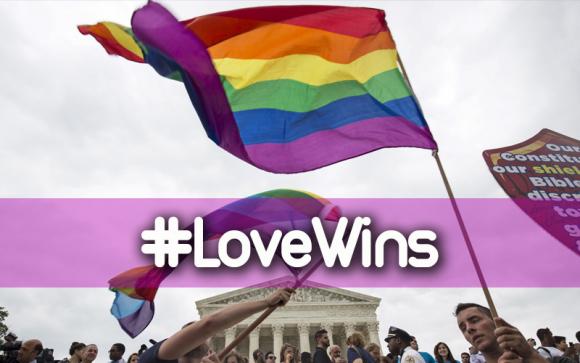
#Lovewins. That was the message from Friday’s Supreme Court decision on same-sex marriage in the United States — a message from the marriage advocates, the President and even Justice Anthony Kennedy, who it was said wrote a “love letter to marriage — and gay marriage” in his ruling. In turn, the decision not only codified the connection between love and marriage, but effectively defined what love is — a love based around “fidelity, devotion, sacrifice, and family.”

But, since when has love been part of marriage? And why are our ideals of love based in the ideas of fidelity, devotion, sacrifice and family? 

The idea of romantic love has clearly been an important part of our society for centuries. Way back in the 1500s William Shakespeare was writing plays in which people literally killed themselves because they couldn’t be with the person they loved.

Yet, despite much of this historic imagery, love has only played a major role in marriage for the past two to three centuries. As I’ve argued in my past posts marriage was all about economics with too much love being thought of as a threat to the institution. Love, it was seen, was best expressed outside the main union of marriage. Researcher Stephanie Coontz uses the French as an example:

Most societies have had romantic love, this combination of sexual passion, infatuation, and the romanticization of the partner. But very often, those things were seen as inappropriate when attached to marriage. The southern French aristocracy believed that true romantic love was only possible in an adulterous relationship, because marriage was a political, economic, and mercenary event. True love could only exist without it.

So how did love become part of modern marriage and what does it say about relationships today?

In my past two posts (on capitalism and women’s oppression and capitalism and gay oppression) I spoke about how the rise of industrial capitalism fundamentally changed the nature of the family. With people moving into the city, workers were able to live more independently of each other, in turn not relying so heavily on the bonds of the nuclear family.

This didn’t just have impacts on the power structures of relationships (as I’ve argued in those posts), but on the very fundamental question of why people entered relationships in the first place.

In previous centuries marriages was seen more as a contract between families, primarily designed to ensure financial stability. Families therefore played an important role, with parents in particular providing the resources and dowry required to make a marriage work. Families even used to attend a couple’s honeymoon, which was at the time seen more as a communal affair to reinforce new familial relationships.

But as people moved away from the land and into cities they relied far less on their families for economic stability. Working in factories, the working class was able to disconnect itself somewhat from family ties. Women, for example, were even able to start earning so they could pay their own dowry. Hence love became a greater motivating factor in relationships. This also occurred at the same time as the French and American revolutions, as well as the Enlightenment, which all promoted the ideas of the “right to happiness”. That right, it was seen, extended to relationships as well.

Yet this provided challenges, both for the capitalist class and, in particular, women. As noted before, while capitalism threatened to destroy the nuclear family, it also required it to survive more than ever. Love based marriage was seen as a major threat: “There was a fear that love would, in fact, lead not only to divorce but to out-of-wedlock sex and childbirth.” Initially the ruling class responded by trying to reinforce the traditional family ties. But young lovers kept at, meaning capitalism was required to adapt. And here the problem women faced in this new regime played directly into the hands of ruling social interests.

The problem for women was that while marriages now became about love, men still held the upper hand. In previous centuries the legal doctrine of coverture had been developed — a legal precedent that meant married couples were seen as one person, a person controlled by the man. As industrial capitalism grew this doctrine remained intact. Men maintained all of their power, making life much more difficult for women. In the old world, with marriages being arranged, women could be assured of a secure economic future. But now, in a love-based system, they were required to fight for that future — they had to prove they loved their man more than anyone else could.

023-married-with-children-theredlist

Hunter Oatman Stanford argues women did this by becoming the perfect homemaker. The “cult of the domestic” was developed, “centering on a stereotype that desexualized women and made child-rearing their primary goal. In her role as a domestic angel, the perfect wife was completely pure in body and mind, submitting to her husband’s erotic advances, but never desiring or initiating sex herself.” To survive in a relationship a woman had to submit fully, proving both that she could look after her man, and more importantly that she had no sexual desires for other men (otherwise there was a threat that she would procreate with another man).

This standard was developed and pushed heavily by the ruling class. Having lost the battle against love-based marriage, this was the next best alternative. Queen Victoria for example was an advocate both for love-based unions, with her wedding in particular setting many of the traditions we still have today. Yet, Victoria was also an advocate for female puritanism. And here our standard narrative of love was developed — you fall in love with one person and that is who you stick with “till death do you part”. This form of love is key to your happiness. We are taught from the moment we are born that we are all destined to fall in love, and those who “can’t” or “won’t” are deeply questioned in our society, immediately thought of as sad and lonely.

This love has been devotedly sold to us as consumers also. From the very early days romance became an important commodity, with white weddings costing thousands of dollars, and celebrations such as Valentine’s Day pushing people to buy lavish gifts for their loved ones. If you did not spend money on your other half, you clearly did not love them enough. This had dual benefits. Businesses were able to develop new multi-billion dollar industries based around romance, and in doing so they could reinforce the ideals of the modern nuclear family that is still required for the reproduction of capitalist society.

We can see this best in modern campaigns around same-sex marriage and the SCOTUS decision on the weekend. Same-sex marriage provides an interesting intersection between love and capitalism.

Love has played a major role in same-sex marriage campaigns. Campaigns have been based on the idea of “equal love”, which states that same-sex couples deserve equal recognition (i.e. equal access to the state institution) because we love each other as much as heterosexual couples. In doing so marriage equality campaigns have actively reinforced many of the norms of modern love (as we saw in Justice Kennedy’s ruling) — either through reinforcing the ideas of monogamy or on the other side actively rejecting the idea of polyamory as a valid form of love.

But all of this has occurred with an economic basis to it. Marriage equality advocates have touted the list of federal benefits marriage brings to couples, while campaigns have emphasised the economic benefits marriage equality can bring a nation. There has even been a growth in a childbirth industry for same-sex couples — primarily focused around expensive surrogacy programs. Same-sex couples (despite some conservative rhetoric) have increasingly been expected to participate in child rearing, in turn doing their part to provide the next generation of capitalist workers.

This is the story of last week’s SCOTUS ruling, and same-sex marriage campaigns in a broader sense. Last week was a win for one particular form of love — love now defined by the state and based primarily in the needs of our economic system. That’s why you see conservatives arguing same-sex couples need to defend the “traditions” of marriage when they enter it. To gain access to the benefits of marriage you have a responsibility to stick to the norms of love is based upon. #lovewins, yes, but only a very particular type of love.

That’s what love has to do with it!

Now, I hope you all enjoy the Frank Sinatra, or maybe the Tina Turner I have inadvertently put in your head because of this post.

– See more at: http://left-flank.org/2015/06/29/sex-and-society-5-love-marriage/#sthash.zxlncBTv.dpuf

The Stanford Prison Experiment

Over the weekend my partner and I went and saw The Stanford Prison Experiment at the Edinburgh Fringe Festival.

Image by GedenkstätteBautzen (Own work) [CC BY-SA 3.0 (http://creativecommons.org/licenses/by-sa/3.0)], via Wikimedia Commons

For those of you who don’t know about it, The Stanford Prison Experiment was carried out by the psychologist Philip Zimbardo in the 1970s. Zimbardo set up a make-shift ‘prison’ in the basement of Stanford University, recruiting volunteers to either be ‘guards’ or ‘prisoners’. He then intended to observe how the guards and prisoners acted over a period of two weeks. You can find out more about the experiment here.

Zimbardo’s experiment only lasted five days. The guards became abusive, both physically and psychologically even within the first 24 hours, and soon enough it was becoming very clear the experiment was significantly harming the prisoners. After immense pressure Zimbardo called the whole thing off.

While I originally thought this movie was going to be a documentary, it was actually a re-enactment of the experiment. The director and production team used tapes and transcripts to recreate what happened in the experiment almost directly. And in doing so they created a unique psychological thriller. I had always thought the experiment ended up much more violently than it did. While there definitely was a little bit of physical abuse, most of the abuse was actually psychological — guards degrading and teasing prisoners until breaking point. And that was far more interesting than some physical fights.

For me, the Stanford Prison Experiment has always been interesting. It provides a unique insight into the state of the human mind, and in particular the nature of the prison industrial complex. As I have been working on Forgivenessfocusing on the life of someone after they have left prison — I have become interested in it even more.

Most people find the Stanford Prison Experiment horrifying because of what the guards did. How, even knowing the prisoners had done nothing wrong, could they get so abusive so quickly? Is human nature that bad that just given the right settings we will quickly turn around and abuse anyone we can at the drop of a hat? Are we really that bad?

While clearly this is fascinating, I think the impact the experiment had on the prisoners is also fascinating. Most of the prisoners became immediately submissive to the abuse of the guards, simply following orders even knowing they, in reality, didn’t have to. They lost all of their power in a moment, not even willing to stand up to the abuse the guards doled out.

The movie concluded with a range of interviews with the different participants, recreated exactly based on transcripts of interviews the research team conducted after the experiment was done. In one of these one of the prisoners said that even within the five days he felt he started to lose his identity — he started to forget who he was at all. Even in five days he became a number (all the prisoners were referred to by their numbers) and not a person.

If that’s what happened in five days, then imagine what would happen within five years? Or even ten or twenty or thirty? I can’t, in all honesty, imagine it. I hope I never do.

In my book I am attempting to write about someone who has left prison after fifteen years. The impact of those years is clearly huge impact on my character — it defines everything about his life after being released. But what watching the Stanford Prison Experiment made me think is, who actually is my character? I have spent a long time thinking about what my character was like before he entered prison, hoping to draw some form of identity to shape him afterwards. But is prison actually such an influence that is strips people entirely of that identity, leaving them with one based solely on the crime they’ve committed and the time they’ve spent inside?

Obviously I will (hopefully) never actually know that. Only people who have actually been to prison can give us that answer. But The Stanford Prison Experiment certainly gives us some clues, and those clues are terrifying.

What role can unions play when we have role models like this?

Unions are fundamentally failing in their core goals – and it’s becoming clear that it’s leaders like Bill Shorten who are a major part of the problem.
Opposition Leader Bill Shorten Image by User:Orderinchaos (Own work) [CC BY-SA 3.0 (http://creativecommons.org/licenses/by-sa/3.0)], via Wikimedia Commons
Opposition Leader Bill Shorten
Image by User:Orderinchaos (Own work) [CC BY-SA 3.0 (http://creativecommons.org/licenses/by-sa/3.0)], via Wikimedia Commons

Originally published in SBS News, 24 June, 2015

I can’t decide what makes me angrier: Bill Shorten’s actions at the AWU, or the fact I am not surprised by them.

For those of you have haven’t caught up, last week Fairfax media revealed a range of questionable  dealings Bill Shorten was engaged in during his time as the Victorian and National Secretary of the Australian Workers Union.

In particular, Shorten negotiated a workplace agreement with Thiess John Holland that cut worker’s conditions, whilst saving the company millions of dollars. At around the same time, Thiess John Holland made a donation of $300,000 to the AWU.

There have now been further allegations, including claims that during his leadership Winslow Constructors paid the union $40,000 to cover the memberships of 105 workers, and that the chemical manufacturer Huntsmanpaid the union’s Victorian branch hundreds of thousands of dollars to ensure workers “didn’t disrupt” their operations.

On the weekend Shorten came out swinging to defend himself, arguing this is how ‘modern unionism’ works. Others have lined up to say the same thing. Technically he did nothing wrong.

As a lifelong unionist this makes me extremely angry. This is a very strange model of unionism to me.

Unions, I believe, are built on a simple principle of workers coming together to build power. They are about challenging the entrenched economic interests in our society in order to create a better deal for workers in both the workplace and in our broader lives.

Look at Shorten’s “modern unionism” however and I’m struggling to see these ideals in practice. This style of unionism seems to have given up on the ideals of workers organising collectively, instead basing itself on union leaders coming together with businesses to negotiate worker’s rights. This is why we see unions taking in millions of dollars of donations from big corporations, and negotiating deals that employees don’t even have an opportunity to vote on.

Unfortunately, this isn’t just limited to the AWU. The allegations against Shorten for example come only months after the Shop Distributive and Allied Employees’ Association (SDA) negotiated an agreement with Business South Australia that cut weekend penalty rates for all workers.

Last year, after QANTAS announced massive cuts to staff, unions were extremely weak in their response. Leaders quickly ruled out industrial action, instead calling on Tony Abbott to save the airline and in turn worker’s jobs. Unions have also done a good job at isolating key parts of the movement, whether it is United Voice calling for students, environmentalists and same-sex couples of be kicked out of the ALP, or Paul Howes arguing that Greens are not part of ‘his movement’.

Since when was this how things were done? Unions are supposed to be there to build worker power but increasingly that is not the case.

Primarily through their historical link with the ALP, but increasingly through connections to the business world, union leaders have become an entrenched part of the political class. In turn, the working class has suffered. What kind of unionism is that?

That does not mean the ideals of unionism are bad, or even that they are dead. With growing economic inequality, and attacks on workers from Liberal and Labor Governments, unions are needed now just as much as ever.

There are many in the union movement still out there fighting the good fight. I have been a member of the National Tertiary Education Union for years now, and have always been impressed by their staff’s dedication to the workforce. I strongly stand behind the Community and Public Sector Union, and their members, who are striking across the public service at the moment. These unions, despite some of their flaws, are clearly standing up for their worker’s best interests.

But these localised instances are not enough. Unions are fundamentally failing in their core goals, and it is becoming clearer that it is leaders like Bill Shorten who are a major part of the problem. Some union leaders seem more interested in doing backroom deals that standing on the picket line with their workers, and then they wonder why membership numbers have dropped so dramatically.

As a unionist, I feel as though it is time to stand up and say, enough is enough. While the Royal Commission into Unions is clearly nothing more than a political witch hunt, at the same time that doesn’t mean these unions are actually acting in the best interests of their members. While Shorten technically did nothing wrong, that does not mean what he did was right.

Bill Shorten calls himself a ‘modern union leader’. As a principled unionist, that makes me very worried.

What’s the point of Pride anymore?

What is the point of Pride anymore?

My favourite pride placard

This weekend I went to Edinburgh Pride. Edinburgh Pride is not a big affair. It started with a march along the Royal Mile followed by a ‘festival’ — an afternoon of bands and drinking. I had no interest in the festival at all, so decided to head to the march instead.

I am not surprised, but in the end, it was rather disappointing. The crowd was actually a decent size, but I couldn’t help but wonder, why were we all there? There was hardly a political message to be heard, with no one even bothering to chant along the march. We walked very quietly, expressing our pride and politely as possible. Instead, the majority of flags and banners were those provided by the corporate sponsors — banks such as Barclays, RBS and the Bank of Scotland, as well as the restaurant Nandos.

It seemed a crazy contrast to the huge anti-austerity protests that were happening around the United Kingdom on the same day. While tens of thousands of people took to the streets to protest harsh cuts by the Tory Government, the gay community in Edinburgh were “celebrating” the work of our proud sponsors — the UK financial sector. On a day of huge anti-austerity protests there was not a single austerity message to be found.

Is this seriously what we’ve come to?

In London it has been noted that the pivotal group, Gays and Lesbians Supporting the Miners, will be leading the London Pride this year. GLSM was so important because it realised that the fights for gay and lesbian rights matches the fight against conservative attacks on unions and workers.

And that fight continues in earnest today. Conservative austerity is going to have a huge impact in the UK — hitting the poorest hardest. And that means hitting LGBTIQ people as well. Gays, lesbians, and trans* people often face severe poverty (particularly those who find themselves homeless due to queerphobia) and they will bear the brunt of austerity cuts coming under this Government.

Yet, instead of standing with those fighting against austerity during the protests this week, Edinburgh Pride instead celebrated our proud financial sponsors. We waved the flag of where our allegiances lie — with the capitalist class instead of those fighting against their oppression.

In the end I wished I had ended up getting on the train and heading to the protest in Glasgow this weekend instead of Pride. And that feels really sad to me. It’s sad parts of the queer movement have lost the important connections we once built with the working class, along with so many other movements fighting oppression today. It’s sad that we find more space for banks to sponsor our events rather than to question their dodgy practices (the sorts of practices that created the financial crisis that Conservatives are using as an excuse for austerity).

Pride used to be something political and radical. It used to be a locus for change. Not it seems just to be a big party, backed up by our corporate sponsors.

There is still a point to pride. But sometimes I don’t think we realise that anymore. 

CIA torture is only part of medical science’s dark modern history

Recent revelations about post-9/11 practice remind us that doctors’ ethical guidelines are only as good the society that has allowed a variety of shocking human experimentation.

Hospital beds. By Канопус Киля (my photo) [Public domain], via Wikimedia Commons
Originally published in The Guardian, 22 June, 2015. 

New documents released by the Guardian have shown the CIA may have broken its own internal ethics policies during their controversial torture programme following 9/11. In particular the CIA breached its guidelines for “human experimentation”, which specifically state that research should not occur without a subject’s informed consent.

While these breaches may not be surprising to the cynical, the involvement of medical doctors and psychologists in the programme still has the capacity to shock. Doctors from the Office of Medical Services (OMS) were active throughout the torture programme – with some even being present and participating in the interrogations themselves. This, according to many medical professionals, it a major breach of medical ethics – procedures based at their heart on the principle of “do no harm”.

But is this really such a shock? Unfortunately, probably not. Look at the history of medical science and these breaches are more common than we’d like to admit.

The controversy over the CIA torture is very similar to another debate raging within the US medical community – that over doctor involvement in the death penalty. With the growing use of the lethal injection, doctors have been increasingly involved in this form of punishment, developing and implementing drugs for the purpose of killing. As Jonathan Groner explains (PDF):

“Even without physician participation, the lethal injection process so closely mimics medical practice that the entire medical community is tied to the death chamber.”

This is highly problematic. As we’ve seen recently, the lethal injection has at times been akin to torture. In 2014 in Oklahoma for example, convicted rapist and murderer Clayton Lockett was submitted to what was called a “botched execution”. In what was the state’s first attempt at using a new three-drug cocktail, Lockett ended up living for 43 minutes after he was injected, writhing in pain as he was strapped to the gurney.

Even if lethal injections can be more “humane” approach, they represent a significant threat to the medical profession. Jonathan Groner argues:

“Not only does lethal injection induce physicians to perform unethical activities, but lethal injection also ‘medicalises’ executions, meaning that its veneer of medical respectability allows the imagery of healing to be used to justify killing.”

It is the “imagery of healing” that has often been used for some of the other worst examples of medical practice. The most obvious example relates to sexuality. Up until 1973 the American Psychiatric Association – and similar associations around the world – considered homosexuality a mental illness. This is part of what Michel Foucault described as “scientia sexualis”, or the scientification of sexuality. Within this ideology “divergent” sexualities were identified scientifically, with doctors then conducting ‘conversion therapy’ to cure people of these illnesses. Techniques included forced hospitalisation, electro-shock therapy, castration, torture drugs and lobotomies.

Perhaps the most famous case of this is the treatment of Alan Turing – the father of computing. After it was discovered that Turing had a homosexual lover in the 1950s he was punished through chemical castration, given hormones to suppress his sexual urges. Turing died of cyanide poisoning only two years later in 1954 at the age of 41. It was at the time put down to a suicide, although recent evidence has suggested that may not have been the case. Either way the story represents potentially the most high-profile unethical medical treatment of homosexuals to date.

And while this may sound like old news, unfortunately that’s not the case. A committee of the Australian Senate for example recently heard evidence from the Organisation Intersex International Australia (OII), who stated that every member of their organisation had at some point experienced a form on non-consensual medical intervention. One story from OII was particularly shocking — a person who agreed to hormone therapy after his doctor insisted that it would “turn him into a real man”:

“It was insinuated, even blatantly stated on occasions, that my life would be worthless; that I would be a freak; that I would never achieve my potential, and that I would never have any self-esteem … So, eventually, from the age of 28, after about six years of constant threats and ‘counselling’ by my medical specialists, I began testosterone therapy. And I found it to be a horrifying experience.”

All of these cases have been based on a desire to do some form of good, but have resulted in what has often been the traumatic and horrible treatment of people against their will. This does not just relate to the treatment of medical patients, but to medical research as well.

For example, from 1951 to 1974 Dr Albert Kligman conducted a range of medical experiments at the Holmesburg Prison in Pennsylvania in the United States on behalf of the Dow Chemical Company, the US Army and Johnson & Johnson. In one study Kligman injected dioxin – a highly toxic and carcinogenic compound found in Agent Orange – into 70 prisoners. He did so because Dow Chemical employees were being exposed to the chemical and the company wanted to know what effect it had on the skin. Prisoners developed severe lesions, with many being left untreated for months.

In another example, from 1946-48 American public health officials conducted a range of unethical medical experiments in Guatemala, infecting soldiers, prostitutes, prisoners, and mental health patients with syphilis and other sexually transmitted diseases without their knowledge or consent. Researchers wanted to test the effectiveness of penicillin in both preventing, and curing syphilis, something they were struggling to do in the laboratory. In doing so they infected people without their consent, with a number dying as a result.

What’s shocking about these examples is they came so closely after the discovery of Nazi medical abuses during the second world war. Throughout the war Nazi doctors conducted a range of horrible medical experiments on people in concentration camps. Perhaps the most notorious of these were conducted by Josef Mengele – known as the Angel of Death. Mengele was particularly fascinated in twins and conducted a range of brutal experiments including injecting dyes into people’s eyes, amputating limbs, intentionally infecting one twin with a disease to test the impact, and transferring blood from one twin to another. In a particularly gruesome example, he sewed two children together in an attempt to create conjoined twins. They both died several days later after developing gangrene.

It was these atrocities that lead to the development of the Nuremberg Code of human experimentation, which outlines the research ethics principles for human experimentation. The code has similar principles to broader ethical guidelines for medical practice — primarily based on the ideal of “do no harm”. This is how we all see medical practice — it is primarily a healer, and helper. Yet unfortunately what we’re finding is this isn’t always the case. Often, medicine is used for other ends.

Of course this is the exception to the broader rule. Medical practitioners around the world are overwhelmingly focused on the treatment of illness, the finding of cures of diseases, and ensuring people live long and happy lives. The Nuremberg Code, along with other medical ethical guidelines, have become central to medical practice.

Yet, what the CIA examples highlights is that we must remain wary. While of course these crimes do not match those of the Nazi era, they still highlight a major breach in medical practice. The CIA’s policies were in line with best practice medical ethics. Yet the organisation, and the doctors involved, continued anyway. They crossed the boundaries and clearly thought that was an acceptable thing to do.

There are two things we need to learn from this. First, ethics are only useful when they are actually understood and enforced. While the CIA clearly had good guidelines, they were not followed. In that instance, what is the point?

But secondly, and more importantly, these examples highlight that while we often treat the medical profession as if it is an inherent “good”, in reality it is only as good as the society and organisation that builds it. Of course many breaches of medical ethics are due to rogue practitioners acting outside the boundaries, but each of the examples above were allowed to happen because of the values of the society at the time — from governments turning a blind eye to unethical medical experiments, to a society that supports torture and the death penalty.

Our society is built within particular power structures and whether we like it or not, medicine – and the broader sciences – have been developed, and act, within these structures. That does not mean that all medical practitioners are destined towards breaching their ethics, but rather that, just like with any other profession, we have to keep a constant check on how medicine operates. Medicine is just as likely to be used as a method of implementing power as any other profession.

We see medicine in our society as an inherent good. But as these examples show, it is often only as good as the society that uses it. It is our job as a society therefore to make sure these sorts of breaches do not occur again.

Sex and Society (4): Capitalism and Gay Oppression

As part of my running series with the people at Left Flank, today I bring you part four of Sex and Society: Capitalism and Gay Oppression. If you haven’t read the other pieces, stop, and go back. They are here, here, and here.

Otherwise, march on!

***

Gay marriage
The new conservatism?

I don’t support gay marriage despite being a Conservative. I support gay marriage because I’m a Conservative.

This statement by British Prime Minister David Cameron was heralded by many as a major win for gay and lesbian people. Lesbian and gay rights had now, it seemed, moved away from being a narrow concern of the Left to become a mainstream issue. With that, full equality was now within reach.

But what did Cameron’s statement actually signify? Did it indicate a final push towards full emancipation of gays and lesbians, or did it instead amount to the integration of gays and lesbians into the structures of the oppressive nuclear family?

In this blog post we’re going to explore the history of queer oppression, and how gays and lesbians have been slowly brought into the fold of the capitalist family.

***

Let’s start a little bit with a note on language. Debates about rights for lesbians, gay men, bisexuals, trans*, intersex, queer and other sexual minorities are full of language issues, so it is important to get it right. First, I will use the term “queer” or “queer oppression” whenever I am talking about anyone who does not fit gender or sexual norms — anyone who is not a cis heterosexual person. However each group within this queer umbrella face different issues, so when required I will specifically name each group I am talking about. Given the focus for this blog I will be primarily focusing on “gay oppression” — i.e. oppression targeted at gay men and lesbians.

Where does queer oppression originate?

Modern perceptions of anti-queer feelings a based primarily on the idea they are based in “fear”. Hence the terms “homophobia”, “transphobia” or “queerphobia”. Patrick Strudwick argues that fear underpins the majority of anti-gay sentiment:

Being anti-gay is, without exception, at least partly fuelled by fear. Fear of the unknown, fear of unwanted sexual attention, fear of gender roles being flouted, fear of humanity being wiped out by widespread bumming, fear of a plague of homosexuals dismantling marriage, the family, the church and any other institution held vaguely dear. And, of course, never forget: fear of what lurks repressed and unacknowledged in the homophobe. Irrational fear. It’s a phobia, people.

In mainstream debate this fear is boiled down to narrative of an “inherent conservatism” within our society, based primarily in religious teachings. Hence a teaching of queer history that largely ignores anything prior to the Stonewall Riots of 1969. Much like the story of the patriarchy, queer oppression, we have been told, is as old as society itself.

Unlike the story of the patriarchy however it is much easier to look back in history and find multiple examples that disprove this idea. The most commonly used example is Ancient Greece — a society in which homosexual sex was elevated, seen as “the most praise-worthy, substantive and Godly forms of love.” Yet it is not just in Greece where we find this — we see varied and more progressive approaches to gay and lesbian activity in places varying from Russia to Africa.

So why then, did gays and lesbians suffer oppression in some societies and not others?

To answer this it is worth looking at queer oppression before the rise of industrialised capitalism. Britain for example has seen a long history of repression of homosexual activities. 1533 King Henry VIII introduced the “Buggery Act”, which mandated death for anyone convicted of “buggery” — a term used for any non-procreative sex, which was considered a “crime against nature.” This sort of oppression lasted well into the 1900s.

What was the reason for this? The answer connects largely to the source of the nuclear family as it existed prior to the rise of industrial capitalism — an institution developed based on a need for labour resources to create economic surplus and wealth (primarily in this time to provide labour for farms). Queer sex and activities presented a threat to this norm, and in turn, in particular during times of economic need, these activities were actively repressed. Sherry Wolf describes this when discussing the North American colonies of New England:

The need for labor in the colonies fuelled efforts by New England churches and courts to outlaw and punish adultery, sodomy, incest, and rape. Extramarital sex by women, who were considered incapable of controlling their passions, was punished more severely than extramarital sex by men.

How has this translated during the rise of industrial capitalism? Just as industrialised capitalism had the potential to break the bonds of the patriarchy, John D’Emilio notes it also had the capacity to lead to greater freedoms for gays and lesbians. As noted in previous blogs capitalism weakened the foundation of family life as it brought people away from rural family life into more autonomous lives in the city. This is why Engels predicted capitalism would lead to the end of the proletarian family. This breakdown of the traditional family also allowed for greater autonomy for gays and lesbians. Yet, with this came a problem. While industrial capitalism opened the potential for the breakdown in the family unit, capitalists required families to stay together more than ever — primarily so they could reproduce the next lot of workers. This remains a fundamental contradiction of capitalism.

Stonewall

This contradiction created a very unique situation for gays and lesbians. In The History of Sexuality Michel Foucault argues there have been two significant changes in the way our society approaches sexuality. First sex and our sexual desires shifted from something we simply do into something that reveals a fundamental truth about who we are, and second, with this, we have developed an obligation to see out that truth and express it. As Jesi Egan argues, “within this framework, sex isn’t just something you do. Instead, the kind of sex you have (or want to have) becomes a symptom of something else: your sexuality.”

As industrialised capitalism developed sex shifted from something you just did, to something that formed a core part of your identity. In doing so our capitalist society was able to identify and target people who connected to this identity. It’s worth noting that this is an interesting, and largely positive step forward in society. Industrial capitalism allowed for the development of individuality that was not possible in previous social organisations. Despite attempts to oppress this individuality, as occurred with those with “divergent sexualities” this is largely a positive step forward.

Foucault argues the creation of sexual identities was matched with a scientific approach to sexualities — what he calls Scientia Sexualis. The identification of different sexualities allowed for these sexualities to be “controlled” and “cured”.

This is how anti-gay sentiment manifested in the modern capitalist state. Capitalism created the very foundations of the homosexual identity, but also required that identity to be squashed so it did not mess with the norm of the nuclear family, which the state promoted because the breakdown of family structures caused by capitalism threatened wider social breakdown. Hence a process of scientific identification and treatment — treatment designed to bring those with deviant identities back into the fold.

So how does this all relate today? If queer identities are diametrically opposed to the modern state, why are we seeing conservatives such as David Cameron embracing gay marriage?

It is certainly true that equality for gay, lesbian, bisexual, trans* and intersex people has come a long way in the last 40 to 50 years. In the early days of the gay liberation movement this emancipation was connected to challenging the nuclear family, and in turn the state which promoted and defended it. Queer people demanded liberation from (rather than within) capitalism.

Yet, Cameron’s statement indicates a major shift in this view over the past decades. In recent years gay and lesbian activists have become more focused on gaining acceptance within capitalist structures, rather than fighting them, and capitalists have slowly begun to welcome us with open arms – not least of all because queer communities have been increasingly identified as a locus of accumulation. This has occurred through a range of different means — from campaigns for same-sex marriage, to the promotion of gay and lesbian parenting. Gays and lesbians have gone through a process of “normalisation”, one in which they have become part of the capitalist family instead of standing from the outside opposing it.

I will explore these issues, and others, in my next blog post — where we look at how capitalism sells sex today, and how this has allowed the nuclear family to survive.

– See more at: http://left-flank.org/2015/06/19/sex-and-society-4-capitalism-gay-oppression/#sthash.AoN41xGk.dpuf

Sick, writing, and taking time off

Eugh! I have been sick the last week. Just a rotten cold, but it has really hit me. I’ve been out for a few days now. 

out-sick-1

Everyone gets sick. But over the past few days I’ve noticed some a bit of a unique challenge it brings as a writer.

One of the frustrating things about being a freelance writer is the lack of security. I literally have no secure job at the moment and therefore no guaranteed future pay. I love what I do, but at times like this, it’s a real pain. What this means is that unfortunately I’ve been working while sick. I took all of the weekend off (I’ve been trying to work less on weekend) — but unfortunately I’ve had to do quite a bit of work at the start of this week (including writing this blog post).

It’s the unfortunate nature of the work these days. I know lots of people who would never take time off work if they were sick — even those with good sick leave provisions. Our work culture has become so engrained that we can’t even look after ourselves properly when we get ill.

I’m definitely trying to get better at taking time off. I had an amazing sleep last night and didn’t get up until 11 today. And I’m going to stop writing this in a minute so I can relax. But I probably will have to keep working before this cold goes away.

I’d love to be a position where that doesn’t have to happen, but that’s probably not going to be the case for a while yet. Oh well.

Now I’m going to have a nap.

If Bill Shorten really wants to achieve marriage equality he’s going about it the wrong way

Originally published in Junkee.com, 2 June 2015

Yesterday, the Leader of the Opposition Bill Shorten introduced his marriage equality legislation to the Federal Parliament. As the first leader of one of the two major parties to actively support reform, Shorten’s move is being seen as a major step in the march towards equality. And with the momentum from the successful Irish referendum, it now seems even more inevitable that Australia will soon legislate for same-sex marriage.

But while I really want to believe Shorten introduced the bill with the sole motive of making reform a reality, I cannot.

To me, this feels not just like a publicity stunt, but one that has the potential to significantly hurt our chances for reform this year.

Why This Bill? Why Now?

It is strange to watch Shorten and his colleagues act as if they are heroes on marriage equality, when the ALP have been one of the biggest blockers for change over the last decade. The ALP voted with the Howard Government in 2004 to change the definition of The Marriage Act 1961 and ensure same sex marriages were not recognised in Australia; and the ALP defeated The Greens’ marriage equality legislation twice, in 2009 and 2012. Six years in Government, and they could not achieve reform.

With this in mind I have to ask: why this bill, and why now?

Shorten’s legislation came at the heels of the successful Irish referendum a couple of weeks ago. When it comes to timing, the ALP’s motives were clear: to maximise on momentum from the vote, and push for a groundswell of support for a similar change in Australia. It is a good strategy.

But there’s more to it than that. The ALP also wants to use this legislation as an attempt to “own” the issue of marriage equality. This is why Shorten has made such a big deal over the bill, and why my Facebook feed has been full of advertisements about the party’s position in the last week. Yesterday, Senator Penny Wong suggested the ALP had to introduce the legislation because “no one stepped up” — a ridiculous allegation if you think about the ten other marriage equality bills currently sitting in our Parliament.

The ALP are trying to position themselves as taking a brave and courageous lead on the issue, rather than simply catching up with public sentiment that has supported marriage equality for years.

Marriage Equality Needs Bipartisanship

‘So what?’, you ask. Who cares if the ALP tries to “own” this issue? It doesn’t matter what they did in the past, as long as they are doing the right thing now.

That’s how I would normally feel as well. That’s politics after all. The problem, though, is that Shorten’s posturing actually has the potential to set back the cause of marriage equality.

While Shorten was making his move last week, Prime Minister Tony Abbott was too. Speaking in Parliament, Abbott finally acknowledged there was momentum for change, and that a vote would come to Parliament at some point this year. But he gave one caveat:

If our Parliament were to make a big decision on a matter such as this, I want it to be owned by the Parliament, and not by any particular party.”

This is a major concession. For the first time Abbott has admitted, even begrudgingly, that marriage reform is on its way — and, even more importantly, that the Coalition will be a part of the change. Not only has the PM opened the door to a Coalition conscience vote, which would likely lead to the passage of the legislation this year, but he has also made a move that could encourage his party’s more conservative supporters to finally accept that change is on its way. These are not just empty words; in the past week Alan Jones came out in support of marriage equality and Andrew Bolt appeared to have given up, and on Friday Liberal backbencher Warren Entsch announced that he would introduce the legislation (again disproving Wong’s contention on Monday that “no else one stepped up”). It was originally reported that Entsch’s bill would be co-sponsored by ALP MP Graham Perrett, but he has since denied any involvement — and one has to ask whether Shorten’s legislation had anything to do with that.

In making this concession, Abbott and the Coalition have laid out a way forward on marriage equality that could see a positive vote by August. Realising that change is inevitable, Abbott has offered a compromise. He doesn’t want to “own” the legislation himself, let alone vote for it. Yet at the same time he does not want to be further embarrassed on the issue by the ALP or the Greens.

Hence a middle of the road approach, and — given that the Coalition controls the Parliament, meaning any legislation will require their cooperation — a fairly decent one at that.

A Dangerous Publicity Stunt

It is here where the ALP’s posturing becomes so dangerous. Abbott’s change of heart and the potential for bipartisanship it represented was one of the biggest signs of progress there’s been on marriage equality since the last election. Yet instead of working with his compromise, Bill Shorten is using the opportunity to embarrass him even further. In doing so Shorten is potentially pushing Abbott and his supporters back into the closet — shaming him at the very time he indicated a willingness to change.

While I normally have no problem with embarrassing Abbott, this time it seems to be a grave mistake. Just look at the Coalition’s reaction to Shorten’s bill. Only five Coalition MPs turned up to the introduction of the legislation, which to the public makes it look  precisely as though they are against the bill. Meanwhile, Abbott has continued with his claim that the budget is more important, delaying a vote for a number of months.

Whether we like it or not, Tony Abbott and the Coalition have control of the House of Representatives, meaning marriage equality advocates require their cooperation (and some of their support) if we want to see a change to legislation this year. This is why a cross-party approach is the best way to achieve reform in the short term, and why the Greens have said they oppose Shorten’s approach in favour of a slower, more consultative process. “Having individuals going it alone now, having the Opposition Leader going it alone, would be a mistake,” the Greens leader Richard di Natale has said. “I just hope that he recognises that here’s an opportunity to have a rare moment of unity.”

Marriage equality is just around the corner. It is great that Bill Shorten has finally caught up on the issue. Yet by barging in the way he has done, Shorten and the ALP have proven they care more about “owning” the issue than they do about actually achieving reform — and if they continue on their current trajectory, they could harm the chances for marriage equality even more.
Read more at http://junkee.com/bill-shorten-has-taken-the-wrong-approach-to-achieving-marriage-equality-heres-why/58221#5l1ELbS8GIPTdjYk.99