The end is in sight for the coal industry

Originally published in SBS News, 14 June 2015

A move by Norway to rid itself of coal investments in its sovereign wealth fund has big implications, writes Simon Copland.

Last week the Norwegian Parliament formally endorsed moves to divest the country’s $900 billion dollar sovereign wealth fund from coal interests. The policy will result in the fund removing $8 billion from the coal industry.

While it didn’t necessarily make huge global headlines, this is potentially one of the biggest climate policy announcements in years. Whilst the $8 billion Norway is divesting may not add up to a huge amount for a massive global industry, it symbolises something very important: the slow death of the coal industry.

Over the past few years fossil fuels, and in particular coal, has been suffering significantly. Coal prices have dropped dramatically, with analysis showing that in the last five years, for every new coal plant that has come online, two have been delayed or scrapped all together. This is hitting coal mining too, with numerous coal mines closing in Australia recently. The situation has led many analysts to declare coal to be in a ‘structural decline’ — one it is likely never to recover from.

There are a number of reasons for this. Shifts in China in particular have caused major changes. A number of years ago China announced a cap on coal usage by 2020, a target It looks like they may have already reached years ahead of schedule. But it’s not just China. After his election new Indian Prime Minister Narendra Modi started cutting coal subsidies and increasing taxes, whilst in the United States President Barack Obama has circumvented the recalcitrant Congress to introduce his own limits on coal pollution.

These changes have not occurred in isolation. After the failure of campaigns to introduce carbon pricing in the United States and Australia, as well as the failure of the European carbon scheme to actually reduce emissions, over recent years climate activists have changed tact. Instead of focusing on abstract, neoliberal and often difficult understand carbon schemes, activists have gone to the source of the problem: fossil fuels.

This has taken a range of different methods. Originating in the United States the divestment movement has worked to deny the fossil fuel industry not only of the money they need to survive, but also their social license. Divestment campaigns have sprouted around the world, with large universities, cities, banks and investment funds agreeing to pull away their support for the fossil fuel industry. Notable divesters have included the cities of Seattle and San Francisco, Stanford and Glasgow Universities and even the Rockefeller Foundation.

On top of this campaigners are also upping the anti on new fossil fuel projects. The United States for example has seen a huge campaign to stop the construction of the Keystone XL tar sands pipeline, likely stopping the project’s construction in its entirety. Campaigns to stop Shell drilling the Arctic are growing more intense. In Australia community campaigners engaged in years of blockading of the Maules Creek Coal Mine, won avictory to close the Anglesea Coal Power Plant and Mine and are currently engaged in a huge battle to stop the Abbot Point Coal Port and associated Galilee Coal Mines.

These tactics are working. While the climate movement cannot claim all the credit for the decline of the coal and fossil fuel industry, these campaigns are clearly having an impact. The fact that the fossil fuel industry isheavily attacking the divestment movement highlights how scared they are.

This is where the Norwegian divestment is so important. Governments around the world are slowly picking up on the idea that the fossil fuel industry is bad for our climate — highlighted by the G7 announcement that they would phase out fossil fuel use by the end of the Century. While still too little, and too late, this has only been possible due to the leadership of these movements around the world. It has only been possible because of the leadership of smaller nations such as Norway.

The question now is, whether global Governments will finally catch up to this leadership, or whether it even matters. Whilst Government action remains important, as we limp toward the Paris climate talks, global negotiations are looking increasingly irrelevant. Communities around the world are stepping up, and the fossil fuel industry is suffering because of it. The question now is one of not if, but when, the industry will finally die.

London and getting away from my computer

Yesterday I got back from an amazing weekend in London.

IMG_4223
Big Ben Selfie!

Taking the trip at the instigation of my friend Tim, who was playing in a show with his band FourPlay and their special gues Neil Gaiman over the weekend I took the opportunity to have a long weekend. Boy, it was worth it!

Last week I was feeling flat, stressed, anxious and overwhelmed. I hurt my back earlier in the week and was struggling to sleep. But, unfortunately I still had heaps of work to do, so I couldn’t just rest and get better. It made for one rather unhappy Simon.

The weekend away made me realise once again how important holidays are. Working as a writer I find that I often end up working all the time — I take my computer wherever I go and it is hard to stop myself from working on that next piece, or editing my books. But just having a few days where I didn’t do any work was amazing for my mental health and enthusiasm. I got to just chill in London — I went to a couple of shows, wandered through the streets, had some beers, went to the Welcome Collection exhibition and met with a few friends. I completely and utterly cleared my head.

I also remembered one other valuable thing — the importance of getting away from my damn computer! Anyone who knows me knows that I rarely go anywhere without my laptop. I almost feel naked without it. I took it to London but after some indecision about it I finally decided I was better locking it away than lugging it around.

For just this one weekend, it was bliss. Not being able to use my computer I didn’t end up sitting at a cafe feeling guilty because I wasn’t writing that piece I needed to get done. There was nothing I could do but read or watch people go by. That was lovely!

And in doing so I realised the power, again, of the pen. Instead of taking my computer around I took my notebook (I always take my notebook wherever I go) and with a bit of a clear head and some inspiration from the FourPlay concert I ended up writing three and half short stories in my notebook. I was that guy who sat late and night with a beer writing things down while everyone else got drunk on their Friday nights. But it felt good. I got away from the constraints of “work” and got to express my creativity in whatever way I wanted. And I came out, I think, with some good stuff. I will try and go over them sometime this week and see if there’s anything worth popping up on here (or sending elsewhere).

So that was London, and a good lesson about getting away, not just from my city, but from my workspace as well. Being creative means being creative about how you go about sometimes, and I learnt that this week.

A couple of other notes.

First, if you ever get the chance you should go and see FourPlay play — particularly if they are teamed up with Neil Gaiman. The concert was just fantastic — a mixture of great original tunes, covers and spoken word backed up with some amazing string music. I thoroughly enjoyed every minute. I also hear they are working on a new and exciting project, so let’s be excited for that!

Second, I also went to the Welcome Collection in particular to see their Institute of Sexology Exhibition. It was excellent. I haven’t been to a museum so creative and well put together in quite a while. Not only were the exhibitions interesting, interactive and informative, but they had regular tours as well as workshops on creative writing and more. And it was all for free! I know I will be back and I think you should head there too.

So London! As I said on Facebook, for me it is still not quite as awesome as Berlin (my favourite city in the world), but it comes pretty damn close!

Sex at Dawn: Are we born polyamorous?

A couple of weeks ago I reviewed the excellent book, Sex at Dawn. I loved Sex at Dawn and really think everyone should read it. But I ended my review with a word of caution/concern — and here it is explained. 

Polyamory activists at the 2004 San Francisco Pride

At its heart Sex at Dawn is science book. Christopher Ryan and Cacilda Jethá outline a vast array of scientific evidence to back up their argument that our sexual history is based on polyamory, not monogamy. But Sex at Dawn also presents a political and moral argument as well. Ryan and Jethá not only talk about the biology of our sexuality, but also make a moral case for the expansion of polyamorous and monogamish relationships in our society. In fact the book dedicates an entire chapter at the end outlining polyamorous movements where they reference authors such as Janet Hardy, Dossie Easton, Dan Savage and more.

I don’t have a problem with this. I think this is a moral argument we should be making. Yet, I am concerned that Sex at Dawn makes this a biologically deterministic argument. We should all be polyamorous because we are “born this way.”

This is the basic thrust of the book. It is heavily focused on biological evidence towards polyamorous relationships, using anthropological and archaeological evidence to then back up the biological claims. I laid out some of the arguments in my review last week, and there are heaps more if you read the book. .

As I am concerned this biological and anthropological evidence is pretty strong. But I am concerned they, and in turn many in the polyamory movement, are relying too heavily on this evidence.

This reminds me a lot of the gay movement. Many lesbian and gay activists have taken on the “we are born this way” mantra; the idea that our society should accept homosexuality because it is just in our genes. There is nothing we can do about it. But as I have argued in the past this argument has stopped us from making a far more convincing argument: that homosexuality should be accepted simply because there is nothing wrong with it.

This is what I fear the biological determinism of Sex at Dawn could lead to. It is an argument that we should all be polyamorous because that is what we are born to do: we should be polyamorous because we cannot escape our biology. This worries me for a few reasons.

Firstly, it ignores the fact that humans have been willing and able to make many active decisions to reject our ‘nature’ for many many thousands of years now. Just look at where we live. We no longer live “natural lives”. In fact, as Ryan and Jethá argue, our bodies are able to adapt to what has often been considered unnatural events — adapting to be able to consume lactose for example. We at experts at destroying our nature and then adapting to unnatural behaviours. Why not be able to do this with sex?

Leading on from this, a biological deterministic approach deny the opportunity for people to make active choices about their sexuality — whether it to be polyamorous or monogamous. I for example have made a very active choice to be polyamorous and I am proud of that choice. That is important to acknowledge. In a society where heterosexual monogamy reigns we have to celebrate the others who have the bravery to make active choices to live outside of this norm — just as well celebrate those who decide to stick with the norms. We must celebrate sexual diversity — something that biological determinism fails to do. Biological determinism just puts us all into little boxes — we are all born this way and just have to deal with it.

Finally, a biologically deterministic approach opens up the potential for continued discrimination for those who make active choices that aren’t scientifically “natural”. I suspect there is nothing natural for example to the use of whips, chains and ropes in sexual activity, just as there is nothing natural to most of our methods of contraception. But that doesn’t mean there is anything wrong with them. These are active sexual choices that people are making and ones we should be celebrating, not ones we should be searching for natural causes of.

And here is the crunch of the matter. Our acceptance of sexual activity should not be based on biology but rather on the measure of ‘harm’. We should not be asking ‘is that act natural’ but rather ‘is that act harmful?’. If the answer to that question is yes then we can have an issue with it, but if not we should leave it alone. Of course harm is subjective and different for many people. We cannot classify it in any stringent way. But it is the only way we can judge sexual practices.

Now, I suspect that if I were to put this to Ryan and Jethá they would probably agree. That is at least what I’ve gathered from what I have read from them so far. Also, this shouldn’t take away from the awesomeness of this book. I still give it five stars and think everyone should read it. But it is something we need to be wary of. If we are going to promote polyamory, or any other sexual choices, we need to do so for radical and moral reasons, not rely on biological determinism.


Sex and Society 3: Capitalism and Women’s Oppression

After a couple of week’s break, here is blog three in my series in conjunction with the team at left flank, Sex and Society. Make sure check out blog one (the prehistoric family) and blog two (the rise of the nuclear family) before you read these ones. If you’ve already read them, that welcome to blog three: capitalism and women’s oppression.

How are capitalism and women’s oppression connected?

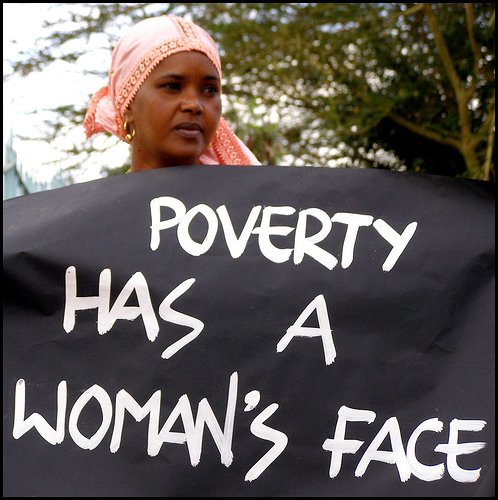
In my last blog post we discussed the rise of the nuclear family and the connection between the class system and the shift in roles between men and women. This week we’re going to explore how modern capitalism has perpetuated the oppression of women.

Poverty has a womans face


***

Let’s start a little differently however. I think it’s time to bring up the opposition to Engels’ theory of the oppression of women. There has been significant anthropological and scientific debate around the standard narrative of human sexuality, but for the purpose of this blog post I want to focus on the feminist arguments against Engels (a quick thanks to Jasmina Brankovich, who has been debating these issues with me in my first post).

This feminist charge against Engels was led by Simone De Beauvoir, who in her groundbreaking book The Second Sex stated that Engels’s theory is “disappointing” with “the most important problems (are) slurred over”. De Beauvoir’s arguments are complex (check this link to see them in depth), but they boil down to what I call a “naturalist” approach to gendered oppression. De Beauvoir acknowledges that economics has played a role in women’s oppression, but argues this only occurred because men used their superior physical strength to take advantage of shifts in economic circumstances. She contends:

Without adequate tools, he did not sense at first any power over the world, he felt lost in nature and in the group, passive, threatened, the plaything of obscure forces; he dared to think of himself only as identified with the clan: the totem, mana, the earth were group realities. The discovery of bronze enabled man, in the experience of hard and productive labour, to discover himself as creator; dominating nature, he was no longer afraid of it, and in the face of obstacles overcome he found courage to see himself as an autonomous active force, to achieve self-fulfillment as an individual.

In other words the development of tools and agriculture gave men the opportunity they had always been looking for to oppress women — primarily through the domination of nature. As leading feminists such as Sherry Ortner (who builds on De Beauvoir’s work) argue, women — primarily through their capacity to have children — are seen as more connected to nature than men. Hence men expressed their domination not only over nature, but over women as well.

These theories form part of an account of “the patriarchy”. There are lots of different definitions of the patriarchy, but the theory is largely based on the contention that men have oppressed women for all eternity, with this oppression operating rather autonomously from economic circumstances. Different feminists give different reasons for this (i.e. the female connection to nature), but what is key is that the oppression of women operates across historical periods, with men using economic circumstances to work together to continue this oppression. Economic circumstances are therefore not the cause, but a tool used to oppress women.

I will leave these theories to one side for the moment.

***

If we want to explore the connection between capitalism and women’s oppression we cannot go beyond the current mainstream form of familial expression — marriage. Marriage today is largely seen through the lens of “love”. Yet, this has not always been the way.

Let’s go back to the standard narrative of human sexuality. This narrative is based on what Helen Fisher calls “The Sex Contract”; the idea, based in Charles Darwin’s theory of sexual selection, that women require men to be able to provide for them and their offspring, while men will not provide those resources unless women ensure fidelity. Men and women engage in a contract — resources for fidelity. This is the ‘nuclear family’ I started to describe in my last blog post.

As I argued last time, the biological determinism of this narrative is incorrect. Yet the economic foundations of modern marriage are surprisingly sound. The question is though, how did this structure maintain itself with the rise of industrialised capitalism?

One of the unique things about industrialised capitalism is that it had the potential to radically change gendered relations within society. With the growth of the factory people flooded to cities, in turn losing much of their small amounts of private property. Industrialised capitalism became an equaliser of sorts — everyone, men and women, were now workers. Women were entering the workforce, with their oppression now occurring through capitalist exploitation. This is why Engels predicted that capitalism would see the end of the proletarian family.

So how is it that even when capitalists were desperately looking for workers to fill their factories women ended up back in the home? Many argue male workers banded together to keep women out. Heidi Hartmann for example argues that male-dominated unions organised to keep women higher paying jobs for men, primarily through excluding women from the workplace. Yet many others disagree with this. In their essay “Rethinking Women’s Oppression”, Johanna Brenner and Maria Ramas argue unions were both too weak to win fights against the inclusion of women, and in many cases they actually worked heavily to benefit women’s economic rights. So what is their answer? Brenner and Ramas look back at biological arguments, arguing that whilst a biological deterministic approach (that dominates the standard narrative) is false, the:

Biological facts of reproduction — pregnancy, childbirth, lactation — are not readily compatible with capitalist production, and to make them so would require capital outlays on maternity leave, nursing facilities, childcare, and so on. Capitalists are not willing to make such expenditures, as they increase the costs of variable capital without comparable increases in labour productivity and thus cut into rates of profit. In the absence of such expenditures, however, the reproduction of labour power becomes problematic for the working class as a whole and for women in particular.

Girl working in Manchester cotton mill

Here was the problem. In the early stages of industrialised capitalism men, women, and children all ended up in the factory. However, as people moved to the cities, the infant mortality rate shot through the roof. In Manchester, for example, there were a recorded 26,125 deaths per 100,000 thousand children under the age of one. This was three times the rate of mortality rater of non-industrial areas.

With the rise of industrialised capitalism workers were robbed of control of production process, and in turn robbed of their capacity to incorporate reproduction into the needs of production. In simpler terms, being forced to work long hours in unsanitary factories made it much more difficult for workers to properly look after their children. And, as Tad Tietze argues, “this created severe problems for the system’s ability to ensure the reproduction of the working class.” Capitalists were watching as their next swathe of workers died in front of their eyes.

Brenner and Ramas argue the creation of the “family-household system emerged as the resolution to this crisis.” The idea of the “family-household system” was introduced by Michèle Barrett in her book Women’s Oppression Today, described as a structure

in which a number of people, usually biologically related, depend on the wages of a few adult members, primarily those of the husband/father, and in which all depend primarily on the unpaid labour of the wife/ mother for cleaning, food preparation, child care, and so forth. The ideology of the “family” is one that defines family life as “ ‘naturally’ based on close kinship, as properly organized through a male bread- winner with a financially dependent wife and children, and as a haven of privacy beyond the public realm of commerce and industry.”

As capitalists were not willing, nor able, to provide services for parents to nurture their children (paid maternity leave, childcare centres, etc.) and with household services (maids, cleaning services, etc.) being too expensive for the working class, women were forced back into the home to look after children and complete domestic duties. As Tietze argues: “The capitalist family thus had to be consciously constructed, with all the coercive and consensual elements of that process — a process involving significant state and extra state mobilisation in terms of ideologies, laws, policies, regulations, work reorganisation, and industrial relations strategies, including settlements around the family wage, etc.” The family-household structure had to be developed in order to ensure the survival of the capitalist system.

That doesn’t mean women stopped working, but when they did they faced particular disadvantages. Brenner and Ramas argue there were particular classes of women who were working at this time; those with children, who were widows and those married to men with unstable incomes. “These women constituted a particularly defenceless and desperate labour pool,” they write. With domestic responsibilities making it difficult to organise in unions and a lack of mobility making it difficult to find better jobs, women were stuck in lowing paying, often part-time work. Hence we see the development of the gender wage-gap — a gap that continues until this day.

Herein lies the roots of female oppression under capitalism — roots we still see today. While some women have broken through the “glass ceiling” the majority still suffer both because of a historical disadvantage they have faced in the labour market, but also due to a capitalist class that is unwilling to provide the resources required to nurture children (which is still largely seen as a woman’s job). Paid maternity leave has been a huge fight, while services such as childcare are expensive and hard to come by. This leaves women still at a disadvantage.

While these roots are economic, however, that cannot explain sexism in its whole. These economic roots have also created cultural realities. There are a number of examples of this, but let’s just look at one: the perception of female sexuality. The repression of sexuality (through ideas that women have low libidos to the medicalisation of female sexuality through the “illness” nymphomania) is perhaps the greatest form of the ideological oppression of women. We (men in particular) are all taught early on in our lives that female sexuality is erratic and therefore the right of men to control. This has been ingrained culturally, and is probably most graphically expressed through continued high levels of sexual and physical violence targeted at women. Yet, if we think about it, this has a material foundation. When women are required to be monogamous the collective oppression of their sexuality is “logical” (although not moral). This is just another way to ensure women complete their economic roles.

Herein sits sexism and misogyny in our society — a system with material roots that expresses itself culturally and economically. Any attempt to defeat women’s oppression therefore requires tackling both sexist culture, and its economic base. We cannot do one without the other.

In my next post I am going to explore the connection between queer oppression and capitalism. I look forward to it!

Same sex marriage has been won, but the fight is just about to begin

Originally published in SBS News, 29 May, 2015

It’s now inevitable.

3133898575-1

After the success of the Irish referendum on same-sex marriage, momentum behind reform in Australia has become unstoppable. This week Prime Minister Tony Abbott effectively removed himself as a roadblock to equality,acknowledging that change was imminent and stating he wanted it to be ‘owned by the Parliament’ instead of any single party. Labor MP Graham Perrett and Liberal MP Warren Entsch will now introduce new legislation that seems likely to pass in August.

Even some of Australia’s most ardent conservatives are finally lining up behind the reform. While the Australian Christian Lobby seems determined to fight until the bitter end, conservatives commentators Alan Jones andAndrew Bolt have both conceded defeat and come out in support of same-sex marriage.

Yet, as equality for lesbians and gays looks closer than ever, the real fight over marriage is only just about to begin.

Andrew Bolt’s conversion to a same-sex marriage supporter this week came with a very important caveat. As gays and lesbians enter into the marriage fold, Bolt called on them to to do everything they can to ‘defend the institution as we conservatives tried.’

What does Bolt mean? Have a look and you can see he is talking about some of the most conservative elements of marriage.

Bolt’s first argument is that gays and lesbians need to do everything they can to ensure marriage continues to “protect children.” Ironic from a man whose movement has actively argued that same-sex couple are disastrous for children.

But what does that actually mean? In reality it means upholding the economic traditions of marriage, which have historically oppressed women. Despite a modern focus on love, marriage is an economic institution. Women are taught from very early on they require a man to survive — even if in contemporary times this is framed through softer language such as ‘security’ and ‘protecting your children’s future’.

Marriage is seen as a contract — women trade access to the resources and protection they require for the promise of fidelity. Hence the continued economic oppression of women in our society — from regular questions about whether they can handle having a career and the family at the same time to their lower wages(in turn forcing them to rely on support of their male husbands).

Bolt’s demand that gays and lesbians “protect children” are built on this premise. It is part of conservative reactions to feminists who have tried to release women from this economic grip. It is why Bolt almost laments previous changes to legalise divorce — a policy that was essential for women in bad marriages to be able to declare their economic and sexual independence.

But it’s not just about children. Bolt’s other demand is that gays and lesbians give up our “promiscuous lifestyle”. Conservatives want us all to accept monogamous marriage as the only acceptable form of relationship, abandoning our ideas of sexual freedom in the meantime. This is not new — Bolt has often railed against polyamorous relationships — a rejection of perfectly valid way to form unions (one that I practice) based on a narrow view of how sex and relationships should work. It is now, apparently, up to gays and lesbians to accept this position as well.

This is what the new fight over marriage will be about. We are once again about to see a great battle over sex, marriage and economics. A battle about sexual freedom, economic subjugation and the dominance of marriage as a relationship norm.

The difference between this and the same-sex marriage debate though is that far more people are going to be involved. The very traditions Bolt want to defend are not only being broken by gay and lesbian communities, but by the straight community as well. Just look at infidelity and divorces rates — a rejection of many of the traditions Bolt wants us to hold on to so dearly. While monogamous marriage still works for many, our society is increasingly questioning whether it should remain as the only option.

The question is where will the newlywed gays and lesbians stand?

For years now the more promiscuous in the queer community have been told that gays and lesbians need to access marriage so we can ‘queer it up’. The best way to break down these traditions, we’ve been told, is from the inside. But is that really true?

Many marriage equality campaigns have reinforced these conservative traditions. We’ve seen inspirational campaign videos eschewing the linear monogamous tale of marriage, arguments that same-sex marriages are important for the well being of children and activists who have actively rejected the possibility of legal rights for polyamorous relationships in the future.

This is where Bolt is clever in embracing gays and lesbians. The real marriage fight was never about homosexuality, but instead over the lifestyles conservatives find abhorrent. The same-sex marriage debate seems to have potentially converted many gays and lesbians into this position.

Marriage equality is now inevitable. But the fight has only really just begun.

Bring on the marriage equality referendum

Originally published in SBS News, 28 May, 2015

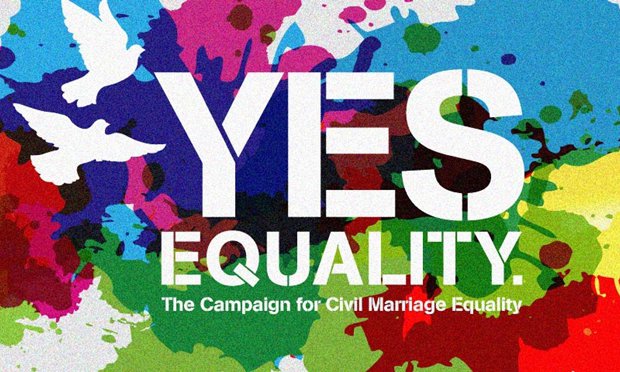
If the Irish example has shown us anything, it is the capacity for a national vote to change people’s perspectives on gay and lesbian rights.
yes-equality

With Irish voters overwhelming voting yes in favour of marriage equality over the weekend, debate has turned to whether Australia should have a similar vote. While some politicians have argued in favour of referendum, the idea has been thoroughly rejected my marriage equality activists. Advocates have labeled a referendum expensive, divisive and a waste of time.

I have often been skeptical of the goals of the marriage equality movement, and in turn am not sure I like the idea of spending a year of national debate on this issue. Yet, at the same time, I don’t understand the opposition to a referendum.

There is no legal need for a referendum in Australia. Unlike the Irish vote, which was required in order to change the constitution, marriage in Australia can only be decided by our Parliament. This is why leading constitutional expert George Williams stated that any marriage referendum would amount to a “large opinion poll.”

However, I can see real value in conducting this opinion poll.

The major opposition to a marriage referendum boils down to the idea that it is not up to everyday citizens to vote on the civil rights of particular minorities. People fear a campaign will allow anti-marriage equality campaigners to roll out the homophobia and in turn force a no vote. This, they argue would be a major setback for the cause.

This, to me, is a very odd view of democracy. Why is it okay for politicians to vote on the civil rights of minorities, but not for the general population? We seem to be placing a lot of trust in our political class when they don’t deserve it. The fact we still haven’t got marriage equality despite a majority of Australians supporting it is probably the best example of this. It seems the Australian population is far more trustworthy on civil rights for minority groups than our politicians.

Herein lies how a referendum on marriage equality could be so beneficial. If the Irish example has shown us anything it is the capacity for a national vote to change people’s perspectives on gay and lesbian rights. With a vote on the agenda advocates seised an opportunity to go street by street, door by door, to have conversations with Irish citizens. In turn the campaign not only resulted in marriage equality, but also forced the conversations needed to change perspectives on sexual diversity. Campaigners forced what has been heralded as a “social revolution” — a massive change in perspectives in the once very conservative country.

A marriage equality vote could have similar impacts in Australia. By focusing people’s minds on a vote we have the capacity to open up debate about LGBTIQ issues in ways like no other. This goes beyond marriage — a vote could open debate on the range of issues facing queer people — from high rates of depression and suicide to the rights of those in polyamorous relationships. This to me is far more exciting than current strategies, which are focused heavily around lobbying politicians and large advertising buys.

Of course there are risks. A vote gives homophobes a platforms as well, and there is a chance marriage advocates could lose. But one could well argue that homophobes already have a platform in parliament – and what better way to shut that down than by a national vote going against them? More than that if we do lose (which I think is unlikely) that would highlight that when it comes to acceptance of gays and lesbians we may not have not come as far as we’d thought. While that would be a hard to accept maybe it would give us the boot in the arse to campaign even harder.

This is why I am so confused at the opposition to a referendum. Even if it is just one big opinion poll, it is an opinion poll that has the capacity to change the hearts and minds of people across Australia. A national vote could push forward a queer agenda well beyond the passage of marriage equality — and that is exciting.

Yet, it is for that reason I suspect so many are so reticent. Because, as I’ve argued in the past, expanding the debate in this way doesn’t seem to be the goal of many in the marriage equality movement. Instead the movement seems largely focused on gaining one new right for a small section of the queer community. When that is your focus it is clear working through Parliament is the best option — taking the issue to actual voters has the potential to be far too messy. But I think getting messy is exactly what we need.

You want a national vote on marriage equality? I say bring it on! I’m sure we’ll win, and I’m even more confident it could have impacts for queer people that go well beyond marriage.

First draft of novel finished

Today is officially the date.

IMG_4102

After about a year’s work I have finished and printed off the first draft of my novel.

This is very much a first draft! There is a lot of work to do. But for me it has highlighted how important finishing a first draft is.

While I have been enthusiastic about my book over the past few months I know my energy about it has been lagging. It has been very difficult for me to see an end point — to actually picture a world where I could finish something and have it at a publishable level. That is why I wanted to push through to finish a draft and having done so I feel a huge weight off my shoulders. I suddenly feel like I could actually finish this thing. Yes, there’s HEAPS of work to do, but it now seems doable. I know what I need to do and can see myself finishing it.

But more important than that, I’ve found that in finishing the book I discovered lots of new things about my characters. The trajectory of the characters changed in ways that I didn’t expect, resulting in me needing to edit things even at the start of the book. These are chapters I have edited numerous times — edits I have now realised were a waste of time.  This is a bit of a pain, but also a good realisation of how I work — it has become clear that I shouldn’t really start editing until I have finished a first draft (good to remember for next time).

Anyway, exciting times! I have now taken to start editing by pen at a cafe nearby (see the picture) and I am finding things I had not expected. And I can finally see a final picture of what the book will look like at the end.

I will keep you updated!

Dating two people at once: why I’m polyamorous and proud

Originally published in The Guardian, 25 May, 2015

11150477_10153028324859794_1702698260427495413_n

This is my coming out story. My second one. When I was 16 years old, I first came out as gay.

Coming out then was hard but this time is much harder. This revelation is something I am more fearful about, but I have to come out.

I am polyamorous.

I am dating two people at the same time – James and Martyn. They are both fully aware of and happy with the arrangement and are able to follow suit by dating or having sex with other people if they wish (as am I).

My partner James and I have been together for nine years. We met on a drunken night during my first week at university. James was in his third year and I had turned 18 the week before.

Straight off the bat James suggested we should be in an open relationship, meaning we’d be allowed to have sex with other people if we wanted. At first I didn’t like it but I agreed. At the time I felt I had little to lose.

James and I moved in together a year later and for many years we rarely acted on our agreement – there was only the occasional hookup. But the arrangement was always there. It was an acknowledgement that we could be sexually attracted to other people and act on that, yet still love and be in a relationship with one another.

Over time I grew more comfortable about it and slowly we developed our understanding of these ideas. When we moved to Brisbane a few years ago we became friends with others in polyamorous relationships. We each developed crushes and realised, in practice, that we could have feelings for other people yet still love each other.

Then came Martyn. James’s friend first, Martyn lives in Edinburgh – they met through roller derby circles and connected on Tumblr.

When visiting Edinburgh last year James, Martyn and I caught up for a drink. By the time James and I got home to Brisbane, Martyn and I were chatting on Facebook and Skype on a regular basis.

Soon James was calling him my “Scottish boyfriend” and not long later Martyn and I made that official. Martyn visited us in Australia and now I am spending the year in Edinburgh living with him.

Over the past year I have faced the same anxiety and fears as I did as a nervous gay teen. But coming out as poly has required vastly more explanation – not only have I faced the fear of people reacting badly, I have faced a barrage of questions about “how it works”. So here is the simple explanation:

My relationships are based on a simple philosophy – there is no limit to the amount of love we can feel for other people. Loving someone does not diminish the love we have for others. Just because I love vanilla ice cream doesn’t mean I can’t love chocolate ice cream as well.

I love Martyn and I love him deeply. So while I’ve obviously been with James a lot longer, my relationship with Martyn is not some fling or a phase. It is a serious relationship and one I see lasting a long time.

Of course, just like any other relationship, this brings challenges. Our relationships require work to ensure we are all feeling happy and secure. It is here that communication is essential. Most people in polyamorous relationships develop “relationship agreements” outlining the emotional and logistical work we do to keep them strong.

Ours cover a number of topics. First and foremost they deal with sex and other relationships. I have agreed with both James and Martyn, for example, that I will tell them if I have a sex or develop an emotional connection with someone else and they are required to do the same.

Our agreements cover when we are required to tell each other and the level of detail we give. In doing so “cheating” is no longer about breaching fidelity but rather about breaking these agreements. Interactions outside our relationships are acceptable as long as we are open and honest about them.

Our agreements also cover who we have sex with and how we have sex. Firstly, no, we don’t have lots of threesomes. While there are many people who are engaged in triad relationships (in which three people are all dating/having sex with each other) James and Martyn do not see each other in that way. They are friends. We have also agreed there are people we aren’t allowed to have sex with (for example ex-partners and good friends). On top of this, we make sure to practise safer sex. We consider this essential to ensuring the three of us are healthy and secure.

But our agreements aren’t just about sex. Poly relationships also bring a range of logistical issues. The three of us have only spent a month in the same city to date but we learned a lot in that time. We had to discuss sleeping arrangements, questions of sex within the house and what activities we’d do all together or as couples. All polyamorous people arrange this differently. Some set up rosters for sleeping and social engagements, others use Google Calendar, and others organise regular date nights to ensure everyone is included. It is a process of constant communication, with everybody figuring out what works best for them.

That communication is important between James and Martyn as well. As I said earlier, they were friends before I met Martyn and that continues. The two often chat on Skype and Facebook and, when in the same city, they train and play roller derby together.

Of course this has been an emotional rollercoaster at times. The most common question I face is “how do you deal with jealousy?”. We all deal with it differently.

I’ve definitely had times where I’ve wanted to crawl into bed to hide from the anxiety while my partner is with someone else. At the same time, jealousy is just one emotion and it is one that does not dominate my life. In fact, if my partner being with someone else makes him happy then that makes me happy too. We in the poly community call this compersion.

Even from those who consider themselves to be ‘lovers, not haters’ we have often faced derision and discrimination
The biggest emotional challenge, however, has been the social barriers we’ve encountered. Along with the questions we’ve faced, James, Martyn and I have all faced a range of prejudice – even from those I consider to have progressive social and political values.

Unlike many others I have been very lucky. I have not lost my children, nor lost any friends or family, owing to my relationship status. But our collective coming out has been met with differing levels of hostility, derision and bewilderment.

Martyn, for example, has been told by friends that he should “be careful” that I’m not “using him”. I have had many insinuate – openly or otherwise – that I am being selfish, judging me for the way I am “treating James”. More commonly though, I have often been told how “weird” my relationships are; a subtle form of judging that follows me wherever I go.

I am not surprised by this but it hurts. And it definitely confuses. Polyamory is based on the simple principle that love is limitless. To me there is little more beautiful than that. Yet even from those who consider themselves to be “lovers, not haters” we have often faced derision and discrimination.

That is why, despite my reservations, I – like many in my community – feel an ever-greater need to be out. I write this explanation as a call to embrace poly people and our relationships. That doesn’t mean I think everyone should become polyamorous, although I believe everyone should think about whether it would work for them.

Even if you decide against it, it’s time to embrace those who are. That should mean fighting for more legal rights for those of us who choose to live this way. It is much more difficult for heterosexual people in polyamorous relationships to gain legal rights than it is for a gay monogamous couple.

Acceptance for me would mean making sure Martyn is treated as a full member of my family and friendship group (just as James has been), talking to me about him as one would about James, and not overwhelming me with questions about “how it works” (I don’t mind the odd question but it does get tiring). Many have already done this, but it is not something I should have to ask for. We’re not any stranger than anybody in a monogamous relationship and it would be nice to be treated like that. Relationships are infinitely diverse.

I am polyamorous and I am proud.

Review: Sex at Dawn

As part of my research into ‘Sexy Capitalism’ I recently read the book by Christopher Ryan and Cacilda Jethá: Sex at Dawn: The Prehistoric Origins of Modern Sexuality.

Sex at Dawn for me was a revelation. Well maybe not a revelation, but certainly an exciting and perspective-changing piece of work. The book dives deep into our sexual history and provides a convincing account of how our predominant stories about this history (i.e. that the nuclear family and the patriarchy) is simply false. As the authors state:

“Deep conflicts rage at the heart of modern sexuality. Our cultivated ignorance is devastating. The campaign to obscure the true nature of our species’ sexuality leaves half our marriages collapsing under an unstoppable tide of swirling sexual frustration, libido- killing boredom, impulsive betrayal, dysfunction, confusion, and shame. Serial monogamy stretches before (and behind) many of us like an archipelago of failure: isolated islands of transitory happiness in a cold, dark sea of disappointment. And how many of the couples who manage to stay together for the long haul have done so by resigning themselves to sacrificing their eroticism on the altar of three of life’s irreplaceable joys: family stability, companionship, and emotional, if not sexual, intimacy? Are those who innocently aspire to these joys cursed by nature to preside over the slow strangulation of their partner’s libido?”

The book starts with the premise of what the authors call the “standard narrative of human sexual evolution”. This is not new stuff and if you are a human you are likely to have heard this story many times. It goes something like this (this is the truncated version):

1.) Boy meets girl

2.) Boy and girl asses one another’s mate value from perspectives based upon their differing reproductive agenda/capacities.

– he looks for healthiness and sexual fidelity

– she looks for wealth and social status

3.) Boy gets girl: assuming they meet one another’s criteria, they “mate” forming a long-term paid bond – the “fundamental condition of the human species”

Our stories are normally much more romantic than this, but at the most basic level this narratives dominates our telling of human sexual history.

This story is based on a few assumptions. A woman needs a man who has a high level of wealth and social status to ensure he can protect her and look after their children. In return a man demands fidelity to ensure the children he is looking after are his. A man is not going to spend lots of energy on another’s genes. In doing so monogamy, and male domination over females, is in our nature — it is what we have always done to survive.

Ryan and Jethá however take a contrarian view. They argue this story is not about something that is ‘natural’ but is rather the result of particular social developments. They offer a range of evidence to support this and it is impossible to cover all of it in one review (you should just read the book) but here are a couple of stand outs.

First, Ryan and Jethá look at our closest biological cousins, the apes. What’s interesting here is the many myths that exist within or understandings of apes — primarily because when it comes to sexuality different ape species are very different. For example, many advocates of the standard narrative point to the existence of gibbons, who are completely monogamous, to back up their claims. But as Ryan and Jethá point out, our closest relations are not gibbons, but are in fact, bonobos. And when you look at bonobos you will find a range of interesting behaviours. Bonobos live in female-centered societies, war is rare and absent, and sex serves as an important social function. Bonobos are polyamorous with both male and female apes having regular sex with multiple partners. If you want to look at our extended family therefore, they argue, you are better looking at bonobos than at gibbons.

The authors then back this up with biological and anthropological evidence looking at human beings. Again, so much to cover, but for example, they argue that human sexual organs are evolved to be ready and raring for sex at any time. This evidence ranges from the fact that women can and do have sex at any point in their menstrual cycle (which differs from most mammals) to the existence of male testicles on the outside of the body, which allows men to have sex at any point of time. Beyond this, the two argue that women in particular are biologically evolved to have sex with multiple partners — with evidence ranging women’s ability to have multiple orgasms in a single session (which largely differs from men) to the way in which women make lots of noise during sex (which Ryan and Jethá argue is an adaptation designed so women can call potential other mates during sexual activity).

Finally, Ryan and Jethá use a bunch of anthropological evidence to back up all of these claims. Anthropological evidence around the existence of polyamorous hunter gatherer societies is not new, but this is interesting nonetheless. The authors for example look at the Mosua in China, a polyamorous society in which women and men have sex with many partners and where children are looked after by mothers and their immediate relations (the idea of a ‘father’ is non existent). In this society there is no shame associated with this — people have sex, enjoy it and do it proudly.

Brought together all of this evidence is convincing. Ryan and Jethá produce an extremely excellent piece of work, which, while research heavy is entertaining and very funny. They actively convinced me of our sexual history, leaving me with a greater desire to investigate more into this topic. It is definitely worth a read.

However, and this is a big however, I have a concern. I fear that basing this work on biological determinism (i.e. that ‘polyamory is natural’) could eventually undermine their claims. That is the topic of another blog post however and one to come!

Remembering LGBT history didn’t start with Stonewall

Originally published in The Advocate, 19 May 2015

The long arc of gay history means there will be wins — like the story of Victorian-era cross-dressers Fanny and Stella — and losses, like Russia’s growing intolerance.

Fanny and Stella (Frederick Park and Ernest Boulton) in 1868

Fanny and Stella (Frederick Park and Ernest Boulton) in 1868

Maybe you’ve heard of the pioneering trans* activists Fanny and Stella, who were charged for indecency in Victorian Britain 25 years before Oscar Wilde. Maybe you haven’t? Up until the announcement of a new play based on their lives by writer Glenn Chandler — appropriately named Fanny & Stella — I certainly had not. Yet, reading about them, it has become clear how important they were, and how tragic it is that most of us probably don’t know who they are.

Chandler’s play is now being performed in London. It follows the story of cross-dressing gays Frederick Park and Ernest Boulton, a.k.a. Fanny and Stella, who were arrested in 1870 for wearing women’s clothes to a play and charged with “conspiring to incite others to commit unnatural offences.” After a trial that attracted huge publicity, the two were acquitted — partly because doctors who inspected the men couldn’t prove they had anal sex. Both Fanny and Stella, who performed throughout London in men’s and women’s clothing, hoped their success in court would be a catalyst for change in the antigay laws of the time (sadly, it wasn’t).

The play is exciting. The retelling of queer history is important. Yet at the same time I cannot help but be disappointed at my lack of knowledge of these two pioneers as well as many others of their time. I suspect I am not the only one. When it comes to remembering queer history we’re pretty bad at it.

I’m not talking here about our modern history. The stories of the past 40 years, from the Stonewall Riots to Harvey Milk to the AIDS crisis to the growth of the marriage equality movement, are largely imprinted on our collective memory. Yet that seems to be the limit of it. Queer history is often written as if it started June 28, 1969, the date of Stonewall.

Yet, our story goes much deeper than that. A quick look and you can find some amazing things. What about Oscar Wilde, who was not as lucky as Fanny and Stella, and was sentenced to hard labor for “gross indecency”? Or how about Magnus Hirschfeld, a gay, Jewish, left-wing occasional transvestite, who developed the Berlin Institute of Sexual Research in 1919? Hirschfeld had to flee Germany in the 1930s, watching as his entire library was set alight.

These sorts of stories run throughout our history. Stories of pioneers and campaigners, and of movements that changed our society for the better. Our history is far deeper and more varied than just what’s happened in the last 40 years.

This is really important. Through pointing to the heroes and heroines of our past we can draw greater connections to our modern struggle. Just as Joan of Arc and the women of the suffragist movement have become important modern feminist icons, so should Fanny and Stella, Wilde and Hirschfeld (among many others!) become icons of the queer movement.

More than that, understanding this history is essential to ensuring the continued progression of LGBTIQ rights. In recent years we have begun to talk as though the march of queer liberation is “inevitable.” But what if it wasn’t as simple as that?

It is a little-known story that the Soviet Union — now one of the most homophobic nations on earth — was at the forefront of gay rights in the early 20th century. In the aftermath of the Russian Revolution, all offenses related to homosexuality were removed from the criminal code (well before this happened in much of the Western world). In fact, if you look even further into Russian history you will see a very tolerant approach to homosexuality. This is a very different picture from the one we see in Russia now. After a decade of sweeping changes for LGBT rights in developed nations, Russia turned quickly against queer people. Suddenly all the progress was lost.

Here is the true importance of understanding our history. If we see history only through the lens of the past 40 years in the U.S., it is easy to paint a picture of constant progress. It is why so many are bewildered by the actions of Russia — how could a country turn on gays like this in the 21st century?

But if you take a longer view you realize our story is more complex. It is one of constant struggle — a story of progress being followed by setbacks, only to be met with resistance once again. This is not to make us depressed about the gains we’ve made but to ensure we collectively protect ourselves from returning to this fate. If we understand our history better, we don’t let ourselves lose the progress we’ve made.

Speaking about Fanny and Stella, playwright Glenn Chandler stated, “The sad thing is that they really thought their case would change things, they thought a change in the law was coming, but then in two decades we have the Oscar Wilde trial and it takes another two centuries for change to come.”

Chandler points out that Victorian society actually became more conservative in the years following their trial. If Fanny and Stella’s case was held in the era of Oscar Wilde, there is every chance they could have ended up behind bars. The progress they hoped for vanished before their eyes. We are making great progress, but the past shows us this can be reversed in a hearbeat. Knowing our history can help us stop that from happening.