Equality and polyamory: why early humans weren’t The Flintstones

Originally published in The Guardian, Tuesday 19 May 2015

A study released last week presented evidence that prehistoric men and women lived in relative equality. But is the truth even further from the nuclear narrative?
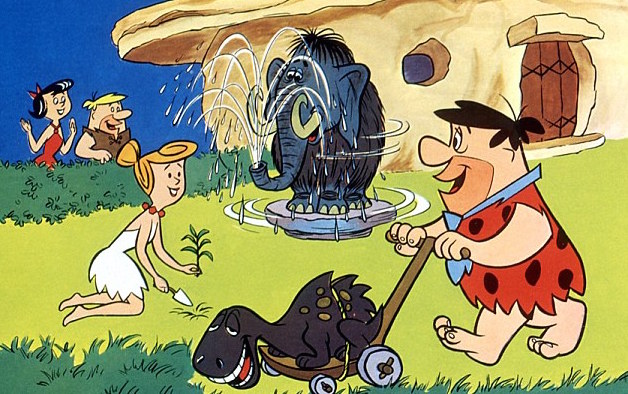
Flintstones
Last week, scientists from University College London released a paper presenting evidence that men and women in early society lived in relative equality. The paper challenges much of our understanding of human history, a fact not lost on the scientists. Mark Dyble, the study’s lead author, stated “sexual equality is one of the important changes that distinguishes humans. It hasn’t really been highlighted before.”

Despite Dyble’s comments, however, this paper isn’t the first foray into the issue. In fact, it represents another shot fired in a debate between scientific and anthropological communities that has been raging for centuries. It’s a debate that asks some fundamental questions: who are we, and how did we become the society we are today?
Our modern picture of prehistoric societies, or what we can call the “standard narrative of prehistory” looks a lot like The Flintstones. The narrative goes that we have always lived in nuclear families. Men have always gone out to work or hunt, while women stayed at home to look after the house and the children. The nuclear family and the patriarchy are as old as society itself.

The narrative is multifaceted, but has strong roots in biological science, which can probably be traced back to Charles Darwin’s theory of sexual selection. Darwin’s premise was that due to their need to carry and nurture a child women have a greater investment in offspring than men. Women are therefore significantly more hesitant to participate in sexual activity, creating conflicting sexual agendas between the two genders.

This creates a rather awkward situation. With women producing such “unusually helpless and dependent offspring”, they require a mate who not only has good genes, but is able to provide goods and services (i.e. shelter, meat and protection) to the woman and her child. However, men are unwilling to provide women with the support they require unless they have certainty the children are theirs — otherwise they are providing support to the genes of another man. In turn men demand fidelity; an assurance their genetic line is being maintained.

Helen Fisher calls this ‘The Sex Contract’, but the authors of Sex at Dawn, Christopher Ryan and Cacilda Jethá, are a little more cutting in their analysis: “the standard narrative of heterosexual interaction boils down to prostitution: a woman exchanges her sexual services for access to resources … Darwin says your mother’s a whore. Simple as that.”

Herein, so some scientists say, lie the roots of our nuclear family and the patriarchy. Our gendered hierarchy is based on an innate biological need for women to be supported by men. The very capacity for women to give birth to children places them in a lower position within society.

Scientists use a whole range of other evidence to support this narrative. Many for example point our closest relatives. Scientists have researched monogamy of gibbons and the sexual hierarchies of chimpanzees to point to a “natural” expression of our innate desires.

Other scientists use human biology. A common example is women’s apparently weak libido. Discussing his book Why Can’t a Woman be More Like a Man? released last year, for example, Lewis Wolpert states: “About half of men think about sex every day or several times a day, which fits with my own experience, while only 20 per cent of women think about sex equally often. Men are far more likely to be sexually promiscuous, a throwback to evolution where procreation was all-important.”

If you subscribe to the theory of a sex contract this is logical. A lower sex drive ensures women are more selective in their sexual decisions, making certain that they only mate with high-quality men. Women, so some scientists say, are evolutionarily designed to be selective in their mates.

Yet, for centuries many have questioned the logic, and the biology, of the standard narrative.

The first real splash in this arena came from the anthropologist Lewis Morgan, and his book Ancient Society. In the book Morgan presented the results of his study of the Iroquois, a Native American hunter-gatherer society in upstate New York. The Iroquois, Morgan observed, lived in large family units based on polyamorous relationships, in which men and women lived in general equality.
Morgan’s work hit a broader audience when it was taken up by Friedrich Engels (most famous for being the co-author of the The Communist Manifesto) in his book The Origin of Family, Private Property and the State. Engels drew on Morgan’s data, as well as evidence from around the world to argue that prehistoric societies lived in what he called “primitive communism”. Other anthropologists now call this “fierce egalitarianism”: societies where families were based on polyamory and in which people lived in active equality (i.e. equality is enforced).

Morgan and Engels were not painting a picture of a “noble savage”. Humans were not egalitarian nor polyamorous because of their social conscience, but because of need. Hunter-gather societies were based largely on small roaming clans where men engaged in hunting, while women’s roles focused around gathering roots, fruit and berries, as well as looking after the “home”. In these societies community was everything. People survived through the support of their clan and therefore sharing and working within their clan was essential. This crossed over into sex as well.

Polyamory helped foster strong networks, where it became everyone’s responsibility to look after children. As Christopher Ryan states: “These overlapping, intersecting sexual relationships strengthened group cohesion and could offer a measure of security in an uncertain world.” The same can be said for our other social hierarchies. As Jared Diamond explains, with no ability or need to store or hoard resources, “there can be no kings, no class of social parasites who grow fat on food seized from others”. Hunting and gathering enforced social equality. It was the only way people could survive.

While initially developed in the 1800s, these theories died down somewhat in the early 20th century. With Engels’ connection to Marx, many of these ideas were lost in the great philosophical debate of the Cold War. Many second wave feminists, led primarily by Simone de Beauvoir in her book The Second Sex, also argued against Engels’ ideas.

Recently however, these theories have had something of a renaissance. On top of Dyble’s study last week, new anthropological and scientific evidence backs up this challenge to the standard narrative. In 2012 Katherine Starkweather and Raymond Hames conducted a survey of examples on ‘non-classical polyandry’, discovering the phenomenon existed in many more societies than previously thought.

In another example Stephen Beckman and Paul Valentine examined the phenomenon of ‘partible paternity’ in tribes in South America: the belief that babies are made up from the culmination of the spermatozoa of multiple males. This belief, which is common in tribes in the Amazon requires polyamorous sexual activity by women, and that men share the load of supporting children.

And then there is the example of the Mosua in China, a society in which people are highly promiscuous and where there is no shame associated with this. Mosua women have a high level of authority, with children being looked after by a child’s mother and her relatives. Fathers have no role in the upbringing of a child — in fact the Mosua have no word to express the concept of “father”.

In Sex at Dawn, released in 2010, Ryan and Jethá provided a range of biological evidence to back up this anthropological data. Let’s take a look at their counteractions to the two examples produced earlier: the behaviour of our closest relatives and women’s apparently low libido.

Ryan and Jethá argue that while yes, gibbons and chimpanzees are close relatives, our closest relatives are in fact bonobos. Bonobos live in female-centered societies, where war is rare and sex serves an important social function. They are polyamorous, with both male and female apes having regular sex with multiple partners. This looks more like the societies Morgan and Engels were describing.

When it comes to women’s “low libido”, Ryan and Jethá simply disagree, arguing in fact that women have evolved for sex with multiple partners. They look, for example, at women’s ability to have multiple orgasms in a sexual session, to have sex at any time during their menstrual cycle and their propensity to make a lot of noise during sex — which they argue is a prehistoric mating call to encourage more men to come and join in. These evolutionary traits have occurred, they argue, to ensure breeding is successful.

In short, Dyble’s paper is unlikely to provide the conclusion to a battle that has been raging for at least two centuries.

The paper, however, certainly is another nail in the coffin of the standard narrative of prehistory. One this seems clear: our history is much more complex than previously thought. How complex, we may never know. Without a time machine it is impossible to confirm. But we now can be certain that things in the past were very different to the standard narrative. We are not all just versions of the modern stone age family.

Sex and Society: The Rise of the Nuclear Family

Welcome to blog two of my six part series, Sex and Society. This is a series I am running in conjunction with the awesome folks at Left Flank. If you have not read the first piece: stop! Turn around and go here to read it first. Then come back. If you’ve read that one, please continue!

****

Before the rise of the plough, society in Egypt was matriarchal

How did nuclear families become the norm?

In last week’s post I discussed our prevailing modern story about sex and the family. This story tells us that both monogamy and the patriarchy are inherent to our nature. They are as old as society itself. Yet, as I showed, many anthropologists and biologists strongly argue the evidence suggests something different. In fact during prehistoric times families were largely polyamorous and in lots of societies women had a high level of authority and control.

So how did we get to where we are? That is the topic of this week’s post.

The prehistoric polyamorous and egalitarian societies we discussed last week were disrupted primarily through one invention: agriculture.

Agriculture has probably had the greatest impact of any invention of human society. It fundamentally changed the way we lived. Hunter-gatherer societies lived largely or completely by subsistence. Different societies lived in different ways, but people primarily lived in small roaming clans, rarely settling in a single place for too long. Constantly on the move, we humans had no means, nor need, to hoard resources. We gathered berries, roots and other vegetable growth, or hunted and fished; working only for a few hours per day to gather what we needed to survive.

Agriculture changed all of this. With its development, particularly as processes became more intensive (through the use of the plough and irrigation) humans were suddenly able to extract significantly more resources. We started to accumulate surplus, or what we now call wealth. As Sharon Smith argues:

This was a turning point for human society, for it meant that, over time, production for use could be replaced by production for exchange and eventually for profit – leading to the rise of the first class societies some 6,000 years ago (first in Mesopotamia, followed a few hundred years later by Egypt, Iran, the Indus Valley and China).

Instead of roaming in small clans we settled in towns and on farms to accumulate wealth. We no longer lived by subsistence but instead started trading resources with those around us in order to survive. In turn we had to produce more and more so we could have more resources to trade.

The impacts of this were obviously huge, but not necessarily in a positive way. Scientist and author Jared Diamond for example called this shift “the worst mistake in the history of the human race”. Agriculture brought with it, he said, “the social and sexual inequality, disease and despotism, that curse our existence”. Evidence suggests agriculture resulted in an intensification of work for what ended up being a less varied diet. In turn the health and average life span of communities dropped dramatically.

The egalitarianism of the past disappeared as well. Agriculture led to greater specialisation of labour, creating new social roles. This division created the first social hierarchies — the owning classes who managed resources and the working classes who worked on farms. With the potential for individual economic gain some families became wealthier than others, creating the first stage of our modern class system.

These social changes were felt most deeply within the family. Engels argues that with the development of agriculture men’s roles moved away from hunting and towards looking after the farm. Since men were largely in charge of sourcing protein during hunter-gatherer societies it made sense they continued this role by looking after the domesticated animals of the farm. Moreover, since it was difficult for women to complete heavy agricultural tasks while nursing a child this job landed in male laps. This is a very important shift. The farm or, more specifically according to Engels, domesticated cattle, was the first real private property. Farms and domesticated animals were owned by individuals, rather than belonging to the entirety of the community. Through taking control of agriculture, therefore, men also took control of private property. Men took control of the vast majority of wealth in a society.

This impact was compounded by the fact that agriculture required a greater focus on reproduction. In hunter-gatherer societies families were kept small, with people only reproducing in order to replace existing community members. In fact, the authors of Sex at Dawn, Christopher Ryan and Cacila Jethá, argue there is evidence that hunter-gatherer societies practiced a high level of infanticide — killing off babies that were seen as excess to the needs of the community. This was now all turned on its head. Agriculture required significantly more labour than hunting and gathering, therefore requiring more human resources. Families needed children to help look after their farms. This is why we see a significant increase in population after the development of agriculture. While men were playing a greater role in production, therefore, women’s roles turned more towards reproduction. It was now women’s role to reproduce, to produce workers for the farm.

Engels

And here, Engels argued, is how we saw a shift in the power relations of the family. With men now taking control of the production of resources they needed someone who they could pass these resources onto. They needed someone who could inherit the wealth they had built. But in the polyamorous families of the past men had no avenue to do this — they did not know who their children were and, in turn, who they could pass their wealth onto. Hence the new demand for monogamy. Men now demanded monogamy in return for looking after (i.e. providing resources for) women and children. That way they could have a guarantee that the children they were passing their resources onto were their’s. This slowly led to the defeat of the matrilineal society. As men took control of production so did they take control of the family, and then so came the introduction of patrilineal descent. Engels described it like this:

The overthrow of mother right was the world historic defeat of the female sex. The man took command in the home also; the woman was degraded and reduced to servitude; shebecame the slave of his lust and a mere instrument for the production of children. . . . Inorder to make certain of the wife’s fidelity and therefore the paternity of his children, she isdelivered over unconditionally into the power of the husband; if he kills her, he is onlyexercising his rights.

What’s important here is that the sexual division of labour did not actually change significantly from hunter-gatherer societies to agricultural societies. Men were still largely in charge of the “outside world”, women were still in charge of reproduction and the household. But as class society developed power shifted significantly away from the household, and so the relative influence of the genders shifted as well. In the book Toward an Anthropology of Women Karen Sacks argues:

Private property transformed the relations between men and women within the household only because it also radically changed the political and economic relations in the larger society. For Engels the new wealth in domesticated animals meant that there was a surplus of goods available for exchange between productive units. With time, production by men specifically for exchange purposes developed, expanded, and came to overshadow the household’s production for use… As production of exchange eclipsed production for use, it changed the nature of the household, the significance of women’s work within it, and consequently women’s position in society.

That is the story. Monogamy and the patriarchy are not natural, they are part of a particular economic development — the rise of agriculture, private property and a class based system.

In our next post we will explore this a little more by looking at capitalism and the modern patriarchy. There have been many critiques of Engels, which we will explore. But we will also look at the evidence that back these theories up, asking the question how have these gender roles continued to this day?

– See more at: http://left-flank.org/2015/05/15/sex-and-society-2-the-rise-of-the-nuclear-family/#sthash.XWsG5Jdo.dpuf

Sex, guys and video games

Is an addiction to porn and video games creating a crisis among young men?
120523015438-demise-guys-teenagers-video-games-story-top

That is the view of Philip Zimbardo, the psychologist famous for the Stanford Prison Experiment (read about it, it’s fascinating). Zimbardo has released a new book, which through studying 20,000 young men, argues a growing addiction to online pornography and video games is creating a ‘masculinity crisis’. He states:

“It (the addiction) begins to change brain function. It begins to change the reward centre of the brain, and produces a kind of excitement and addiction. What I’m saying is – boys’ brains are becoming digitally rewired.”

This is not the first time we’ve heard about a modern ‘crisis in masculinity’. Many are becoming increasingly concerned with the trajectories of young men in our society, and for good reason. Look at mental health, for example. In the United Kingdom, while rates of female suicides have remained steady over the past forty years, male suicide rates have increased significantly. Men are now between three to five times more likely to commit suicide than women. The Australian Bureau of Statistics finds similar data, with men being three times more likely to commit suicide than women. Something is certainly going on.

Yet, as a young person, I cannot help but feel we are as a society, Zimbardo included, largely missing the point.

Clearly some of Zimbardo’s results are concerning. He talks about young men who play video games up to 15 hours a day. Research show people with these sorts of addictions have similar brain functioning to those addicted to drugs or alcohol. It is clearly not healthy.

Yet, it is far too easy to worked up about this ‘crisis’ and then attribute it to the wrong factors when real problems are discovered.

It may be hard to miss, given all the moral panic about the issue, that despite potential increasing addiction to porn and video games, alcohol abuse is actually going down. The same can be said for the number of assaults in our society. While many are whipping up a frenzy about a drunken violent young generation, the simple facts don’t hold this up to be true.

But that doesn’t mean there isn’t something wrong. The problem is that we’re just blind to the real problem. Zimbardo for example seems to place the blame entirely onto porn and video games, but the issues are much more complex than that. Pornography and video games are not the cause of the problem, they are a symptom. To understand this we should look at alcohol and drug addiction. Johann Hari argues these sorts of addictions are not due to some ‘moral failing’ or even to chemicals reaction in the brain. Instead, he says: “addiction is an adaptation. It’s not you. It’s your cage.” This can be said about porn and video games as well. This is not about the failings of young men, who have become too “lazy” or “selfish”. It is about a cage that has been placed around young people that is making it difficult for many to function.

Now, before anyone gets worried here, no, I’m not about to blame feminism. While many “mens rights organisations” have blamed this crisis on the growth of feminism, I stand with Steve Biddulph, who says “the women’s movement was the most positive event of the 20th century.” There is no doubt that feminism changed male roles in our society, yet that is a change that has been needed for a long time.

The problem however is much deeper than this, and it is one that affects people of all genders. We are facing aWestern Cultural Crisis. Our society has become obsessed with work, consumerism and productivity,disconnecting people from the social bonds that make us human. And young people are facing the brunt of this the worst. We are told we must work hard to succeed, yet we are struggling in the economy of today. Young people face increasing student debts, more difficulty finding secure jobs and the idea of buying a house is now laughable for most people my age. Add in the stress of climate change and it’s no wonder many young people are worried, pessimistic and depressed.

And how does our society deal with this? Young people face an almost daily barrage of being told by we are ‘lazy’ or that we are ‘self-obsessed’. We face an impossible economy and are then lambasted for struggling in it. It’s no wonder so many young men are deciding to hide in their rooms, preferring to play video games and watch porn.

In his comments about his book, Zimbardo gave an example of the mindset of someone addicted to porn and video games. He said:

“When I’m in class, I’ll wish I was playing World of Warcraft. When I’m with a girl, I’ll wish I was watching pornography, because I’ll never get rejected.”

Reading that I thought this person was speaking about fear of being rejected by someone we are attracted to — a pretty common feeling. But it seems much deeper than that. Young people, men and women, are not just being rejected romantically, we are facing a much broader rejection from society. And while much of the frenzy about this amounts to little more than moral panic, there is a real crisis happening. A crisis that goes to the root of our culture. Instead of just finger waving and calling us all lazy and selfish it’s time our society dealt with the real issue at hand.

This article was originally published on SBS News. Click here to view the original. © All rights reserved.

Working on some big projects

A couple of weeks ago TimeHop showed me a tweet from my first ever article published online. Appearing four years ago in New Matilda the article was titled Obama Goes the Chop.

I had been blogging before this and writing for FUSE Magazine, but for some reason this article stands out as the official start of me being a writer. It was the first time I realised I could do something serious with what I then considered to be a hobby. 

I have been writing a lot since on blogs and online and recently have been working on a couple of ideas for books. And here are those plans!

By Jelizawjeta P. (Own work) [CC BY-SA 3.0 (http://creativecommons.org/licenses/by-sa/3.0)], via Wikimedia Commons

I’ll say here that I have always been nervous about talking about writing books. Maybe it’s because I fear I will fail, or potentially because I worry people will think my ideas are stupid. Or alternatively you may all think I’m big headed for speaking them out loud. More importantly though I think that speaking it out loud makes it real — it makes them something I have to follow through on. But that is why I need to do it — I need to force myself to follow through. 

As I said, two books. One fiction. One non-fiction. Here they are.

Fiction – Forgiveness (working title)

This is a book I have been working on for almost two years now and it is quite developed (70,000 words at the moment).

The book follows the story of two characters — John and Irene. John is a convicted murderer who has just been released after fifteen years in prison for killing his girlfriend, Alicia. Irene is Alicia’s mother. Both are dealing with John’s release and the impact the murder is having on their lives. I  wont expand too much more on the plot from there as I don’t want to write in any spoilers and things may change, but hopefully you can get the idea based on that.

As I said I am quite a way through Forgiveness and my plan now is to try and power ahead to finish my first draft. That’s probably about another 10,000 words at the moment. That means buckling down and writing. Then will start the very long editing process.

Non-fiction – Sexy Capitalism (again, a working title!)

Very much a working title Sexy Capitalism aims to be my first foray into really long-form non-fiction.


Sexy Capitalism aims to draw the links between our economics (capitalism) and sex. The book is inspired The Origin of Family, Private Property and the State from Friedrich Engels and I hope to present a modern version to this classic. I want to draw the links between how capitalism still has a major impact on our sexual and familial relations and in particular how the roots of much of our sexual oppression lay in the foundations of capitalist society. It is therefore only through challenging capitalism that we are able to challenge sexual oppression.


This book is in its early stages. I am reading, taking notes, developing ideas and starting to work on proposals for potential publishers. No real text just yet.

So there you have it! My plans for my two books. Writing it down certainly does make me feel like I need to commit, and that is excellent. But you can also expect these books will be a running theme throughout my blog — expects lots of posts on crime books and the justice system as well as on sex, capitalism and the family. 

Like my ideas? Please help! I can always use encouragement, links to interesting articles/books or even people who are willing to chat, read and edit. Let me know.

‘Never again’ must echo through the ages for everyone

War brings out the worst in society, and we mustn’t forget about all of the victims.
Holocaust Memorial Day in Berlin

In the middle of Berlin sits an impressive Holocaust Memorial. Consisting of straight rows of concrete blocks undulating across a grey landscape the memorial was designed to emulate a famous Jewish cemetery in the Czech Republic. In these mass graves so many Jews were buried during the War the ground began to ripple and the tombstones tilted under the pressure.

There is something deeply special about this memorial. It is haunting. Thought provoking. A piece of art that forces you to think about those who lost their lives during this tragedy. Yet, unfortunately,  this memorial is not for everyone. It is only there to remember some of those who have died. Whilst colloquially known as “The Holocaust Memorial”, its official title is actually “The Memorial to the Murdered Jews of Europe.”

The story goes that the German Government built a memorial specifically dedicated to the Jewish victims of the Holocaust as the city was littered with other memorials dedicated to the other victims. While visiting Berlin recently I thought I’d find them. The memorial to the murdered homosexuals is a tiny square concrete box opposite the Memorial to the Murdered Jews. If you blinked you’d miss it. The memorial to the Romani people is a small pond with some glass panels hidden in a park nearby. The memorial to those with mental or physical disabilities is another glass panel even further away. Scattered around the city these memorials pale in comparison to that for the murdered Jews.

It is a trend that runs throughout the stories we tell of the Second World War. Most definitions of The Holocaustdescribe it solely as the genocide of the European Jewish population. That ignores the millions of others who were targeted during the Nazi regime.

Many other ethnic and religious groups were persecuted just as strongly during the Holocaust as the Jews. A particular target were the Romani and Siti, who the Nazis considered to be an “inferior race”. While estimates of their deaths fluctuate it is possible that up to 1.5. million were murdered during the genocide. Other persecuted groups include homosexuals, people with physical and mental disabilities, people of colour, Freemasons andJehovah’s Witnesses.

Yet while these groups make up much of the discussion of Nazi atrocities, it doesn’t end there. The Nazis also engaged in systematic persecution of people in occupied territories. For example, Heinrich Himmler’s Generalplan Ost (General Plan East) planned for the displacement and murder of millions of Slavic and Russian people to make space for German nationals. The murders of people who the Nazis described as ‘sub-humans’, were planned to occur through “‘extermination through labor’ or decimation through malnutrition, disease, and controls on reproduction”. As part of this it is estimated that over the period of the war the Nazis likely murdered over 10 million Slavic people and millions of Russians.

These are people who have been forgotten. Millions of people forgotten. People who were heavily persecuted against, but who have largely been left out of the history books. People whose stories are not being told.

It is tragic. As a gay man I think of what my life would have been like during those years and shudder at the thought that my potential suffering — like that of so many others — would be pushed aside. Yet, this is more worrying than just my hurt feelings. When you forget history you have a tendency to repeat it. After The Holocaust, around the world, we said “never again.” Centuries of persecution against Jewish people had to stop. Yet, I cannot help but feel this dedication is not given to the others who suffered in this tragedy.

Homosexuals for example continued to be targeted well after the war. For decades homosexuals in the Western World faced significant oppression — from the criminalisation of homosexuality to cruel and unusual medical procedures being conducted to cure us of our “illness”. These sorts of forced medical procedures (that were considered horrendous during Nazi times) continue. While no longer targeting homosexuals, recent reports for example showed that Intersex people in Australia regularly face involuntary or coerced sterilisation procedures.

The Romani have it much worse. Romani people remain one of the most highly discriminated against groups in European society. They suffer from high levels of poverty and over recent years have faced forced removals in France and claims in the UK that they are wrecking economic security. While we have fought all levels of persecutions towards Jewish people, Romani and Siti do not seem to have been given the same consideration.

Of course, none of the groups are facing similar crimes to that of the Holocaust. Yet if the Second World War taught us anything it is that to stop a crime like this from ever happening again we must fight discrimination at all levels. Traveling through Europe though it feels like we’re only remembering that message for one group — leaving millions of others behind.

War brings out the worst in society. The Second World War certainly taught us that. On reflection it should teach us something about how we should treat those who have suffered the worst. We have done the right thing by saying “never again” when it comes to Jewish persecution. It’s time we did the same for the others who suffered as well.

Sex and Society: The Prehistoric Family

Flintstones

I said in my introduction to my blog that this wasn’t going to be a blog of opinion and analysis pieces. This will be the exception. Working with my friends at Left Flank, over the next 6 weeks I am writing a series of blogs on the history of sex and the family (you can see the first blog linked at Left Flank here). This series will explore how our ideas of sex and family developed in modern society. How did the modern family evolve? How did the oppression of women and sexual minorities come about and why are these groups still oppressed? What do we need to do to challenge sexual oppression?

This forms part of a lot of work I am doing at the moment and I hope it will be interesting.

To start we need to understand the history of the our most common form of sexual expression: the family. That’s where we will begin today. 

***

Mother duck, father duck, and all the little baby ducks. The family, ruled over and provided for by father, suckled and nurtured by mother seems to us inherent in the natural order.

—Germaine Greer, The Female Eunuch

We’ll start with what we can call the “standard narrative of human sexuality”. This narrative dominates our historical understand of sex and society and is based on one ideal: the nuclear family.

Think about how we picture ancient “cavemen”. We see Fred and Wilma Flintstone — a stable monogamous relationship built around a nuclear-style family. The man goes out to work, or hunt, while the woman stays at home. He is the head of the household and the breadwinner; she looks after the house and nurtures the children. Monogamy and the patriarchy are as old as society itself.

This picture is part of a larger social narrative largely based in biological assumptions about the “opposing genders”. On the one hand the standard narrative goes that women, who produce “unusually helpless and dependent offspring”, require the support of a man to bring up the family. On the other, men, who have an innate, biological need to dominate, are unwilling to provide that support unless they are assured a woman’s offspring is their own. Otherwise they are spending time and energy on the genes of another man. Men demand fidelity — an assurance their genetic line is being maintained. Monogamy and the patriarchy are a natural part of human society.

One element is missing from this story — other forms of sexuality. Apart from quiet discussions about the prevalence of homosexuality in ancient Greek and Roman societies, our history ignores other sexualities. We’ll just not that for this moment because we’ll discuss it a lot more in later blogs.

That is the dominant story. But there is another story — one that questions all of this. The most famous leaders of this alternate story is Friedrich Engels, who is best known for being Karl Marx’s right-hand man and a co-author of The Communist Manifesto. After Marx’s death Engels wrote his own masterpiece — The Origin of Family, Private Property and the State. The Origin draws primarily on the work of anthropologist Lewis Morgan, who studied the Iroquois Indians in upstate New York. Using Lewis’s work, as well as other examples from around the world, Engels argues that prehistoric societies lived in what he called “primitive communism”. Other anthropologists call this “fierce egalitarianism”. In primitive communism families were largely polyamorous and non-hierarchical. People lived in active equality (i.e. people worked hard to make sure everyone was equal) and women were given a high level of authority. Engels’s work has since been backed up by other anthropologists, who have found similar results around the world.

Let’s take a deeper look at these societies.

Canadian Iroquois women making maple sugar (illustration by François Latifau, 1724)

First, it is important to note that Engels did not argue that men and women had the same roles in these societies. In fact, quite the opposite: women were gatherers and carers of the home; while men largely hunted. However, in a system based on hunting and gathering, these roles had very different value to our societies today. Despite common pictures of the male heroically going out to provide all the food for the starving family, this was largely not the case. Hunting was a rather hit and miss game. It was women who provided the majority of the food — gathering berries, fruits, roots and other vegetables. It was the women who were the key breadwinners and providers and therefore importantly the “home” (which was very different to how we know it now) was the centre of economic and social activity. The home was the place of control. In 1724, Father Lafitau described the role of women when discussing the Iroquois Indians:

Nothing … is more real than this superiority of the women. It is essentially the women who embody the Nation, the nobility of blood, the genealogical tree, the sequence of generations and the continuity of families. It is in them that all real authority resides: the land, the fields and all their produce belongs to them: they are the soul of the councils, the arbiters of peace and war.

Women were not desperately in need of ‘support’ from a child’s father. In fact they were the ones who held much of the influence and power. This is where polyamory comes into play. Different societies engaged in polyamory in different ways and for different reasons. For example, numerous societies in South America believed that babies were formed through the collective spermatozoa of different men. Babies would gain qualities from the different sperm provided. Women therefore needed to ensure they had sex with the smart man, the strong man, the fast man and the tall man to ensure their baby had the greatest attributes possible. When babies are born these different men then all play a role in bringing up the child.

The Mosua in China do it differently. While men and women in the Mosua engage in “marriages”, these are very different to way we think of them. Both men and women are free to lead polyamorous lifestyles, with no shame associated with sexual promiscuity. Children are not raised by fathers — in fact the Mosua have no word for “father”. Instead they are raised by mothers and their immediate family. Men are collectively known as “uncles”, with there being absolutely no shame in children not knowing which uncle is their genetic father.

These are just two of many examples, but one theme runs throughout — the need for strong community. This makes sense — hunter-gatherer communities were generally small, and therefore the strength of the community was essential. Everyone knew each other and everyone looked after each other. Polyamory helped foster this. It created strong networks where it became everyone’s responsibility to look after children and provide for the greater community. As Christopher Ryan, co-author of the book Sex at Dawn states: “These overlapping, intersecting sexual relationships strengthened group cohesion and could offer a measure of security in an uncertain world.” This also meant societies were largely “matrilineal”, meaning the bloodline of the family passed on through mothers. In a world where there were no paternity tests, women were the only ones who could confirm the parenthood of their children. Women were the head of the family.

This is a very different story to the one we usually hear. Instead of the nuclear family we had families that were larger and were based on group marriages and polyamorous relationships. Women were given an equal or even higher status than men.

This does not describe all family systems in the prehistoric age, but it gives a broad understanding. While some societies still operate in this way, these systems, in reality, extinguished in most of the world many years ago. The monogamous patriarchy has reigned supreme since.

What these examples highlight, though, is that our narrative — that of sexual and family relationships based entirely on monogamy and patriarchy — is false. There is another story: one in which the oppression of women and other sexual minorities developed to suit particular economic needs. I will explore that story in my next piece.

Welcome to my new blog

Welcome welcome welcome!

It’s good to be blogging again and on this new website.

Marinus van Reymerswaele [Public domain], via Wikimedia Commons

For those of you who know me you may know that I have blogged in the past at The Moonbat (and if you really know me you will be aware of http://polswatch.wordpress.com). I kept The Moonbat going for about a year and a half up until about this time last year when it finally lost steam. I’ve thought about reinvigorating it many times but recently finally decided to lay it to rest (don’t worry if you liked any of those pieces they have all been transferred onto here and will form the archive of this blog).

While I loved The Moonbat it was exhausting. It was basically a full opinion and analysis blog, which I eventually found became just too much. So, to disappoint some (maybe), this blog is going to b different.

While there is a chance I will be posting political and opinions pieces (with some actually coming as my first posts) this blog is going to be more personal. This will be more about my personal experience as someone who is writing and thinking a lot about different issues.

What does that mean? Well, I’m not really sure yet. But I have some ideas. The blog will follow me and the stuff I am working on. I aim to write personal reflections on my work, from the process of writing and my travels to reactions to books, lectures, articles and events I have been attending. It will hopefully be a space to explore ideas that will form parts of my greater projects in the future.

Hopefully there will be some interesting stuff for you, but if not I am sure there will be some interesting stuff for me.

So enjoy!

Simon

We were unable to save them but we can remember them

Originally published in SBS News, 29 April, 2015

We can remember that a crime does not automatically make someone a bad person. We can become a more compassionate society, which understands that people make mistakes, writes Simon Copland.

290415_finalpainting

I feel sick. I feel completely and utterly sick.

I did not know those who were executed in Indonesia last night. I was not close to them, or any of their friends or family. I am separated from this whole affair.

Yet, I feel sick. I cannot get their names out of my mind. Myuran Sukumaran’s heart, signed by all those who died, is imprinted onto my brain. The sound of the bullets that killed them rings in my ears.

Over the past days, weeks, months and years we’ve heard many reasons why these executions should not have gone ahead.

We heard about the corrupted legal process. A couple of days ago for example, allegations of attempted bribery in the trials of Andrew Chan and Myuran Sukumaran were brought to light. Lawyers for Rodrigo Gularte, a Brazilian national, have argued the man should have never been put in a courtroom. Doctors in both Indonesia and Brazil certified he suffered from schizophrenia, a diagnosis that by Indonesian law required he be sent to a mental health centre.

We heard about the prisoner’s rehabilitation. Chan converted to Christianity, organising courses and leading the English language church service while in prison. Sukumaran learnt how to paint, becoming renowned around the world. Both had become mentors, with even the governor of their Bali prison asking for clemency because of how they had reformed.

We heard this is pointless because it will not be effective. The Indonesian Government said the executions were an essential part in stopping the country’s ‘drug emergency’. It is a shame how wrong they are. The death penalty is simply not effective at stopping crime.

These are all important reasons. They are why the death penalty should never have be imposed.

Yet, today, they pale into significance to the pit in my stomach. They are nothing compared to the pain of the families and friends who just lost loved ones. The reason these executions should not have gone ahead is because, at their heart, they were deeply inhumane.

The reason these executions should not have gone ahead is because, at their heart, they were deeply inhumane.

We all do bad things. We all at some point hurt someone else, we all make mistakes, and some of us even commit crimes. Yet, just because we do these bad things, that doesn’t mean we’re no longer human. It doesn’t mean we no longer have dreams, or ambitions; it doesn’t mean we don’t have loved ones who care about us or even things that make us good human beings. It doesn’t mean our lives deserve to be wasted.

Yet, somewhere along the line, we have forgotten that. These executions forgot that.

Unfortunately this forgetfulness goes beyond the top ranks of the Indonesian Government. While hundreds of thousands of people in Australia stood for mercy, many others backed these killings. They deserve that, we were told, they knew what they were getting into. In some ways our actions as a society are just as bad. While we do not put people in front of a firing squad, we have become just as unforgiving. We sack politicians for past mistakes, we punish people for minor crimes for the rest of their lives, we lock more people away in jails than ever before. We even have our own prison islands.

We punish and we punish and we punish some more. We may not execute but we do the best we can to ruin lives. We do not kill but we hack at souls. We forget to forgive and we fail to forget. We waste lives because of one mistake made during one small part of a person’s existence.

In some ways our actions as a society are just as bad. While we do not put people in front of a firing squad, we have become just as unforgiving.

Today I’m thinking of the friends and family members of those who were murdered in Indonesia. I’m thinking about the politicians, diplomats, lawyers and advocates who did all they can to save those lives. I cannot imagine their pain.

Andrew Chan. Myuran Sukumaran. Zainal Abidin. Raheem Agbaje Salami. Silvester Obiekwe Nwolise. Okwuduli Oyatanze. Martin Anderson. Rodrigo Gularte.

We were unable to save them. But we can remember them. We can remember to forgive and forget. We can remember that a crime does not automatically make someone a bad person. We can become a more compassionate society, which understands that people make mistakes.

And most of all we can strengthen our resolve to make sure no more people face their fate. We can work to end the death penalty. We can stop wasting people’s lives. That would be the true way to honour them.

This article was originally published on SBS News. Click here to view the original. © All rights reserved.

Tony Abbott’s ‘No Jab, No Pay’ Policy Is Misdirected, And Won’t Work

Originally published in Junkee.com, 16 April, 2015

This week, the federal government made an official foray into the debate about childhood vaccinations. Targeting those colloquially known as “anti-vaxxers,” Tony Abbott has announced that conscientious objectors to vaccinations will be denied access to particular welfare payments. Parents will be denied family tax and childcare payments, which in total could be worth up to $15,000 per child.

In making the announcement, Tony Abbott said: “The choice made by families not to immunise their children is not supported by public policy or medical research, nor should such action be supported by taxpayers in the form of childcare payments. The government is extremely concerned at the risk this poses to other young children and the broader community.”

The government’s decision comes in the context of increasing debate about vaccination. While Australia’s childhood vaccination rates still remain high, at around 97 per cent, a growing number of parents have listed themselves as conscientious objectors to vaccinations. According to the Department of Health, these numbers are centred around particular geographic areas (Kuranda, the Gold Coast hinterland, Byron Shire, the Adelaide Hills and Daylesford), leading many to worry that it will lead to a similar situation as that in California and Oregon, where congregations of anti-vaccination groups have lead to disease outbreaks in the United States.

As someone who is entrenched within particular scientific communities, and who is a strong believer in the benefits of childhood vaccinations, my initial reaction was to support the government. Anything that can encourage people to get their children vaccinated, I thought, must be a good thing. But since then, I’ve turned against the idea.

A Policy With Little Basis In Evidence 

Over the past few days, many have rightly pointed out that this policy is simply unlikely to work, for a number of reasons.

First, through reducing welfare payments, this announcement is inherently regressive. If it were effective, it would likely hit lower-socioeconomic groups the hardest — which is reason enough to oppose it. But: it won’t be effective. The policy only applies to those who have formally applied for “conscientious objector” status, with both parents signing a form and taking it to their doctor or immunisation nurse. While often lumped in with “anti-vaxxers,” people of a lower socio-economic status generally don’t fit the “conscientious objector” profile; poorer people who don’t get their kids vaccinated are more likely to do so for a range of reasons that are largely logistical. Moreover, as University of Sydney associate professor Julie Leask has already pointed out, these “motivated but disadvantaged” people are already missing out on a range of benefits linked to vaccinations. This policy would therefore have no real impact on these people’s vaccination rates.

This leaves the true anti-vaxxers: those who register as conscientious objectors to the system. This group largely has a higher-socio economic status — the so-called “tree changers” in the progressive rural areas of the country like Byron Bay and the Adelaide Hills. This is a group that is likely not to be receiving welfare benefits anyway, and who therefore won’t be hurt by this policy at all.

As such, ‘No Jab, No Pay’ either amounts to a regressive welfare policy that attacks the very few conscientious objectors in lower socio-economic groups, or a completely ineffective policy that fails to address the real growing number of higher socio-economic vaccination conscientious objectors. Not particularly effective at all.

A Political Statement, And A Bad One At That

When seen this way we can see what this really amounts to: a political statement made by the government to win favour with the public. And a very bad one at that.

There is a problem throughout the pro-vaccination movement. In fact, it is a problem that applies to much of our communication about science. When it comes to talking about vaccinations, we have fundamentally failed to understand why it is that people are registering as conscientious objectors. Why is it that, despite the vast majority of evidence that points one way, more people are turning in the other direction, away from vaccinations?

Many in the science community answer this question with derision. We assume that people are stupid and that we need to simply “teach them the science”. But in doing so, we actually push people further into their beliefs. These people are not stupid. In fact, largely falling into higher-socio economic groups, they are more likely to be educated, and have greater access to scientific information on vaccinations. This is not about a gap in information. So there must be another reason.

In fact, there are many other reasons. Anti-vaxxers fall into a range of different groups, from those who simply want to avoid a perceived (minimal) risk, to those who want their kids to avoid the discomfort of the needle, to those who are simply taking the gamble that the immunity of everyone else will protect their child.

But this announcement has impacts for one group in particular: those who are refusing vaccines because of a lack of trust in our scientific and political communities. As argued by Salon’s Andrew O’Hehir, the vaccination debate is part of a growing crisis of authority in our society. Around the world we are seeing a drop in trust in traditional structures of authority, that’s playing out in many ways, including through a hatred of our politics, or a growing dissatisfaction with our media. As the anti-vaccination movement shows, this crisis is reaching out to science as well. More members of our community are questioning the authority of scientists, doctors and politicians to mandate that their children be jabbed with needles — an apprehension Leunig claims he was speaking for in his controversial cartoon this week.

We can draw links here with climate science denial. While climate deniers obviously make up a very different demographic to anti-vaxxers, the core issue is still there. Climate denial doesn’t exist because of a lack of information. Like anti-vaxxers, people deny climate science for a range of reasons — from a natural tendency towards denial of hard-to-accept information, to a lack of trust in the politicians and scientists talking climate science. This lack of trust is emphasised more with climate change than vaccinations, as climate change carries greater political and economic impacts, and the way we approach it has divided our major parties.

All this leads to an understanding of why Abbott’s announcement is such a mis-step. If you are someone who already lacks trust in the government and scientific establishment, how do you think you’ll react when they threaten you to vaccinate your kids, or else? The answer is simple: it will simply push you further into your beliefs. This policy does nothing to deal with the fundamental issue behind why people are increasingly refusing to vaccinate their children. In fact, it will only make them dig their heels in.

Deal With The Cause Of The Problem 

Vaccination is a deeply difficult issue. It is dividing our communities, and it has the potential to cause serious health problems too. But casting conscientious objectors as either morons or social outcasts will do nothing to solve the problem.

While it may be difficult for us to admit, people object to vaccinations for very real reasons. They do so because of a lack of trust in our systems of authority. Much of this mistrust, particularly with our political class, has a lot of basis behind it. Therefore, while we may not agree with it all, we have to at least understand and respect it. Government plans to enforce vaccination and punish those who don’t vaccinate their children do the opposite. They will simply entrench this mistrust, pushing people even further away from the system.

We need to find a different solution. Julie Leask argues that in fact the system we have already is working relatively well. Our vaccinations rates are still high and we have yet to see the outbreaks that are occurring in the United States. As Jason Wilson argues, much of our debate at the moment amounts to a bit of “moral panic.” But we can do more. Leask says we need to implement a national vaccine reminder system, home visiting programs and — most importantly — work to build respect for local vaccination centres. This would help those who have logistical barriers to getting their kids vaccinated and deal with the issues of trust.

We can jump up and down about how dangerous and stupid anti-vaxxers are all we like. But in doing so we are just going to entrench views and lead to greater problems. We need to deal with the cause of the problem — and the government’s ‘solution’ definitely does not do that.

Let’s not rush to judge Billy Gordon

This article was originally published in SBS News, 2 April 2015

The ALP Queensland Government is in turmoil after it was discovered new MP Billy Gordon has a long criminal history.

In a public statement on Friday, Gordon disclosed that over the past thirty years he has been charged and convicted with breaking and entering, breach of probation, public nuisance and breach of bail conditions. Gordon has also had his license suspended, had an Apprehended Violence Order placed against him and iscurrently under investigation for allegations of domestic violence.

This information was acted on swiftly by the Government, with Premier Annastacia Palaszczuk sacking Gordon from the ALP and calling on him to resign from Parliament. With others making similar calls it seems likely Gordon wont last long in his role.

I, however, take a different view. Gordon’s past crimes should not disqualify from office and current allegations must be dealt with by our justice system before he is forced to move.

Let’s be clear what is happening. The moves by the Government effectively amount to stating that having a criminal history, or any allegations against you, denies you the right to be a member of Parliament. This is not the first time this has happened. People with a criminal history struggle to make it in politics and even those who have committed errors of judgement — i.e. dipping one’s penis in a glass of wine or writing a letter of recommendation for someone who ended up being a terrorist — have lost their jobs. Our society is completely unforgiving for those who have made mistakes in the past.

While we may say that in the case of Gordon, who has so many convictions, that this is completely justified, it sets up a very dangerous precedent. Our justice system is designed to allow courts to decide on punishments for those who have committed crimes. These punishments should be designed in part to ‘rehabilitate’ offenders so they can participate in society as a full citizen when the punishment is over.

What Gordon’s case shows, however, is that we’re moving beyond this. People are no longer punished just once for a crime, but for the rest of their lives. This can occur through the blocking of someone’s right to be in Parliament to the denial of jobs, services and other rights.

Let’s think about the ramifications. What this says is that if you have committed a crime there is no opportunity for redemption. It will follow you for the rest of your life. If that is the case, I ask, what motivation is there for someone to reform? What motivation is there to pursue a better life?

Worse than that, this approach denies large swathes of our community the right to representation. Look at our indigenous community in particular. Due to ingrained systematic racism, indigenous people have particularly high incarceration rates. We have built a generation of indigenous people who have moved through the prison system. And now, to add insult to racist injury, we are denying these people the right of representation. We are further disenfranchising those who are already disenfranchised.

Let’s deal with the other two major issues in Gordon’s case. The first is the current allegations of domestic violence. While any allegations of this matter must be taken seriously we our justice system is based on the idea of innocent until proven guilty. While we may want to judge Gordon therefore it is our duty to let the system do that instead (there are of course questions that need to be asked at our effectiveness of the system in doing this in relation to domestic violence). If he is found to be guilty then there would be reason for him to resign, but up until that point we must hold back.

Second, many are angry Gordon did not release this information before the election. We must ask, though, why do we need to know? I would consider, particularly given the relatively minor nature of Gordon’s convictions, that his past is irrelevant to his capabilities to serve as an MP. What is more important is the person Gordon is today. But I also ask do we really blame Gordon from not disclosing these facts? Given the reaction he’s faced I surely would have hidden this history, too. If he had revealed this before the election there is no chance he would have gotten preselection. It seems to me that Gordon just wanted to get on with his life and it is clear revealing his past would have denied him that right.

In his public statement Billy Gordon stated that “… from this troubled and fractured past I’ve managed to piece together a positive and constructive life.” It’s really easy to judge Gordon for his past, and for the allegations facing him now.

But in a society that is supposed to be based around a fair justice system, where we want people to be able to redeem themselves for past acts it is our job to hold back. With a society based on innocent until proven guilty, we should not judge him until the justice system has had the opportunity to do so.

Until then he has the right to stay in the seat he was elected to.

This article was originally published on SBS News. Click here to view the original. © All rights reserved.