Sattler’s comments are the reason we need to tackle homophobia

Originally published in Mamamia, 15th June, 2013

Howard Sattler’s interview with the Prime Minister last night has highlighted the role and negative impact sexist and homophobic stereotypes still play in our society today.

[youtube=http://www.youtube.com/watch?v=flAJmIs1d1I&w=560&h=315]

A lot of the reaction of the interview has been to once again point out the extreme disrespect with which our Prime Minister is treated. As Mamamia said last night “Of all the rude questions the Prime Minister has been asked, this is by far the worst.” But for me, the issue here is bigger than this. What Sattler has neatly done has shown the impact of queerphobia not only on GLBTIQ people, but on our broader community.

You can read the full article at Mamamia.com.au


Keep our coal in the ground

Originally published in the Guardian Australia, 14th June, 2013

Queensland coal
Coal waiting to be loaded onto ships at the Gladstone harbour. Photograph: Simon Copland 

I’m instantly stuck by the contrast. On one side, the landscape is beautiful. A river winds its way towards the ocean, until it hits a few islands sitting on the coast. Mangroves cling to the water edge. Beyond the initial line of trees, the landscape is bare – dark brown and red soils radiating in the sun.

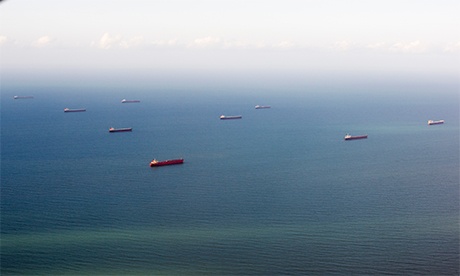
The other side is very different. Amongst the beauty, humans have wreaked havoc. We can see factories, gas plants and piles of coal getting ready to be shipped out. On the ocean I can count around 20 ships, sitting, waiting to be loaded up with their cargo. The harbour is being dredged so more ships can enter its waters.

I have traveled with US climate activist Bill McKibben and Greens senator Larissa Waters to the town of Gladstone to visit the frontline of Australia’s coal expansion. We took a charter plane to fly over the developments, and I interviewed McKibben and Waters as part of the trip. McKibben said that he was struck by what he saw: “I thought it was remarkable to see one of the relatively few spots in the world where the great carbon conveyor belt has its beginning.”

Coal ships waiting off the coast of Gladstone
Coal ships waiting off the coast of Gladstone. Photograph: Simon Copland 

The Gladstone and Fitzroy Delta port area already comprises of two ports, with three more proposed/under construction (a fourth was recently dumped by Xstrata). The port area already handles approximately 50 million tonnes of coal each year. The new developments could increase that number by approximately 28.3 million tonnes. McKibben says that is simply too much for the climate to bear:

“There’s just six or seven places around the world that have such great concentrations of carbon. This part of Australia, the tar sands of Canada, the Powder River basin of the US. Unless we can keep that carbon in the ground there is very little chance of arresting climate change.”

The last year in climate science has been nothing short of terrifying. In Australia, we saw our “angry summer“. Records were smashed and floods and fires ravaged the country. But what has been worse has been the reports coming out from some of our more conservative institutions; ones like The World Bank and the International Energy Agency, saying that we are heading for a world of four degrees warming or more. Far too much for a safe climate.

The maths – as highlighted by McKibben – has become clear. The science shows that we can only emit globally 565 gigatons more of CO2 to stay at or below two degrees of global warming – a target agreed by pretty much every government in the world. The known carbon reserves in Australia make up 30% of that number.

Thinking about those numbers as I flew over Gladstone, one thing became obvious. Even though we have implemented a carbon price, Australia is not doing enough to halt climate change. Our leaders, and our fossil fuel companies, are addicted to coal, and in doing so are playing an oversized role in warming our planet. Waters agrees. She told me that we can’t let most of the proposed developments go ahead:

“If the world is to stay below two degrees we only have a certain budget left, a carbon budget if you like. And if all of the proposed, enormous coal mines that are planned for the Galilee basin – if they were to go ahead, that one basin would comprise 6% of the world’s burnable carbon to stay below two degrees warming. That is a sheer amount that simply must stay in the ground.”

Waters argued that despite agreeing to the target, the Australian government is not doing enough:

“Under the current environment minister, and in fact all previous environment ministers, no coal mine has ever been rejected in Queensland and to my knowledge in Australia. Under our current environmental laws there has never been a refusal of a fossil fuel project in our history. And that’s saying an awful lot.”

This is the reality we now must face up to. Global warming is here. If developments like Gladstone and the Galilee Basin go ahead, we are dooming ourselves to a world of four degrees of warming – a world no one wants to see.

If we are serious about leaving a safe world for our future generations there is only one course of action – leave our coal in the ground.

Joining the fossil fuel resistance

Over the next little while you are probably going to be hearing a lot from me about climate change and in particularly 350.org. Over the past couple of months I have been working hard to help organise Bill McKibben’s tour, in particular his events in Brisbane last weekend. I was also lucky enough to join Bill, and Greens Senator Larissa Waters, on a fly-over of the Gladstone coal ports development on Monday. 

Now, in a couple of weeks time I am heading to Turkey for Global Power Shift; an international conference held by 350 to help build a global movement to fight climate change. I’m hoping to be able to blog some of my experiences from Turkey, so I thought it was worth talking about why this in particular has become important to me.

I have been concerned about climate change ever since I was in school. When I was in high school I enrolled in outdoor education. I needed something a bit lighter from the usual maths and english and it suited my adventorous streak. As I got travelling around Australia though I could see destruction all around me – the worst being the bleaching of Great Barrier Reef. It was awful. Slowly I built up an environmentalist mind, and eventually I became aware of global warming. 

For years I have searched for a way to deal with the issue. I get stressed about it at times. Thinking about it can keep me awake at night. I have stopped reading about climate science because it stresses me out – a coping mechanism I guess. I have always figured that the best way was to take action, but I was never really satisifed with what was on offer. We either had campaigns on individual action – you know, changing lightbulbs, driving less, not traveling – the sort of stuff that makes people guilty. Or we were campaigning for complex trading systems and international negotiations – the things I couldn’t really connect with even if they were important. I just have never felt as though those approaches worked. 

And that is where I guess I see of 350 being different. It is not perfect, but it is different. 

There is one clear message we need to get across today. We are on course for catastrophic climate change and there is one group of people taking us there; the fossil fuel industry. They are of course helped by Governments, banks, and the finance industry, but in the end it is fossil fuel companies who are taking us down a path of destruction. 

These companies are not innocent actors who are just stuck in a bad system and are doing the best they can. They don’t really believe (and I don’t think they do) that renewable energy can never play a major role in our energy system. No, they are actively working to destroy our climate for the sake of profits. 

I write about climate change a lot, and will continue to do so on this blog and in other arenas. 

But after spending years of thinking about how we can make a different, about how we fix this problem, about can convince Governments to make a change, I hope to take a more active role in the future. This week starts a real journey for me as part of the fossil fuel resistance movement. This job is important. There is almost nothing more important. 

Something different: The women missing from Triple J

The last few months have been crazy busy for me, and in doing so I feel as though my blog has suffered a little bit. With a couple of big events which have now passed, I’ve decided that this trend ends here – even though I am heading overseas in a couple of weeks (and therefore may not end up blogging at all). One of the great things about having a bit of a lull in the blogging however, is that I’ve been able to think about the direction I want the blog to take. I have to say I have struggled to keep the content up – mostly because getting new, intelligent, political pieces out on a regular basis in a way that I want to present them can be tough.

So, I have decided that, in line with a desire to do more writing in this way in the future, I am going to add in some elements that aren’t quite as political. A personal touch if you wish. It’ll be a way to express my personality, build some writing skills, and talk about some new things. I’ve decided, given that it’s a bit different to what I normally do, to call this Something Different.

With the Triple J Hottest 100 of the past twenty years happening over the weekend, I thought, what better way to start this trend than to talk about this great tradition.

One of the best, and worst, parts of the Hottest 100, is finding out which of the songs you thought deserved to be in the top 100 don’t make the list. I reckon I have at least one each year. This year however, I managed 11. Unfortunately I noticed that most of my 11 were sung by women. In fact, if you look through the list, there are only 6 songs with women singers (The Nosebleed Section, Something that I Used to Know, Zombie, Dog Days are Over, Paper Planes and Video Games), and only four of those where women were the lead (let me know if I’ve missed any). That’s four women out of 100 songs. This isn’t a new trend – in the Hottest 100 of all time only one woman made it in (The Nosebleed Section), whilst a woman has only won the Hottest 100 once (the Cranberries with Zombie).

There are lots of reasons for this – largely around the lack of support for women artists, both in developing as artists, and in promotion of their work. In other words, sexism is still systematic in the music industry. Yet unfortunately, what we often get in today’s world are arguments that we live in a competitive world and men are just creating better music. Instead of going in depth into the sexism of the music industry therefore (there are many more people better qualified to do that), I thought I wanted to share my list of songs sung by women, and that I think deserved to be in the list. The list is in no way comprehensive, but for me, these are some of the best songs of the last 20 years – all of which should have been in the top 100. I hope you enjoy, and I would love to hear your list.

(I am not a music critic, and apart from enjoying listening to it, I know nothing about music. So apologies if my descriptions of songs aren’t technically correct – but you’ll get the gist of what I mean)

Bjork – It’s Oh So Quiet

[youtube http://www.youtube.com/watch?v=htobTBlCvUU&w=560&h=315]

There is no doubt in my mind that Bjork is one of the most influential artists of the past twenty years. Bjork defines how to be strange and cool at the same time, with some of the most creative music of the past decades. It’s Oh So Quiet is a classic example of this. In the song, Bjork alternates between soft, wistful singing, and loud, almost screaming into the mic. The blend of the two creates a classic.

Honourable mention: I also came very close to voting for Bjork’s Earth Intruders.

No Doubt – Just a Girl

[youtube http://www.youtube.com/watch?v=PHzOOQfhPFg&w=420&h=315]

If you want to talk about classic pop, it is really hard to look past Just a Girl by No Doubt. Starting with a riff that I think everybody would recognise, Gwen Stefani rips into the song, which matches catchy lyrics with a tune to die for. Not much else I can say!

Sarah Blasko – Flame Trees

[youtube http://www.youtube.com/watch?v=VQvjvEWDIoQ&w=420&h=315]

I had real trouble deciding which Sarah Blasko song I would include. I fell in love with Sarah Blasko as an depressive teenager, with her first album The Overture and the Underscore speaking to me in a way no musician could at the time. I think I could have easily voted for her first real hit Don’t U Eva, and for pretty much all of her album As Day Follows Night, which for me was a classic, but I ended up landing on her cover of Flame Trees. Blasko does a good cover (check out her version of Hey Ya), but this one takes the cake. Slowly building into the song, she completely changes its tone, turning it into a brooding ballad that you cannot help but feel moved by. Every word has meaning in her version, giving a classic song a new meaning.

Honourable mention: Don’t U EvaWe Won’t Run and Hey Ya (cover)

Hole – Celebrity Skin

[youtube http://www.youtube.com/watch?v=O3dWBLoU–E&w=420&h=315]

The Hottest 100 list was full of classic 90s rock, but Hole was for me, the most notable band missing. Courteney Love and Hole were an essential part of the rock scene in the 90s and Love is really the epitome of how awesome women singing rock can be. Celebrity Skin was an album I grew up with in the late 90s and the title track just hits you straight in the face. The song hits you from the first moment, and apart from one interlude, doesn’t let up at all throughout. It is classic rock, and shouldn’t have been missed.

The Waifs – Lighthouse

[youtube http://www.youtube.com/watch?v=ADlAc-NsDng&w=420&h=315]

I really love folk music at times, and the Waifs are probably some of the best folk artists Australia has to offer. With a career spanning what must be decades now, the band has criss-crossed Australia, and importantly, the United States with a mixture of catchy pop/folk tunes, and more soulful music. There is no better Waifs song than Lighthouse. With an extremely catchy tune, the Waifs paint a perfect picture for me of the Australian coastline – turning this into an awesome Australian tune.

Honourable mention: London Still

Lily Allen – Smile

[youtube http://www.youtube.com/watch?v=0WxDrVUrSvI&w=560&h=315]

I was really disappointed not to see any Lily Allen in the list. Even though she has only released two albums, Allen dominated the charts, and much of Triple J for years in the late noughties. Allen clearly has a mean streak, which can be found throughout her songs, but it is best expressed through Smile. Putting on what can only be described as a happy face, the song is deceptive, as Allen sings about the joy of bringing others pain. But it’s not just the deception that makes this song so great; it is just great pop, leaving yourself singing to it when you don’t even realise it.

Honourable mentions: Fuck You, Not Fair, LDN and The Fear

Ladyhawke – My Delirium

[youtube http://www.youtube.com/watch?v=X_bFO1SNRZg&w=560&h=315]

Ladyhawke has, for me, only really had one memorable album so far (although I need to listen to Anxiety more), but it was an instant classic. Released in 2008, LadyHawke presents a great album of soft rock/pop, presenting something that I missed from much of the music scene at the time. My Delirium is the standout track of the album. With an excellent backing (synth I thinking – help me here!) riff, LadyHawke’s voice haunts me throughout as she sings about her delirium.

Honourable mention: Paris is Burning

Pnau – Embrace (feat LawdyHawke)

[youtube http://www.youtube.com/watch?v=EuVI04mrZqo&w=420&h=315]

This song brings back memories of life in Sweden for me in 2009. Having released it in 2008, I came across Embrace as I was living in Sweden and making my way through Swedish pop. The song is sung by LadyHawke (see above). Embrace takes time to build, but once she gets into it you get an instant dance classic. This is the kind of song I love hearing out in the clubs (the times once every three months I go to a club) and I would have loved to have heard it in the Hottest 100.

Architecture In Helsinki – That Beep

[youtube http://www.youtube.com/watch?v=b_Xf-IpT4jQ&w=560&h=315]

Last, but certainly not least, is one of my favourite bands from the last 20 years, Architecture in Helsinki (AIH). AIH have a unique pop brand, with a quirky approach that doesn’t quite follow the standard song formula. Nothing could display this better that That Beep. That Beep builds itself up, with the voice of Kellie Sutherland (tell me if I am wrong) slowly entering the stage. The beeping continues as a backing track throughout the song, but it is Kellie’s voice that stands out – creating a great pop song.

Honourable mention: Machine Gun Fellatio – Pussy Town

[youtube http://www.youtube.com/watch?v=EItYM2TOAQA&w=420&h=315]

So, this song is actually sung by a man, but Machine Gun Fellatio had a woman who sung in a number of their key songs, and I absolutely love them (and voted for this song), so I decided to include it at the end. Machine Gun Fellatio were one of those bands that were around just as I started to appreciate music, and I loved what they had to offer. Unfortunately only producing three albums, Paging Mr Strike was clearly the best, producing songs such as The Girl of My Dreams is Giving me Nightmares, RollerCoaster, and Pussytown. As a band that had some rather subtle sexual undertones in their music (not really), Pussytown was one of their best, with the voice of Pinky Beecroft (who I think sung the song) create deep sexual urges that can make us all uncomfortable.

Is Man Therapy the way to solve men’s mental health issues?

Yesterday, a friend of mine pointed me towards a new Beyond Blue mental health campaign Man TherapyI was interested reading the Mission Statement of the campaign:

The social norms of masculinity play an important role in the gender differences of suicide. Men have a greater tendency not to recognise or respond to their own negative emotions or distress, partly due to the stigma associated with ‘mental health’, which in turn may result in clinical depression. Through tackling the rate of depression and anxiety in men, and reducing stigma, facilitating a change in men’s behaviour and challenging perceptions of masculinity, beyondblue believes that a reduction in the male suicide rate can be achieved in the medium to long term.

That first line stood out to me – “the social norms of masculinity play an important role in the gender differences of suicide.” I tend to agree, but looking at the site I am not convinced it does any work to help break these norms down. The videos posted are of a typically ‘blokey dude’ talking in a particularly blokey manner about how blokes need to do something about mental health problems. Go through the site and you get a whole bunch of blokey cliches.

Now, I fully appreciate why Beyond Blue has done this in this way. I get that this is a way to break down stigma for a particular subset of guys. And I can see how getting a blokey dude to talk about depression can help deal with this.

But as a man who has suffered depression these sorts of advertising campaigns sometimes bother me. Facing up to depression and anxiety as a man, the vast majority of programs targeted at me told me that as a man I clearly had trouble dealing with my feelings and therefore owning up to them was what I needed to do. Depression advertising says that men have trouble dealing with depression, which naturally means that women have a much easier time talking about their feelings because they are the more emotional kind.

As a dude who is both blokey and has traditionally ‘feminine’ attributes (i.e. I can talk about feelings at times) this sort of advertising doesn’t really speak to me. I do alright talking about my feelings at times, but still needed help, and struggled with dealing with my issues. For me, the campaigns like this just played into ideas of gender normativity. And the ‘feminine’ dudes of ‘butch’ women, and everybody in between seem to miss out.

And so I guess I have to ask, how do we both deal with stereotypes of masculinity, whilst not buying into traditional gender norms? We seem to have created a world where we say we need to break down stereotypes for one issue (depression), yet to do so we just buy into traditional stereotypes to get it done. It seems to me that the real issue here is gender norms in themselves.

Review: Beyond Denial

A little while ago I posted a piece called Are we wasting our time on denialismMy basic thesis was that most of the energy fighting climate change denialism was wasted energy – energy we could be putting into fighting the fight for good climate policy. Finally getting around to reading the latest copy of The Overland Journal I have managed to complete the piece Beyond Denial by Philip Mirowski, Jeremy Walker and Antoinette Abboud. They go into this issue in much more detail, and so I think it is worth a review.

If we think about the climate movement globally at the moment we can see two key themes – the vast majority of energy is spent either in defending climate science, or alternatively fighting for market-based mechanisms to solve the problem. We fight for climate science and then talk about carbon pricing mechanisms as a way to deal with the issue. For Mirowski, Walker and Abboud this has put the movement in dire straights – one where climate denialism is growing, and the market-based solutions being proposed are not cutting emissions. Authors such as Robert Manne in the Monthly, Nick Feik in the Age and Clive Hamilton have all argued similar positions. But according to the authors there is a bigger problem:

While we agree that the situation is indeed dire, we want to highlight another dimension to the tragedy: the unacknowledged dominance of neoliberal ideas across the spectrum of acceptable climate change.

The authors argue that the three most dominant elements of the climate debate; denialism, and the proposed solutions of market-based solutions and/or geoengineering show the dominance of neoliberalism in the climate change debate.

We think most people on the Left don’t full realise that the phenomena of science denialism, emissions trading and geoengineering are not in fact unrelated or rival panaceas but rather constitute together the full neoliberal response to global warming.

The reasons this array qualifies as neoliberal are twofold. First, they all originated from within think tanks and academic units affiliated with the neoliberal thought collective; second, the net consequence of all three is to leave the problem not to the state but to the market. Denialism buys time for the other two options; financialisation of the carbon cycle gets the attention in the medium-term; geoengineering incubates in the wings as a techno-utopian deus ex machine  for when the other two options fail.

It makes sense. Neoliberalism can easily be argued to be the dominant political structure of our time, and it therefore makes sense that on an issue such as climate change neoliberalism would play a major role. Mirowski, Walker and Abboud make this argument extremely well. They argue that neoliberalism has see a shift in the definition of ‘the economy’ to one in which ‘the maket’ is seen as the omniscient arbiter of truth. In doing so, the market has become the key indicator of defining what is right and what is wrong – the market knows all and provides all solutions. It is therefore up to the market to make the decision on how to respond to such an issue as climate change.

What is interesting, and potentially different about climate change however, is that neoliberals have managed to use the issue to reinforce their own ideals, and bring the left along for the ride:

At each step along the way, the neoliberals guarantee their core tenet remains in force: the market will arbitrate responses to biosphere degradation because it knows more than any of us about nature and society. As a bonus, some segments of the Left, operating under the impression they can oppose one or more of the neoliberal options by advocating another – that is they might think they can defeat science denialism or geoengineering by advocating emissions trading – end up as unwitting foot soldiers for the neoliberal long march.

In other words, environmentalists have become ‘neoliberals on bikes’, becoming unwitting foot soldiers for neoliberalism and dooming our world to a point where geo-engineering becomes the last and only option available to save us from climate change. And Mirowski, Walker and Abboud provide an excellent analysis of how this is playing out (it is hard to cover it all in this piece). However, unfortunately this is where the critique seems to end. Whilst their analysis is great, I feel like it lacks that next step – how we deal with it. Now, don’t get me wrong – they do go somewhat into the failure of environmental neoliberalism – the failure of emission trading schemes in Europe and New Zealand and the terrible potential solution that is geo-engineering. But I come out really questioning how we can defeat these ideas. The authors provide a very quick solution at the end:

The way out of our current impasse involves a serious reconsideration of what ‘the economy’ actually is. Rather than allowing ourselves to be enrolled pragmatically in the neoliberal script, we need to remind ourselves that there are other policy options.

In doing so they suggest one policy solution:

For example, fixed high or rising carbon taxes applied universally to wholesale coal, oil and gas transactions deserve our serious consideration, as they might actually accomplish the effect of a ‘price signal’ and spur disinvestment in the ever-expanding fossil-fuel sector.

For me this is quite a confusing policy response after such an in-depth critique of neoliberalism – and it highlights to me some of the issues that we continue to face with neoliberalism, and importantly the continued economic-focus of environmental problems. Whilst I certainly agree that a high price on carbon is a better mechanism than an ETS, I don’t see it as part of the ‘serious reconsideration of what ‘the economy’ actually is’. In fact, in discussing the role it can play in accomplishing a ‘price signal’ it seems to me that it is just a different form of using the market to solve the problem.

And that is where the challenge lies. If we agree, as I do with Mirowski, Walker and Abboud that market-based solutions to global warming are not going to solve the crisis, how do we articulate a better response? I think they hit the nail on the head when they argue that a reconsideration of our economy is essential – but I think we need to delve into that issue in a much deeper way. This means fundamentally questioning not just the role of neo-liberalism in environmentalism, but neo-liberalism in itself.

I’m not going to provide any answers to that today, but I’ve been thinking about it a lot – so more to come.

The debate we should be having

Published in the Overland Journal, 30th May, 2013. 

I learn more about privilege from what I get wrong about misogyny than from what I get right about racism –Teju Cole

After reading Mia Freedman’s piece about Delta Goodrem’s ‘blackface incident’ (not sure what else to call it) a couple of weeks ago, I couldn’t help but find myself agreeing. ‘Yes,’ I thought, ‘we are getting over outraged over the symbols of bigotry, and in doing so diverting our attention away from the real fights we need to have. And really, how offensive could that photo be?’

I’m glad I didn’t express my views at the time. As I watched the debate go on, I started to see that as a white man, I had not realised the impact of blackface. I did not know enough of its history and how offensive it truly was.

And then it clicked. The people trying to downplay the situation were the same sorts of people I would get angry at (as a queer man) when they tried to downplay Julia Gillard calling Christopher Pyne a ‘mincing poodle’ because ‘we know she’s not homophobic’. They’re the same ones who tell me to calm down if I get annoyed when I’m called ‘princess’ – because it’s ‘just a joke’.

In doing so, I learned a lot more about privilege, and more from what I got wrong about racism than from what I get right about queerphobia.

Freedman got herself into some hot water again yesterday when she tweeted in support of Eddie McGuire:

Eddie has an outstanding reputation for supporting equality and indigenous AFL players. His apology is sincere.

This time around I’m struggling to see the outrage. What McGuire said was clearly racist and he deserved to be torn a new one for it, but I think it is fair enough to say ‘he’s learnt his lesson, let’s be done with it’.

After all, hasn’t McGuire now learned about privilege from what he got wrong about racism?

In reaction to Freedman’s first piece, Sunili Govinnage argued that ‘Freedman didn’t encourage a conversation Australia very desperately needs to have. She ended it.’ Govinnage continued, saying that it ‘would be a good start if, for once, we can have a discussion about racism that doesn’t finish with a white-Australian proclaiming that we don’t need to have one.’

I couldn’t agree more. We need to have a bigger debate about privilege and bigotry in Australia. But for me, an important part of this would be how we can encourage people to learn from their mistakes about bigotry, and become part of a movement that challenges it. But I don’t think this is the debate we’re having.

The only way I can really describe much of our debate about bigotry at the moment is ‘outrage’: a thirteen-year-old girl sparks national outrage after calling Adam Goodes an ape. Stephanie Rice was hammered when she tweeted ‘Suck on that faggots’ after the Australian rugby union team beat the South Africans a while ago. Online sensation Destroy the Joint regularly takes to Twitter to publicly shame those who make sexist comments on their feed.

We are outraged at bigotry and we are willing to show it.

I’m not trying to play the ‘poor white boy’ here who believes that queers, women and blacks have now taken all the power and it’s white men who are now oppressed: that’s clearly not the case! But I don’t think this world of outrage is how we build a strong movement against bigotry – or help people ‘learn from their mistakes’ about misogyny, racism or queerphobia.

When I think about identity politics, or the collective fight against bigotry, I cannot help but think of it in a structural way. Our societies are built for white, straight, wealthy men, and we are all sucked into this hierarchy. This means that while individual instances of queerphobia, racism, and misogyny are clearly bad, they are part of a broader structural problem in society, which prompts the question – how do we challenge bigotry on a day-to-day basis as well as on a societal level?

I think the solution is to engage in a collective fight against bigotry, while also being willing to (respectfully) challenge it daily, and as part of a collective movement. And herein lies my problem. In this world of outrage, we’ve decided to focus on that second element, and in an aggressive way. Challenging bigotry has shifted from ‘Hey, that’s racist, you need to think about that’ to ‘You’re a racist fuck, the scum of the earth and because of [racist statement] you are now dead to me’. Delta Goodrem and Mia Freedman’s feeds were both full of it, and McGuire received a lot of it too.

And I understand why! Bigotry is awful, but I just don’t think this approach works. Instead of engaging with the structures and effectively challenging large-scale bigotry, we are creating a world in which those who say the wrong thing at the wrong time get eviscerated for it, and then completely locked out. In the meantime, the real structural bigotry often gets ignored.

While giving it to Alan Jones (rightfully) for his comments against Julia Gillard late last year, campaigns on issues such as access to abortion and freedom from violence struggle to get traction. Yet, in all of this debate around racism, the report from last Friday that showed that increasing numbers of Indigenous people are being both imprisoned and dying in custody seems to have been largely ignored.

Instead of doing the groundwork of building a collective, we are spending our time identifying those we think aren’t part of the collective and shaming them for it. If the targets were Tony Abbott, Jim Wallace and the like, I probably wouldn’t have a problem with it. But it’s not – it’s happening both to those who are building the bigoted structures, as well as those who are caught up in them.

We need to be able to have these debates about what constitutes misogyny, racism and queerphobia. At the same time, we need to question whether the debate we are having now is really that effective. When I think about this, I want us all to be able to ask that question, just like Teju Cole: ‘how can we all learn from our mistakes about bigotry?’

The world of outrage fails to do this.

The debate about political disclosure

A couple of weeks ago, Media Watch ran a lengthy segment on political disclosure, or when and how political commentators should disclose their political affiliations. Commentator Andrew Bolt decided to weigh into this debate last week, attacking Mamamia Editor Jamila Rizvi for not disclosing her political affiliations. As Bolt said:

How to disclose when you’re not disclosing:

Jamila Rizvi @JamilaRizvi
Editor at @Mamamia, columnist at @CosmopolitanAU, optimistic realist, feminist + former political staffer. Opinions expressed are mine + I’m not sharing. Hmph.

“Editor at @mamamia” should already be enough to tell you her political leanings, given those of her boss.

This should clear it up:

image

So, back to the non-disclosure disclosure. Whose political staffer was Rizvi?

Need you ask? The Rudd and Gillard governments’, of course.

Apparently if you are commenting on public policy publicly, and you are a member of a political party, you should always have to disclose.

As a member of a political party myself (The Greens) and someone who writes publicly on a range of issues, I have thought about this a lot. I have often felt anxious about the impact my party membership on my public commentary, and the impact of my commentary on my party. When I was the Convenor of the ACT Greens in 2011-12 I decided to always disclose my membership whenever I was published (it may not have always worked out that way). As an elected spokesperson of the party at times, I thought it was necessary to delineate my two roles and make it clear when I was, and wasn’t, speaking for the party. Today, as someone without any of those roles, I don’t always publicly declare my affiliation (although it is relatively well known publicly), and I’m not sure I should always have to. It’s not that I have a problem with it, but rater that I think the debate about public disclosure is kind of missing the point. Here’s why, and why I think it is important.

In our public debate I have noticed that we have placed ‘official politics’ – or that of the work of elected politicians and political parties – into a very special and weird space. Whilst those of us who identify as members of NGOs, scientists, economists etc. are seen to argue for an issue because they believe in it, we have a mindset that those identified with parties are only there to put party first. Jamila Rizvi clearly only cares about cuts to the public service because campaigning on that will help the ALP, and I only write to help get the Greens ahead. The moment you join a political party in this country you are tainted – forever tarred with a brush of being a politician who cares more about power than values.

And I can see how this idea has come around – I have discussed cynicism in our political system extensively (here and here). When you take such a cynical approach it makes sense to be cynical about members of political parties. It is then obvious to assume that everybody needs to disclose because they are only talking to benefit party power, and not to progress a policy ideal.

But, as an argument, or belief system, this is fundamentally flawed (the media having a flawed understanding of the internal workings of political parties is a constant frustration of mine). Because whilst the leaders of political parties may present a united front, whether we believe it or not, intra-party debates are always present. I have never met a member of a political party who has not got a passion for the issues, and does not pursue them fully within their chosen party.

And here is where the problem lies. Because as long as this cynical idea dominates our political debate, it is going to discourage involvement in our political system. It seems obvious to me that as long as we pursue the idea that political parties are a centre of political sameism, where membership is simply a source of financial income and the potential to create foot soldiers for the policy prescriptions decided on from above, people are not going to want to engage in the process.

But it’s worse than that, because this narrative also discourages active debate within parties, and in particular discourages that debate becoming public. I can just point to my own experience in relation to this. In an article I wrote last year I criticised the queer movement for what I called exclusionary tactics, in particular around same sex marriage. In doing so I pointed out the exclusion of people in poly relationships from the debate and the Greens were one target for criticism. I didn’t do this to attack the party, but rather as an opportunity to try to open the debate about this issue. But for the mainstream media (or in particular The Australian), it was an opportunity to find ‘a split’, and they ran with that in an article called ‘Greens Elitist on Wedlock’. We can see this happen all the time, whether it is the debate in the Greens over the Tasmanian Forest Agreement, the arguments in the LNP over Paid Parental Leave, or the vote in the ALP caucus this week over political party funding. If there is a debate, it is a split – and one that clearly opens questions about party leadership.

The point here is that we have created a misunderstanding of how our political parties work – we assume a group of people who have exactly the same positions and are only in a party to help gain power in a non-ideological world. If the party changes positions, so to would the members. And if there is a debate, it clearly is a major split that opens up massive questions about relevant party leaders. Declaring affiliation here therefore really isn’t the problem – it is the way we treat our political process.

For me, my political affiliation is just one way in which I aim to achieve my policy goals. It is not the driving factor, but instead a means to an ends. I am left-wing first, and Greens identifying second. For everyone else I know in a party, this is the same. Declaring affiliation therefore isn’t the solution – it is just a way to alienate people from an essential political process.

Debating the systematic violence against Indigenous Australians

This weekend marked the 20th anniversary of when St. Kilda player Nicky Winmar lifted his jumper and pointed at his skin in reaction to racial taunts in the Saints match against Collingwood at Victoria Park. 20 years on and the debate Winmar ignited has unfortunately reared its ugly head once again, after Sydney Swans player Adam Goodes was called an ape by a 13 year old fan in their game against Collingwood on Friday.

It is hard to describe how disappointing this is. It was a terrible incident. But something much more disappointing happened on Friday. Earlier in the day the Australian Institute of Criminology released a report about Indigenous deaths in custody. The report is alarming at best.

Here are some terrifying statistics.

The report said that whilst only two-and-a-half per cent of the Australian population are Indigenous, Indigenous people make up 26 per cent of the adult prison population. This represents a doubling Indigenous people in prison over the past 20 years – a DOUBLING.

Since 1980 there have been 2, 325 total deaths in custody across Australia, with 450 of those being Indigenous people. 19% of deaths in custody in Australia over the past 20 years have been Indigenous people. And these numbers seem to rising. In 2009-10, 14 Indigenous people died in prison – the highest number on record. As more Indigenous people are entering prison, more are dying.

Let’s go back a little while and have a look at some more terrifying statistics. In a report that I doubt very few actually noticed (I certainly didn’t until the weekend), in March the United Nations ranked Australia number 2 un the Human Development Index. Take Indigenous Australians out as their own group however, and that number drops from 2 to 122. As The Stringer reported:

“The report stated Australians have the world’s fourth highest life expectancy in the world – 82 years. But this is not so for Aboriginal peoples – subtract 20 years from the Australian life expectancy average for Aboriginal peoples, and in some regions of Australia make that 30 years less off the average.

With education – in terms of number of years of schooling achieved and the standard of school performance – Australians are ranked second highest but that would not be the case for Aboriginal peoples who do not enjoy quality schooling in many semi-remote and remote communities.

Australia has the lowest suicide rate of the world’s top ten nations but Aboriginal peoples have the world’s highest youth suicide rates.

Nothing has improved since the 2011 United Nations State of the Indigenous Peoples report, “In Australia, an Indigenous child can expect to die 20 years earlier than his non-native compatriot.”

These aren’t new statistics. These aren’t new issues. But they are extremely confronting to me. I feel like I may end up coming across here as the ‘white boy with some middle-class guilt’ here. Maybe that is part of what I’m feeling. But at the same time I feel like it’s just useful to say something. Anything to help bring up this issue.

What happened at the AFL on Friday was disgraceful, and Adam Goodes should be lauded for the way he dealt with it. He has helped further the debate about racism in Australia that we desperately need to have. But, please, at some point, can this debate also include some discussion about ending systematic racial violence in this country? About closing the gap, ending poverty and getting people out of prisons?

I’m a white middle-class man. I can’t explain what it is like to be an Indigenous person in Australia. I can’t truly explain the impact of over 200 years of oppression. I can’t tell you what the solutions are, nor even come close to acting as though I can speak for Indigenous people. I’m not sure if I can progress this debate and do justice to it.

But the one thing I do know is that the systematic violence against Indigenous people in this country is shameful. I’d be delighted if we can finally have a national debate about it – one that actually deals with the over 200 years of oppression that continues today, and actually looks to tackle this issue.

Any ideas on how we can do this?

On Kevin Rudd and the cynicism when politicians change their mind

It is a peculiar part of our politics when politicians are routinely slammed for changing their minds. It is even more peculiar when it is the exact people who have been arguing for a change do all the criticising. But that is what we’ve seen from many after Kevin Rudd publicly came out in support for same-sex marriage on Tuesday night. For example, George Brandis claimed that Rudd’s announcement was politically motivated:

“What it tells you is that Kevin Rudd has not given up; Kevin Rudd is at it again.”

Others have hit Rudd for not making the announcement earlier, saying that he should have done it when he was PM. For example, Kieran Salsone started his op ed on the issue this week with:

CHEERS, Kev. I’m glad you’ve finally figured out that denying queers like me access to marriage isn’t particularly ethical.

These sorts of arguments are common. We hear about Julia Gillard’s ‘lie’ on carbon pricing, and Wayne Swan’s ‘backflip’ on the surplus. And, just like Rudd, Barack Obama was slammed by many for not supporting same-sex marriage earlier in his Presidency. Apparently, changing our minds, and our policies, when new information arises, or simply because we change our perspective on an issue is no longer acceptable.

Let’s get over the basics here. It is obviously ridiculous to assume that circumstances and minds can’t change and that our politicians can’t change with them. If it were the case then we would live in a completely static political world.

Despite this, I can see where it comes from. In a world in which politicians are forced to take their policies to an election every three years, the ‘they lied’ argument can be a very effective political tool. In cases like same-sex marriage I can also see why people get frustrated with the time it takes for people to change their views – I have experienced that myself.

However, I think we need to question our desire to jump on pollies when they change their mind. Whilst we may think that keeping pollies to their promises is important to democracy, the Kevin Rudd experience shows how it has taken has become quite destructive.

If we look at modern Australian politics I reckon there is one word to describe it; cynicism. We are all cynical – we expect the worst from our politicians. And we have some reason to be cynical – politics in many ways has become all about spin and a lot of substance has been lost. But at the same time, I think the public need to acknowledge their role in this process – we get to decide our politicians, and so it is therefore up to us to change our politicians if we want to.

I think this demand that people can’t change their minds is deeply part of cynicism. Instead of providing some decent analysis around how and why politicians may change their mind about a subject, we have become wholly cynical about their motives – that it is all political, and that they change their minds to suit political needs. The problem with this is that it creates an awful feedback loop – we become cynical about politicians motives, so politicians become more political about their motives, and hence we become more cynical etc etc.

Where this has become interesting though is when social movements play into this cynicism and I think the same-sex marriage movement is a good example of this. As a movement that fights for people to change their mind on an issue, it is often very cynical when people actually do change their mind. When I think of social movements, I think maybe there are two ways to create change – to defeat your opponents, or to convert them. Both are important. Yet, with this cynical approach to politics, we seem to have lost our drive to convert – if you have held a bad view once it is held against you forever and no amount of repentance is allowed to bring it back. The problem is that it inhibits change. If politicians know they are going to get slammed when they come out in opposition to a position they have previously held, even by the supporters of that position, why would they do it? The risks become too large, and without any cover to support change, it seems easier to stay in the closet.

I guess what this all comes down to in the end is an appaling lack of trust we have found ourselves placing in our politicians. As Stephanie Peatling said about Rudd:

“It is a failing of the political discourse in Australia that politicians are often not given the benefit of the doubt when their thinking on a particular issue changes.”

I couldn’t agree with Peatling more. We need to start taking responsibility for our lack of trust in politicians just as much as the politicians do. If we think people are backflipping for political reasons, that’s fine – let’s vote them out. But at the same time I think we need to break down some of the cynicism. Not everything every pollie does is for political reasons – people get into the game for genuinely good reasons. So maybe we can start treating it a bit like that as well, and we can engage in a proper debate about how policies can and should evolve.