Queer liberation: An interview with Dennis Altman

Originally published in Green Agenda, 3 December, 2015

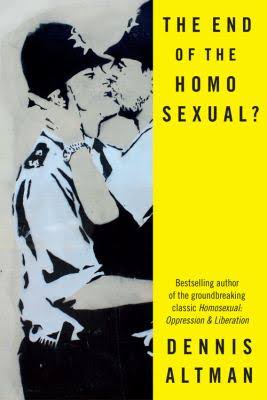
Green Agenda editor Clare Ozich and member of the editorial panel Simon Copland sat down with the academic and gay rights activist Dennis Altman in September 2015. Altman is best known for his pioneering book Homosexual: Oppression and Liberation, released in 1971. He recently released a retrospective of his work,The End of the Homosexual?, in 2013. In this conversation Clare, Simon and Dennis discuss all things queer, with a mix of Australian politics in there as well.

The conversation is split into three parts — a discussion on the tension between liberation and equality politics, a look at the modern marriage equality and queer movements, and finally a debate on the “alphabet soup” and modern identity politics.

The following is an edited extract of our conversation.

We begin with the first question from Clare.

Liberation vs. Equality

Clare: When Simon and I were chatting about the potential for you to be involved in Green Agenda, one of the key things I was interested in is this relationship and tension between liberation politics and the equality politics. I know that is a regular theme in your work.

Dennis: It’s interesting that you raise that because in a few weeks I have to speak at a conference in Sydney for the 40th anniversary of Damned Whores and God’s Police by Anne Summers.

I am going to look back at what we meant by liberation. Liberation came into the common left language through the National Liberation Front in Vietnam and then it got picked up and we had women’s liberation, black liberation and gay liberation. There was also the term sexual liberation, which was being used sometimes to cover women’s and gay liberation and sometime to cover what people in the past called free sex. So in thinking about the differences — so I’m going to go directly towards what I’m thinking you’re suggest — I think there are three real differences.

If I compare the rhetoric of the early 70s with what’s happening now, particularly through things like the marriage equality movement, it strikes me that firstly, identity has become essentialised. It has done so in a way that has become very convenient both for people who claim the identity and use that awful phrase “born this way”, and for everybody else. So Bill Shorten can get up and he can defend “our rights” because his sexuality isn’t thrown into question.

The second thing that I think is different is that the liberation movements at least rhetorically believed that you couldn’t get full equality or freedom for one group without getting it for everybody, which in turn meant you needed radical social transformation. That’s largely disappeared and I think that’s one of the reasons why the gay movement’s actually been so successful. Because it’s become reformist, indeed conformist.

homosexualoppressionAnd the third thing is I think there’s this tension between wanting to assert an identity and then at the same time wanting to disrupt identities. Twenty years later after the liberation period this idea was taken up by queer theory, which sort of came and went in about five years. There’s a tension between asserting identity, but then asserting that identities were fluid. So there was that wonderful phrase that “feminism is the theory, lesbianism is the practice”. That was an early 1970s feminist slogan. Now if you think what that’s actually saying, it’s saying that all women have the potential to experience desire with other women. That is not what the language of today says, which is based on the idea that whatever identity that someone assumes is discreet and essential.

Simon: The talk is a reflection of 40 years ago to what we’ve got now. In your perspective what happened that caused this shift?

Dennis: Obviously the world has changed and I think what’s really interesting is that what one might call social liberalism, or acceptance of diversity, has actually happened to a much greater extent that people might have expected. 40 years ago the idea of a black American President or a woman Prime Minister was the stuff of fiction.

On the other hand economic inequality has increased and the social democratic project has essentially been totally derailed. There would be no Governments in the world that would call themselves social democratic and one of the great mysteries that we all I think share is that the global financial crisis resulted in the election of right-wing Governments, which on the face of it is slightly bizarre.

Personal freedoms have certainly increased, enormously in all sorts of ways. It would be silly to deny that. But at the same time we tolerate greater and greater inequality and the two are related.

So I think there’s a discrepancy. Personal freedoms have certainly increased, enormously in all sorts of ways. It would be silly to deny that. But at the same time we tolerate greater and greater inequality and the two are related. So I think going back to your question Simon, that’s the big shift. The larger socio-political context has shifted considerably.

The other thing that has of course happened is shifts in the gay movement. The movement began as a small group of radicals who had the time, and the freedom, and had already been politicised. As the gay movement became bigger it inevitably became more mainstream. But the success has meant greater and greater pressure to behave as a pressure group, not as a social movement. Australian Marriage Equality is an extraordinarily good pressure group who are very good at raising a lot of money, and were very good until Tony Abbott gazumped them at lobbying politicians. They were so successful that Abbott had to invent a plebiscite because the equality movement looked like winning.

The same-sex marriage movement

Simon: [Noting Dennis has often been critical of the same-sex marriage push]. What is your current thinking on the issue?

Dennis: I’ve had to think about this, because I’ve found myself in an increasingly awkward position in the marriage debate where the dilemma was do I want to sound as though I was on the same side as Cardinal Pell against Penny Wong? I had been quoted in Parliament by one of the Catholic right wing Labor people and something I said had been used in one of the anti marriage equality ads in the Australian, which was embarrassing.

So for me the way I would answer it is that it’s clear that marriage has become a symbolic issue that is about much more than the right to walk down the aisle in matching tuxedos. I really have little sympathy for the people who, when they talk about marriage equality, only talk about their right as two individuals to get married. Because people who are in that situation are in fact already very privileged. They are clearly out because if they weren’t out they wouldn’t be able to get married. They’re in long-term relationships. In fact many of them seem to be able to afford to go overseas to get married. So their big beef is that their Buenos Aires wedding is not recognised in Australia, you know, tough shit.

But I think that equally marriage has become a symbol of accepting cultural and social diversity.

So I think one can go from the marriage equality argument to broader arguments. I spoke at a rally in Melbourne a couple of weekends ago and speaking at a rally means you actually get to see the crowd — it’s right there. The crowd really interested me because it was predominantly young, and not particularly queer — okay, I’m not saying my Gaydar works on a crowd of 5,000. But marriage equality has clearly become a symbolic issue for a lot of young people, for whom it means acceptance and diversity and I think that’s where one builds on the marriage movement.

I think that equally marriage has become a symbol of accepting cultural and social diversity.

Clare: I think that’s very true. I was anti-marriage before Simon was. I wrote an article for the gay press in Perth about ten years ago about why we didn’t need marriage.

Dennis: Did you get brutally attacked?

Clare: Not really. I also went to the very first gay marriage rallies in Perth when there was only 20 people there. They were mostly organised by my friends.

But I think you’re right that it’s become a very important opportunity. Although I must say one of the uncomfortable things I find is how all the straight people just love it. It’s so easy.

Dennis: Yes, I was joking about how it was great to have Bill Shorten and Richard Di Natale as my warm up act, but then I also thought “do I really want all these straight men up there speaking for me?”

I think there are two issues here. Marriage equality has also become a way to bash the power of organised religion and that’s why I think the Irish referendum was so significant. Because we might not personally feel it’s the most important issue, but effectively Ireland saw a popular vote against the influence of the church and that I think is very good and important.

But the other thing I’d say as someone who had a very long term partner who died a couple of years ago, I think there’s a real danger of the marriage equality movement marginalising people who are not in long-term relationships. I’ve had people come up to me crying when I’ve said it, saying to me “I’m so glad you said that because I’ve never heard anyone say it.” The marriage equality movement are quite good at bullying. I’ve had more attacks for statements that are in any way critical of marriage from other homosexuals than from straight people.

Simon: The bullying point is an interesting one. I’ve written about my polyamorous relationships and the people who have always reacted the worst to it have been gay men, who come and tell me stop talking about this publicly, you’re going to hurt marriage equality. You’re going to make it more difficult for us. You’ve got to wait your turn. It’s always been the straight friends who I thought were a bit conservative that were fine, while the gay friends who I thought were more progressive were not.

Dennis: Well Simon my suggestion to you is that you track these men down on Scruff and point out their hypocrisies.

Simon: So I was interested, you talk about marriage equality as an opportunity but there is also problems with it in the way it can marginalise people who aren’t in long term relationships and it can normalise long-term monogamous relationships. So how do we deal with those negatives but use the opportunity it has provided us?

Dennis: I think in Australia now we are stuck with the reality that it is not going to be possible to have a nuanced discussion about this until either, which is probably the more likely outcome now, the current Government loses and Labor passes it. Or if the Liberals get back in and we go to a plebiscite, the whole nature of a plebiscite is that you’ve got to be for or against. And so we get trapped. So I don’t think we’re going to have a nuanced discussion until it’s resolved. [Note: this interview took place before the replacement of Abbott by Turnbull as PM, and I no longer believe a Labor government is likely next year.]

Clare: Until it’s done, yes.

Dennis: That’s one of the really important reasons to have it done. Once it’s done is then we can start talking about why do we — I think this is one of the things that strikes me about polyamory — is why do we measure fidelity only through sex? I mean you can be unfaithful to someone in all sorts of ways. You can treat them like shit, you can be totally faithless emotionally, but somehow as long as you don’t screw anybody else this is alright.

queerfistOn the other hand, and I think this is one of the virtues about gay culture, which we ought to be talking about and not hiding is that gay men have actually been quite good at managing that. So we know from the research that my former partner did actually that almost all long-term gay male relationships are not monogamous. There’s something a bit sick about all these gay men getting up and talking about monogamous relationships. I wasn’t joking when I said go online and you’ll find them.

But I think that’s a discussion that’s become very difficult to have in Australia. Would you agree with that?

Clare: Yes, I would. I remember hearing Rodney Croome speak in Parliament House a few years ago. I’d always wondered why he and I don’t share the same political perspective and when I heard him speak I understood why. That’s because he spoke very movingly about his strong desire to belong. He wanted to be a part of the broader community. Whereas I have never had this particular desire to belong. I’ve had a desire to be as I am or don’t have me.

Dennis: It’s interesting because when you’ve been in a relationship with someone for ten years all that changes with marriage is you get a one off ceremony and a bit of paper. I know about this. When Antony died everybody behaved as if we had been married, as if in fact we had been legally married. There was only one thing, literally, that was different and that was the nature of the death certificate. Everything else, and this included major institutions, all acted as if we had been married.

Clare: It is the flipside of what marriage symbolises. At one level marriage symbolises this great acceptance and on the other hand marriage symbolises, or actually is, a very particular way of living in our culture.

Dennis: Yes, and then of course it goes back to something you said earlier Clare. It becomes a very easy way for straight people to understand and accept us, because we are just like them.

Simon: And we’re promising to behave just like them.

I was just thinking about going back to that question of how do we use marriage. One of the things I found interesting, particularly following the success of the Supreme Court Decision in the United States, was that the following the discussion, particularly in the straight circles was “okay, marriage equality is done, what’s next?” And a lot of the focus has gone to “okay, now it’s time to fight for trans rights”.

Obviously it is very important as trans people have been pushed out in many ways, but then part of me is very concerned as it seems part of this idea that we’ve got another group we have to work for and it’s not a discussion about gender and sexual liberation as a whole. It goes down to some of this stuff we’ve spoken about the focus on individual identities. What’s your response to that? After marriage equality will it just be “what’s the next set of rights” or how can we shape it so that there’s a broader discussion that’s not just about individual groupings all the time.

Dennis: In the days of gay liberation in the 70s there was always a belief that transgender was essentially a product of very strongly defined masculinity and femininity. As that distinction broke down there would be fewer people who would feel the need to transition. And transition now means all sorts of possibilities, medical possibilities that probably weren’t really available then.

I think what you’re saying Simon is very important, because of the fear of sounding un-PC, if not transphobic, but we’ve actually created an essentialist notion of transgender, which in a way, when you start pushing it, doesn’t really make sense any more than an essentialist nature of being homosexual makes sense. So I have deep sympathy with what you’re asking.

In some ways traditional assumptions about gender have broken down in that women now occupy all sorts of positions that they didn’t occupy 30 or 40 years ago. On the other hand in some ways they’ve increased. There’s very strong markers of being a woman and being a man. So we don’t actually know what would happen if they were to genuinely break down.

I think that raises really interesting questions. So transgender strikes me as both being extremely conservative and extremely radical, which I think presents a real dilemma for trans* people because they get constantly caught. They have to depend on the conservative notion of gender, they have to depend on the medical profession in a way, you know, you suddenly decide to change your sexual preference you don’t have to go to a doctor for it, or be on hormones. At the same time it’s radical because it’s questioning all sorts of ideas about what you’re born as.

transgender strikes me as both being extremely conservative and extremely radical

Clare: Language becomes very interesting here too, there’s transgender, transexual, gender queer etc. One of the things that I find very interesting is this development of “trans” and its opposite being “cis”. I find that quite interesting because I’m neither. As a masculine of centre woman I don’t identify as trans and there’s a large part of the trans movement that wouldn’t identify me within that scope either. I also don’t fit an objective definition of what cis is either. I find it interesting to reflect on how trans* has evolved over the past few years – it has gone from being a quite all-encompassing concept to being a potentially much narrower one, and being caught in the dualism.

Dennis: I think you’re absolutely right and as you were talking about that I was thinking about — the army officer — Kate McGregor. What’s interesting is that she presents herself as trans, but she simultaneously is very clear she wants to be taken as a woman. And I think that’s what you’re pointing to is that’s a really interesting contradiction because I am sure there are people out there who are trans who don’t want people to see them as trans.

And then there’s people who do. I’ve noticed on the gay apps, there are increasing numbers of guys who identify as trans.

Simon: There’s that and then there is an increasing number of people who are “searching for trans”.

Dennis: Yes

Simon: As if people who are trans are a fetish.

Dennis: I think that’s always been true. We know there’s been…the idea of trans women as sexual objects for hetereosexual men is quite strong. There are all those fantasies that I think a lot of straight men have that if they can be fucked by a trans woman, who hasn’t done a total surgical transition, then somehow that makes it okay because they’ve not “really” homosexual. I think there are all sorts of sexual fantasies that a lot of people play out on trans bodies.

Clare: I guess just going back to our previous discussion there is also this massive disconnect isn’t there, in that there’s this debate about marriage and these norms, yet there’s all this activity that occurs all over the place that is not fitting these norms.

Dennis: One of the reasons is that there are not many things that you can demand from the state if you are homosexual in Australia, so you are sort of stuck. In a sense it was much easier to organise when we were criminalised as there was a very clear objective. So marriage remains in Australia the last legal barrier.

Australia actually, this is the odd thing, we actually have far more progressive legislation than most other countries, yet because marriage has become the yardstick, if you look at the various international surveys we now rank low on queer rights, because we don’t have marriage equality. On the other hand South Africa, where your day-to day life is probably much more precarious, ranks high because they have all these apparent legal equalities, including marriage.

Clare: Takes it right back to the beginning in that the concept of a liberation movement has some focus on the state but it actually has a much broader focus on how to change society and social relations and not relying on the state.

Dennis: Which must be one of the links with a Green movement, because a Green movement has to be more than, or demand more than things the state can deliver. Because for the state to deliver real change requires a whole change in how we all live.

Clare: Yes, I mean I think it’s true for all movements. I do think about this a bit, you know one of the things that happened off the back of gay liberation, off the back of feminism, off the back of the struggles of indigenous peoples in the 70s and the 80s is that the state then did get involved and we did get a raft of laws and things changed legally and then a lot of things got quite bureaucratised.

Dennis: Yes, Australia invented the term femocrat.

Clare: Yes, which I think is very apt.

I see this kind of politics playing out around domestic violence in Australia. There’s all this activity again and it’s all good and important but it’s all very much focused on the state. I was at something the other day and someone was saying “it’s really great and we’re winning and it’s all excellent” and for me it was like “we’re catching up on stuff we’ve lost in some ways”. Not in all ways but in some ways and certainly in that sense that broader cultural change, broader social change doesn’t come from Government, it comes from other places.

Dennis: That makes me think, there’s a wonderful example in terms of queer politics in that we now have a Minister in Victoria for Equality and we now have a Commissioner. And the Commissioner is great but she has to find things to do. She’s talked to people, she’s actually looking for, “for god’s sake give me some terrible oppression I can stop” and that is the dilemma when you start depending on the state.

The Alphabet Soup and Identity Politics

Simon: One of the other things I’d love to chat about is the alphabet soup (the letters “LGBTIQ”). I know you don’t have a like for that so I was wondering if you could go into that because it goes into all of these discussions about rights and identity politics.
endofhomosexualDennis: The first point I’d make about LGBTI, — some people say it’s LGBTIQA or AA — is that the letters have become a noun. So when I say to people “what do those things stand for” and you can’t be all those things simultaneously they often react as if they had never asked what the letters actually mean.

But that’s not really the question you asked is it Simon?

Simon: No, I guess I know you are critical of the use of it.

Dennis: Well I’m critical of it because I think it dumps in a whole lot of categories together. And the one I’m most critical of is the B, because I think human beings are all potentially bisexual. But having said that I don’t think that there are clear historical and contemporary case of the sort of oppression on people for them being bisexual that is true for peoples who are one hand lesbian or gay or on the other hand transgendered.

Clare: Controversial, controversial.

Dennis: It is controversial but it’s become, I think people use the letters without actually stopping to think about what they mean. Ironically as someone who has been perceived to be hostile to queer theory, I think the term queer is a much more useful term because it actually somehow captures both sexual and gender difference.

I’m really uncomfortable with the LGBTIQA when A stands for allies, which you know, if you’re thinking about where we’re all sitting — you’re sitting in Edinburgh Simon and we’re sitting in Melbourne, well that means pretty well the whole population are part of this minority.

Simon: I think what I was trying to get at as well is that part of the LGBTIQ for me is the issue of specific identity politics and this is what I was going back to with when marriage is won who is next, what is the next group that we’re going to fight for? The idea of queer challenges the notion of there being individual groups that obviously have different types of oppression but also form a broader minority.

Dennis: The other thing one has to throw in, which we’d need a whole other discussion and a whole other hour is the global situation. Using the term LGBT, which is a classic American one, actually assumes Western concepts are appropriate everywhere in the world. That ties into the very strong backlash where Western ideas of sexuality get used very effectively by a whole number of unpleasant Governments in the rest of the world to persecute people.

It clearly is much more important that people are being executed by ISIS for apparently being homosexual or that women are subjected to corrective rape in Africa because they’re seen as lesbian. But to say it’s more important doesn’t actually say there’s very much I think we can do about it directly. I don’t want to channel the energy from the marriage equality movement to rally outside the Zimbabwean Embassy or the Russian Embassy, because it would make the situation worse. That is I think the really big dilemma that I find the most interesting in terms of a global movement on gender and sexuality.

Simon: Well, maybe that’s good place to end? But that was fun.

All: Thank you!

Green Agenda acknowledges the above conversation included discussion of identities that the participants do not hold or have lived experience of. We welcome engagement in the conversation from those who do. This was a critical discussion of contemporary queer issues but we acknowledge that we do not speak for everybody.


On the verge of a post-antibiotic world

Scientists have been warning us about antibiotic resistance for decades. What can we do about it?

antibiotics

Originally published in SBS News, 27 November, 2015

This should send shivers down all our spines. Researchers from China reported they found a new mutation (called the MCR-1 gene) that is resistant to the antibiotic Colistin. Colistin is already considered a ‘last resort’ drug; one used only when all other antibiotics have failed. Researchers warned this means we could be on the verge of a “post-antibiotic era”.

Antibiotics are used to kill bacteria. But as they are applied some bacteria form mutations, which allows them to resist the treatment. These bacteria then multiple, making particular antibiotics no longer effective. With this, new drugs and treatments are needed. Science is required to constantly adapt — to keep ahead of mutating bacteria.

Scientists have been warning us about antibiotic resistance for decades. Alexander Fleming, for example, warned us about the overuse of antibiotic as he accepted his Nobel Prize in 1945 for discovering penicillin. Over the past decade many scientists have increasingly raised the alarm bells, leading to the World Health Organisation to declare it a “serious, worldwide threat to public health”. As Timothy Walsh says: “antibiotic resistance in some parts of the world is like a slow tsunami, we’ve known it’s coming for years and we’re going to get wet.”

With the discovery in China it seems we are likely to get wet sooner rather than later. The consequences of this couldn’t be more serious. Antibiotics form the base of much modern medicine. Antibiotic resistance would ensure common infections would shift from an inconvenience to a potential death sentence, whilst surgery and cancer therapies would both be much more complex and dangerous.

It is time to put serious energy into a solution. There are two things we need to do, and fast.

First, we need to start reinvesting significant amounts of money into finding new forms of antibiotics, or alternative treatments from current drugs. Until a potential breakthrough earlier this year we’ve had no new antibiotic discoveries since 1987, meaning we haven’t had new alternatives when bacteria become resistant to current treatments.

While some may argue this is due to us physically running out of alternatives it is more likely to be due to a lack of investment, in particular from private companies. As Leigh Phillips explains in his book Austerity Ecology & the Collapse-Porn Addicts:

“The reason for this is straightforward: big pharmaceutical companies have refused to engage in research into new families of antibiotic because such drugs are not merely unprofitable, but are antithetical to capitalism’s operating principles. The less they are used, the more effective they are. As these firms readily admit, it makes no sense for them to invest an estimated $870 million per drug approved by regulators on a product that people    only use a handful of times in their life, compared to investing the same amount on the development of highly profitable drugs that patients have to take every day for the rest of their lives.”

Some governments have started to deal with this issue; the EU and partners launching the program “New Drugs for Bad Bugs” and Barack Obama pledging $1.2 billion this year. Yet this money is still relatively small, and relies (at least in part) on private companies who so far have done little to solve the problem. Significant public investment in new research is therefore desperately needed.

But new drugs can only go so far. Modern drug resistance is both a symptom of a lack of discovery but also of the way we use current drugs. The antibiotics we have have been used far too much, both by patients expecting them for every minor ailment (even for colds, which cannot be treated by them), to the widespread use in animal agriculture. Overuse results in bacteria having more opportunities to mutate, making resistance far more likely to occur. Proper regulation of antibiotic usage is therefore essential, ensuring the continued effectiveness of current treatments, and the survival of future discovered drugs.

The question is how do we do this? Some have argued we should look to models such as international negotiations on climate change, which presents many of the same dilemmas of collective responsibility. However, if the slow progress on global climate change action is any indication than this is probably not ideal. Others have argued that individual countries should take action on their own, with China being seen by many as the key player in the issue. Unlike climate change there is less potential economic harm for countries if they reduce antibiotic use, making this form of action more likely.

Either way, some form of collective action is required that both limits the use of antibiotics in agriculture and reduces usage in human populations. This would require government regulation, in particular of the agricultural sector, and education for both doctors and patients, ensuring drugs are only prescribed at relevant times. Brought together we need to significantly reduce our use of antibiotics, ensuring they are used only when needed.

We are on the verge of a post-antibiotic world. The time to act is now. If not, the consequences could be huge.

This article was originally published on SBS News. Click here to view the original. © All rights reserved.

Time for CHOGM to address LGBTI rights abuses

LGBTI issues look set to be front-and-centre at this year’s Commonwealth Heads of Government Meeting.

chogm-logo-06

Originally published in SBS Sexuality, 24 November, 2015

At the end of November, the biennial Commonwealth Heads of Government Meeting (CHOGM) will be held in Malta. For the first time in CHOGM’s history, LGBTI issues look set to be front-and-centre of this meeting’s agenda.

CHOGM represents a diverse range of countries from around the world, including some of the most progressive and conservative states when it comes to LGBTI rights. Whilst nations such as Canada, the United Kingdom, New Zealand, South Africa, Bahamas and Australia will all be represented, so will a number of countries that still criminalise homosexuality.

In the lead up to the meeting, British Prime Minister David Cameron has already faced pressure to raise India’s re-criminalisation of homosexuality with his counterpart Narendra Modi. The meeting is also likely to put some focus on the African nations like Nigeria and Uganda, which have seen numerous moves to strengthen anti-homosexual legislation in recent years. A bit closer to home, legislation in Papua New Guinea, which provides up to 14 years imprisonment for homosexuals, is likely to be under scrutiny.

These issues are going to be discussed in a formal manner before CHOGM for the first time at this year’s meeting. Dr. Felicity Daly, who is the executive director at the UK’s Kaleidoscope Trust, explained that they, along with other LGBTI organisations from around the Commonwealth working through the Commonwealth Equality Network, have organised a number of activities surrounding this year’s meeting. This includes two formal sessions in the people’s forum, as well as sending LGBTI delegates to the women’s and youth forums.

The aim of these sessions is to produce communiques which will put more attention on LGBTI rights during the main meeting. This will hopefully influence the Head’s of Government meeting, which may include statements regarding the need for greater progress on LGBTI rights from some Commonwealth governments. Daly described that while they do not expect the CHOGM Head’s of Government communique to make any strong statements it could however set a policy outcome:

“What we would really like to see as a technical outcome is that the Commonwealth secretariat is empowered to put into its work program a stream of work that would enable them to support any country that wants to start to consider what it would take to change their policies.”

Such an outcome would be an important first step giving the Commonwealth Secretariat the capacity to work with governments seeking to replace discriminatory legislation. This may sound extremely weak to some people. In the past, CHOGM has acted swiftly when it comes to human rights abuses, in particular through theirsuspension of Zimbabwe in 2003. Why not call for the same for countries with such strong anti-homosexual legislation?

A strong statement on LGBTI people from British Prime Minister David Cameron at the 2011 CHOGM received such a poor reaction from both opposing states as well as LGBTI movements in those countries.

The reason is that such moves would likely make the problem much worse before it got better. Daly, for example, described how a strong statement on LGBTI people from British Prime Minister David Cameron at the 2011 CHOGM received such a poor reaction from both opposing states as well as LGBTI movements in those countries that it took the debate backwards instead of advancing it.

This is something we should not be surprised by. In his book The End of the Homosexual, Dennis Altman describes how much of this anti-gay legislation is framed as a reaction to “importation of Western values”. As he describes:

“The assertion of ‘Asian’ of ‘African’ values as a counter to what is perceived as imported  western individualistic values is a growing part of nationalist ideologies in a number of  countries, and often includes claims that homosexuality is a ‘Western import’, despite  evidence of well established pre-colonial homosexual cultures and practices.” (pg. 180)

We’ve seen this reality in particular with recent Russian anti-homosexuality legislation, with the Russian government often arguing recent legislation was required to protect the nation from the evils of Western values. Anti-homosexuality legislation represents a reaction against Western culture; a fear of a form of neocolonialism. Strong reactions from Western states therefore can actually bolster anti-gay arguments rather than challenge them.

That is why groups like the Kaleidoscope Trust are taking a much softer approach, incorporating behind-the-scenes discussions with the bolstering of local activists who are willing to speak our for LGBTI rights. Daly argued that through all their work they work “to ensure it’s lead from Southern civil society, particularly the Commonwealth Equality Network, to encourage Southern leadership.”

While it may not create headlines this year’s CHOGM may present an important step in this leadership, and in turn in eliminating anti-queer legislation around the world.

This article was originally published on SBS News. Click here to view the original. © All rights reserved.

What’s been happening?

Argh!

It feels like ages since I’ve written a blog post. Sorry. I’ve been slack! I thought I’d give a quick update on life before I run off into the busyness of everything again.

Based on above, as you can imagine, everything has been crazy recently. I spent all of my October in Berlin studying German, writing and exploring my favourite city in the world. I am now back in Edinburgh for 2 1/2 weeks (only one week left) before I fly to the U.S. for two weeks before getting on a plane and going back home to Australia! So I am busily packing and visiting my favourite Edinburgh places and saying goodbye to everyone I love here. I will miss this city, but I am also really excited about getting home.

But in the middle of all of this, my writing is still going strong!

My "why is everything so busy" face
My “why is everything so busy” face

Sexy Capitalism 

After the amazing success of my Sexy Capitalism fundraiser (which ended in September!!) I have now had the time, energy and motivation to get down the writing. I’ve been working primarily on the first couple of chapters, which will form the basis of a proposal to send to relevant publishers. This is proving to be a really useful exercise not only because it’s motivating me to write, but also because it is forcing me to think about the bigger picture of what the book will look like.

In doing so I think I have changed my structure and outline a million times, but I am finally settling on something I am happy with. My book will work in two parts; part one looking back into our history to investigate the early ways capitalism shaped our sexual and familial relationships, and then part two looking at how these early foundations play out today (in particular reference to the sexual revolution in the 1970s that many people argue changed things dramatically). This I think will be a fun progression and I’m learning a lot while trying to shape it together.

My plan is ideally to have a first draft of my proposal (including a couple of chapters) by the end of the year. I think this is still possible, but will have to work hard given the travel coming up!

Forgiveness

And I am still working on my novel! The last few months have been a bit slow with this, but working with my old writing group in Brisbane I have now set myself some targets to get the second draft done. I am hoping to be finished by the end of April. This is a full redraft, including changing from third to first person, which is a lot of work! However, with some monthly targets I am now seeing faster progress in this, which feels great.

An important shift I also think I have had in this arena has been to start to see Forgiveness more like my other work. Maybe it is because I am in editing phase, but I think I’ve been able to shift my brain space so I now see this more as a piece of writing I can chip away at whenever I want, not something I need to wait for the ‘creative juices’ to start flowing in order to work on. While this may sound like I will end up writing at bad times, it is actually working really well for me. It is giving me the space to think I can do this whenever I want, not just when I have some sense of ‘inspiration’ that I cannot articulate. This is particularly important given the stage of the book I’m at, where I’m doing more editing than writing, and therefore don’t have much space to be as creative anymore.

**

Anyway, that’s the update! It’s been busy, and I’m sorry I haven’t been publishing as much! I will probably not blog again for a few weeks given all the travel coming up. I’m hoping to use the US as a proper holiday — i.e. no work! And I have a busy week between now and then.

I’ll see you all on the other side!

Can we have a sensible debate about sharks?

Sam Morgan this week became the latest shark attack victim in Australia. And it’s unlikely to be the last attack this season. It’s time we had a sensible conversation about sharks.

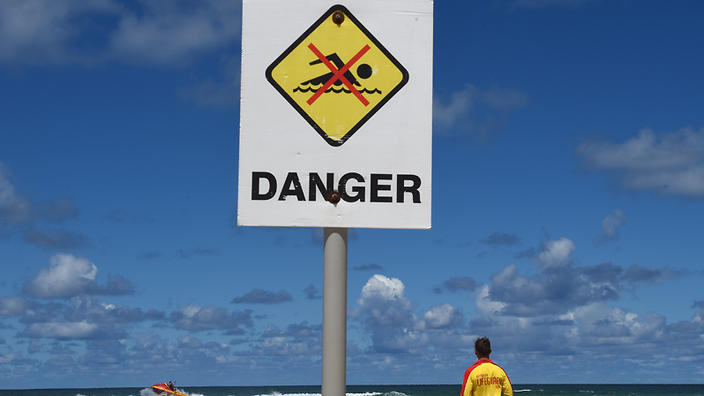
A surf rescue boat searches Shelly Beach near Ballina in far northern New South Wales, Monday, Feb. 9, 2015. A Japanese National has died after being attacked by a shark while surfing at the beach this morning. (AAP Image/Dave Hunt) NO ARCHIVING

Originally published in SBS News, 12 November 2015

On Tuesday, 20-year-old Sam Morgan was mauled on the coast off Ballina, and while he will likely escape serious injuries, the incident has again led to calls for more protections to be put in place. The New South Wales Government has already committed to install ‘eco barriers’ at Lighthouse Beach, where the attack occurred.

It is likely this will not be the last attack of this season. The question we have to ask is how we will deal with them.

Sharks have always been a factor in Australian life, but recent attacks have resulted in an increasing hysteria over the issue. This reaction began after the Western Australian Government’s shark cull in 2013, a policy that many continue to push for even after the Government’s own regulator recommended it not continue.

This response is best epitomised by an opinion piece by Laura Banks in the Daily Telegraph this August. Bank’s article set up sharks as our ‘enemy’; one which we must do whatever it takes to defeat. As she wrote:

“The ocean is our domain and sharks have no place destroying lives and livelihoods; these predators are lurking out there ready to cull humans and we as a community must find a permanent solution.”

A permanent solution — the culling of sharks to protect surfers and swimmers — seems to be gaining more favour in our community.

I have a lot of sympathy for people advocating for culls. I love swimming at the beach but sharks terrify me. In some ways I’ve often thought the beach would be nicer if the threat of them was gone.

Yet, when I look at this issue realistically I cannot help but think things have gotten a little over-the-top. While shark attacks are awful things, we’ve blown up this situation to a status it doesn’t deserve. In doing so we’ve created more threats to our local communities than sharks could ever provide.

Let’s just take a quick look at the data. Since 1791 there has only been 232 fatal shark attacks in Australia, with only two deaths occurring so far in 2015. This puts shark attacks well below many other forms of death in Australia, including obesity, smoking, traffic accidents, domestic violence and lighting strikes, amongst many others.

Each of these attacks is awful. At the same time though, they is a risk that comes with the territory. Just like lightning strikes are a risk if you go outside in a storm, or a car crash is the risk of driving every day, getting attacked by a shark is the risk you take when you go into the ocean.

As with any of those activities we should be doing as much as we can to reduce these risks. I’m in favour of helicopter patrols and of deterrent technologies when they prove not to have an impact on endangered species.But, as Alex McKinnon argues, “car crashes don’t make journalists call for cars to be banned. People dying in floods don’t trigger campaigns to ban rain.”

Yet somehow this is where the rhetoric is leading us when it comes to sharks. Instead of just minimising the danger we have moved to trying to get rid of it completely, seemingly by declaring war on an entire species. This isn’t just completely unrealistic, as the WA shark cull proved, but it is also potentially creating real harm to coastal communities. In her article, for example, Banks said that shark attacks were leading to the “desertion” of coastal towns. “We won’t have to worry about sharks because there will be no one living on the coast,” she wrote. “The shark will have won.”

The NSW Government today rolled out a new program of shark monitoring measures, but some local residents on the north coast say that culling or baited drumlines are needed to protect surfers and the local industry.

I doubt this is even close to true, but if it is the case it seems unlikely that sharks are the real cause. Our coastal towns have flourished for over two centuries despite the risk sharks have played. What has changed has been our reaction — a desire to get rid of the risk of sharks, and a panic when that doesn’t happen. It is not sharks that are turning people away the coast. It is fear mongering over a tragedy that is extremely unlikely to occur.

We are unfortunately likely to see more shark attacks this summer. That is the risk we take when we head into the water.

Sharks are a natural and integral part of our ecosystem. They will always be a risk. It is our response that we can manage. Reducing the risk of shark attacks makes sense. Trying to eliminate it though is both impossible and impractical.

This article was originally published on SBS News. Click here to view the original. © All rights reserved.


If love is love then why exclude the polyamorous?

The consequence of a ‘gay equality’ movement that has become so narrowly focused on marriage is that we’re sacrificing anyone who gets in the way.

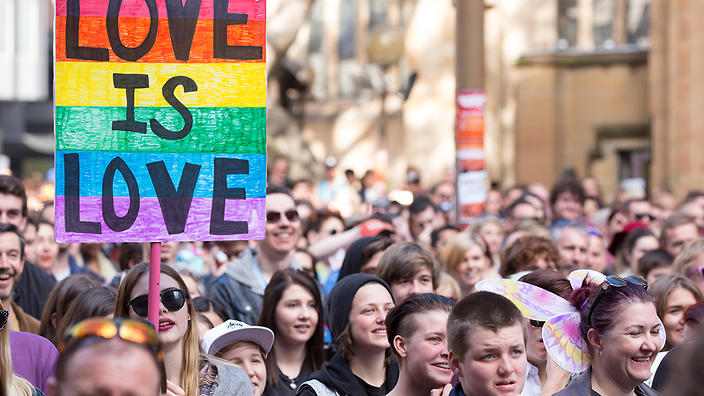
Same-Sex marriage activists march in the street during a Same-Sex Marriage rally in Sydney, Sunday, Aug. 9, 2015. (AAP Image/Carol Cho) NO ARCHIVING

Last week, three Canadian men — Adam Grant, Sebastian Tran and Shayne Curran — publicly came out about their polyamorous relationship. In a video posted online and a range of stories that followed, the three announced their imminent “marriage” as well as their desire to have children.

They seem to have received significant support from their loved ones and others around the world, but not everyone is happy. Grant, Tran and Curran have also received a torrent of abuse — particularly from gay men.Some examples here.

I have experienced this sort of abuse firsthand. In May this year I did something similar to these three by openly talking about my polyamorous relationship with my partners, James and Martyn. The reaction from friends and family was overwhelming, but gay men were quick to tell me I was “hurting our chances” at winning same sex marriage. Others insisted that my relationships were morally wrong as “monogamy is natural”. These are the exact same kind of attacks I’ve seen being used against the Canadian trio.

This is not coming from a few on the fringe. Responding to the idea of polyamory marriage in 2012, for example, the then convenor of Australian Marriage Equality (AME) Alex Greenwich told journalists the organisation’s concept of marriage was “what it’s always been” of “two people who rely on each other in a relationship to the exclusion of all others”. This was echoed by comments of AME’s current convenor Rodney Croome, who once wrote that ‘polyamorous people don’t want marriage’.

Since when did gay groups start to parrot the messaging of the conservatives who attack us? Conservatives have often argued, for example, that “homosexuality is unnatural” and “humans have always been in heterosexual relationships”, as an attack on gay rights. Replace “marriage has always been between two people” with “marriage has always been between a man and a woman” and you’ll find one of the most common lines of attack against marriage equality.

Why are we now using the exact same lines against people in other non-traditional relationships?

This is the consequence of a ‘gay equality’ movement that has become so narrowly focused on marriage that we’re sacrificing anyone who gets in the way. It seems for many gays that all love is equal, except when that love is shared between more than two people. In our desire to get wed we’ve it’s become okay to attack people who are in happy, open, and totally consensual relationships.

That’s not just about polyamory, it goes for those who are single, happily promiscuous or in open relationships. If you don’t fit the coupled mould, gays are ready to throw you under the bus — calling your relationships ‘destructive’ and ‘unnatural’.

When it comes to relationships, the only thing we should ever be concerned about is harm.

Being polyamorous, I’ve become used to these sorts of attacks from conservatives, but it is so much worse when it comes from gay men. Prejudice is ugly, but even more from those who have supposedly been fighting against it all their lives.

When it comes to relationships, the only thing we should ever be concerned about is harm. If a relationship is not harmful, then what right do you have to attack it? If love is love, then why does this not count when that love is expressed between more than two people?

You’d think that after years of fighting for acceptance, gay men would be the first to realise this. It’s a failure of the rights groups whose focus has been on straightening queer people to get access to a set of rights for a limited few. After years of fighting for acceptance they should be the first to support and congratulate people carving their own way. The fact they’re not says a lot about how far we’ve really come.

This article was originally published on SBS News. Click here to view the original. © All rights reserved.

Don’t be too excited over Malcolm Turnbull’s newfound love for science

The Prime Minister has put science ‘at the centre of our national agenda’ and announced a new Chief Scientist. But that doesn’t guarantee change.

20151027001192688173-minihighres

Originally published in SBS News 29 October 2015

The Coalition Government has pressed ‘reset’ on its relationship with science.

Malcolm Turnbull initiated the shift last week whilst handing out the Prime Minister’s Awards for Science,declaring he wanted Australia to be “a country that invests in science and puts it right at the centre of our national agenda.” He continued by stating: “It’s a great honour for me, not just to be prime minister, but to be your prime minister, to be the prime minister that says that science is right at the centre and the heart of our national agenda. Not just that, it’s at the heart and very centre of our future.”

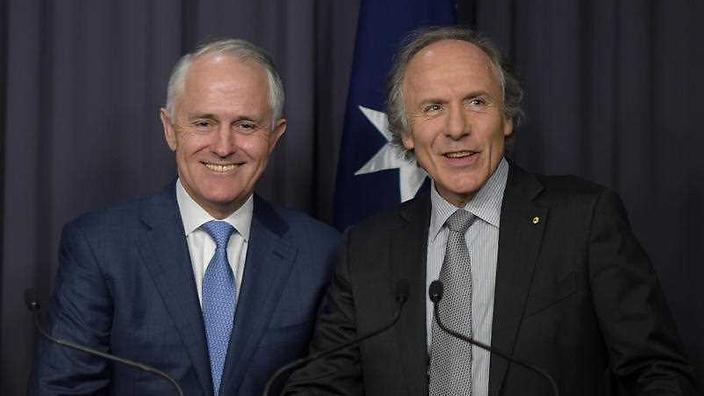
The Government continued the trend this week as it appointed the current Chancellor of Monash University, Dr Alan Finkel, to replace Ian Chubb as Australia’s Chief Scientist. Finkel’s appointment made waves due to his strong advocacy on climate change, arguing both for the end of coal and the adoption of nuclear power.

The Government’s manoeuvres mark a significant shift from previous years. Turnbull’s reception at the national science awards for example is in stark contrast to that received by Tony Abbott, while it is almost impossible to imagine Abbott appointing someone such as Finkel given his climate views. But what will this shift mean in the long run?

The best place to look for the answer to this is the outgoing Chief Scientist Ian Chubb’s report Science, Technology, Engineering and Mathematics: Australia’s Future. Released in 2014, Chubb used the report to pressure the Government to develop a national strategy for science, technology, engineering and mathematics (STEM). Whilst former Prime Minister Tony Abbott let the report sit, last week Turnbull committed to implementing it in full. This makes it the closest thing we have to a national science agenda.

Chubb’s report is broken down into four different categories: Australian competitiveness, education and training, research, and international engagement.

Potentially the most important of these is education and training. Chubb points out that enrolment in STEM subjects by Australian high school and University students is dropping to unsustainable lows. This is partially due to a chronic shortage of STEM teachers, with, for example, 40 per cent of Year 7 to 10 mathematics classes in Australia being taught without a qualified teacher. Polices to build a stronger pool of STEM teachers, whether from local or international sources, are therefore essential.

Research is another area of importance. The Abbott Government slashed funding to some of Australia’s most important research agencies, in particular the CSIRO and the extremely successful Co-operative Research Centres (CRCs). More destructively, the Government shifted their funding priorities almost solely to research with commercial outcomes. This excluded extremely valuable and important research that aims to understand the world in which we live. Chubb’s report rejects this, emphasising both the importance of publicly funded research and of ‘blue-sky’ research — research which is aimed at increasing our knowledge, even if it doesn’t result in commercial applications.

That is the positive. Yet, when I look at the rest of strategy, and Malcolm Turnbull’s own ideologies, I have cause for concern. In particular I worry about Chubb, Turnbull, and now Finkel’s end game. What is the purpose of all of this investment in science, technology, engineering and mathematics? Chubb’s report states: “The end we aim to achieve is to build a stronger Australia with a competitive economy. We will need to facilitate growth in ways and on a scale that we have never achieved before.”

A national strategy for science therefore is all about economics, and seemingly little else. Having science at our heart means having economic growth at our heart as well. Alan Finkel reiterated this focus, commenting on his appointment that “we exist in a competitive international environment and to compete effectively, business needs science, science needs business, [and] Australia needs both.”

For the scientific community this seems rather contradictory. This strategy is about using science to continue a system that scientists have often pointed out is extremely destructive.

It is ironic for example to see scientists cheering a growth-focused agenda, when it has been the very same scientists who have been at the forefront of the fight against climate change. Scientists have warned us for decades again about the destruction of our environment, which is fundamentally a symptom of our growth agenda.

Even with his more climate-friendly rhetoric, this is not an agenda Malcolm Turnbull is going to change any time soon. Turnbull’s appointment of Finkel for example came only a day after he reiterated his Government’s support for coal mining and export. It was only two weeks ago that Environment Minister Greg Hunt approved the construction of the Carmichael Coal Mine, once again. It doesn’t seem Turnbull will be acting on Finkel’s no coal plan any time soon.

Or what about the impact our economic system has on our social well-being? Medical professionals have oftenwarned of the serious impacts our work culture has on our physical and mental health. This again is connected to an obsessive growth culture, one which encourages employers and our Government to demand longer working hours. In fact, technology has played an active role in the very problems scientists are researching. Technological development has often been predicted to liberate the workforce, in turn allowing us to work fewer hours and have more free time. But in the hands of employers the opposite has been true. Technology has allowed employers to intrude into our daily lives more and more, effectively meaning we are always at work.

This is something Chubb’s strategy seems to want to continue. One of his stated objectives is for Australia to have “a flexible workforce with the entrepreneurial skills to thrive in an environment of rapid technological change.” This is the very sort of language employers have used to weaken union power and crush the conditions of workers, a position that Turnbull regularly supports. These are the very sorts of moves that increase stress and health problems that many scientists warn us about.

This is why I’m not so quick to get up and cheer over Malcolm Turnbull’s newfound love of the scientific agenda. Greater investment in STEM education, and better coordination of research is definitely welcome. But the contradictions in the approach could actually see us, and science, worse rather than better off.

What does a nation with science at the heart of its agenda actually look like? Well, that depends on how you use it.

Science and technology are powerful tools, but that is all they are. There is a lot these tools have done for us — alerting us to climate change and environmental problems, developing new technologies to make life easier, investigating and finding cures for health problems and diseases. Our world would be a very different place without centuries of scientific and technological advancement.

But the tools of science and technology are only as valuable as those who use them. In the hands of Malcolm Turnbull and the Coalition I have little faith they will be used to any good.

This article was originally published on SBS News. Click here to view the original. © All rights reserved.

The “new” marriage equality strategy is bound to be a failure

When Australian Marriage Equality announced their new strategy on Monday to win over 8 MPs that are needed in order to make marriage equality a reality, Simon Copland was skeptical. Here he explains why. 

Screen-shot-2015-10-01-at-11.37.41-AM

Originally published in the Sydney Star Observer, 15 October, 2015

WHAT do you call it when the so-called conservative Catholic countries of Spain, Portugal, Brazil, Argentina, Uruguay and Ireland pass marriage equality legislation before the secular, and apparently more progressive Australia?

Some have called it a national embarrassment. Others a blight on our democratic leaders. But I give it a different name: the monumental failure of a movement that should have won years ago.

It is for this reason that I was stunned when reading Australian Marriage Equality’s “new” strategy released on Monday.
You may notice I put “new” in inverted commas. Reading the strategy I could not help but get a sense of déjà-vu. This “new” strategy seems very similar to the old one — lobbying politicians to get them to change their position. According to AME national director Rodney Croome we just need “another eight votes” and then same-sex marriage will become a reality.

After years of failure you would think it may be time for a rethink, but apparently not. In doing so I suspect we may not see marriage equality for a long time yet.

Previous marriage equality strategies have been based on two ideas: get a free vote in both parties and then convince enough MPs to vote yes when that happens. This strategy however, while seemingly solid, has failed for two reasons.

First, a free vote was always too weak an ask. Focusing on a conscience vote let the ALP largely of the hook, then squeezing out any room for the Coalition to manoeuvre. With their conservative base, the Coalition were never going to agree to all our demands. Fighting for a binding vote therefore would have let them have a conscience vote as a compromise — an opportunity we took off the table from day one.

These issues are particular pertinent when met with the second problem, the weak public pressure placed on our politicians. Most work has been done in the corridors of Parliament, and while marriage equality has remained an issue of public debate it has not become a vote-changing one. This is why Malcolm Turnbull was able to dump a conscience vote with little to no change in his popularity or electoral chances. There is simply not enough strength in the movement, resulting in little pressure on our political leaders.

It is these same issues I see with AME’s “new” strategy. The strategy sticks to the old plan — lobby politicians, change individual MP minds, and somehow hope that that leads to reform.

You have to ask, why will it be different this time? The strategy in particular misses any real plan for how to convert new MP support into an actual vote in Parliament — once again placing all bets on the slim chance the Coalition will opt for a free vote. With no real ground game to put pressure on Malcolm Turnbull in particular (who has largely received a free pass since his ascension to the Prime Ministership) to make that happen, this hope seems very faint indeed.

So what is the alternative? If we want marriage equality as soon as possible there are two options.

First is to defeat the Coalition at the next election. Parliamentary votes are now so close that the issue is no longer numbers, but who controls your vote. That means that, if marriage is your big issue, you are better off giving your preference to an anti-marriage Labor candidate than a pro-marriage Liberal one. Even if they vote against marriage (and I highly doubt any Labor MP would vote against their own Prime Minister’s first legislation) the mere existence of a vote is currently what is important. An anti-marriage equality Labor MP (or even better a pro-marriage Labor or Green one) is therefore better than a pro-marriage Liberal MP sitting on the back bench with no power to create the change.

However, I think there is an even better alternative. I know people don’t like this, and for good reason, but we still have time to push Malcolm Turnbull to make a plebiscite occur at the next election. This would not only force both parties to act straight after the election, but would also do one thing the current strategy has not — get us on to the street to engage voters one by one. This not only has the capacity to pass marriage equality but would also have the longer-term impact of changing people’s views of homosexuality and queer relationships. That, to me, is far more valuable that spending thousands of dollars to change the minds of eight Parliamentarians.

Time to get out of the halls of Parliament and into the streets. That’s how marriage equality will happen.

When is it okay to boo the Prime Minister?

Booing is a way of saying ‘you’re not one of us’. So when is it okay to unleash on the Prime Minister? The football is a given, writes Simon Copland.20100119000291290588-minihighres

Originally published in SBS News, 13 October 2015

Last weekend Malcolm Turnbull was booed at his own party’s state conference. Turnbull was heckled by his own party after he told delegates there were “no factions” in the Liberal Party; an amusing concept from a leader who just used his own faction to depose of a sitting Prime Minister.

While Turnbull may be the first Prime Minister to be booed by his own party, at least in living memory, he is certainly not the first Prime Minister to receive the treatment. So, when is it okay to boo the Prime Minister?

Australians love to heckle Prime Ministers. Last year for example, Tony Abbott received all of the wrong headlines after he was booed by a 80,000-plus crowd at the NRL Grand Final. Whilst some of Abbott’s enemies were highlighting this as a show of how disliked our former leader was, nearly all of Abbott’s predecessors faced the same fate at some point. John Howard seemed to be booed at every event he went too, and yet still managed to win four successive elections.

When not booing our PMs we like to throw (literally) other abuse towards them. Howard, again, famously had a shoe thrown at him on Q and A, while Julia Gillard was the victim of a vegemite sandwich. John Howard also had delegates turn their back on him in a very public display during his speech to the Corroboree 2000, a tactic some (unsuccessfully) tried to employ during Kevin Rudd’s apology to the stolen generation.

The list goes on and on. The point though is that we Australians don’t seem to have a very respectful relationship with our national leaders. But is that a good, or a bad thing?

For some these indignities shown to our political leaders are a step too far. Our leaders, whether we like them or not, at least deserve our respect. This deference to authority is, at its heart, a very conservative ideal, but recently has often been progressed by the left as well. Progressives for example used to bitterly complain when right wing shock jocks referred to Julia Gillard solely as “Julia”, something they said showed no respect for the Prime Minister. The same critique was used by US President Barack Obama when heckled by a LGBTI activist at an event in the White House. Obama responded by saying that if you’re eating his hors d’oevres and drinking his booze you have no right to interrupt him. Don’t raise your voice, especially when you’re eating my fancy snacks.

Yet, I tend to think there is something healthy about this question of authority, and I’m glad Australians are willing to express this as boldly and openly as we often do. While this may just look like a rude expression of Australian larrikinism, it goes much deeper than that.

Just look at where most of our booing happens: at national sporting events. Sport is a difficult place for politicians — a space they are, for some reason, expected to inhabit, but one where they can be sensed as a phoney from a mile away.

That’s what the booing really represents. It’s anger at politicians trying to act like they belong when they really don’t. When we’re booing what we’re really saying is, “you are not us, stop pretending like you are.” This can be said for Abbott, Rudd and Howard who always looked out of place at the football, or Malcolm Turnbull who is clearly very different to his own political base.

This is the power of the boo. In a time where politicians are increasingly disliked it’s not just some childish taunt but instead a reflection of our society’s view of our leaders. The boo screams of “get out of here, you are not one of us.” In doing so it is potentially the best expression of our political class I could think of.

So, when is it okay to boo the Prime Minister? Always. Have at it, I say!

This article was originally published on SBS News. Click here to view the original. © All rights reserved.

‘New Atheism’ takes on a boy and his clock

Ahmed Mohamed, 14, attracted international attention with his homemade clock that was mistaken for a bomb. But when Richard Dawkins and Bill Maher weighed-in it was all about ‘New Atheism’, writes Simon Copland.

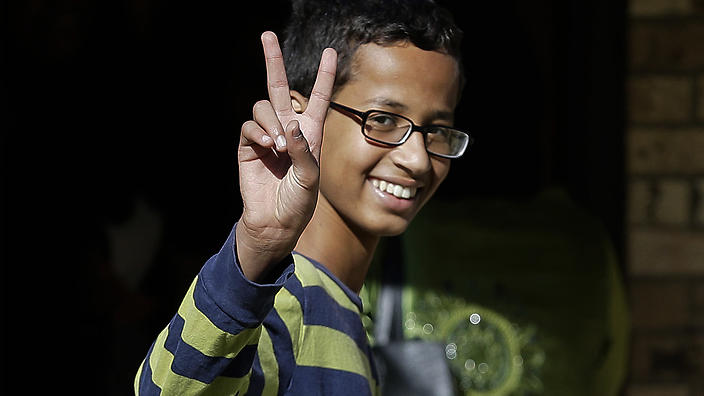
FILE - In this Sept. 17, 2015, file photo, Ahmed Mohamed gestures as he arrives to his family's home in Irving, Texas. The family of the 14-year-old Muslim boy who got in trouble over a homemade clock mistaken for a possible bomb has withdrawn the boy from his suburban Dallas high school Monday, Sept. 21. (AP Photo/LM Otero, File)

Originally published in SBS News, 2 October 2015

Why would two grown men attack a 14-year-old boy for seemingly no reason at all?

Last week evolutionary biologist Richard Dawkins and US comedian Bill Maher both took aim at 14-year-old Ahmed Mohamed. Ahmed, if you remember, was the kid arrested in Texas after his teachers thought that a clock he had made was a bomb. Ahmed’s story received international attention and even an invite to the White House from US President Barack Obama.

But that wasn’t good enough for Dawkins and Maher, who both came out within the last week to question Ahmed’s motives. Dawkins questioned whether he had actually ‘invented the clock’, claiming Ahmed “wanted to be arrested”. Maher went even further by saying school officials “absolutely did the right thing” in calling the police on the child.

These are the sorts of attacks you may expect from the reactionary, and racist, right. Coming from Dawkins and Maher however seems potentially more surprising. Unfortunately though, it highlights a serious problem with a growing movement some call “New Atheism”.

The proponents of New Atheism have often come under attack for being racist. Dawkins and Maher have a long history of attacking Islam, both labelling it “inherently violent”. This often results in a neo-colonialist approachthat you often wouldn’t expect from so-called “left wing” commentators.

Yet the attacks on Ahmed highlight something even more sinister. New Atheism is not just an attack on organised religion, but the very idea of religious and spiritual thought as a whole. And while that may seem benign, it is anything but.

Richard Dawkins in particular is the epitome of this type of thought, but it permeates many scientific and progressive communities. Within this belief system rational science takes precedence over all other forms of spirituality. Anyone who has any spiritual or religious beliefs is therefore “anti-science” and deserves to be criticised. Simple as that.

Here, we can see a really hallow, and dangerous, form of ideology.

This is not just a system that tries to educate and promote science, but enforce it as well. New Atheism is a political ideology based on nothing more than imposing the idea of an “objective truth”. It is about proving that science is “right” without ever questioning the potential reasons why some have religious and spiritual beliefs, and what benefit they may bring.

Now, don’t get me wrong, I have no problem with promoting science and science education. I would be the first, for example, to say that we should be teaching evolution in school, and not creationism. But that doesn’t mean there’s anything wrong with the spiritual and religious ideas existing in our society. For many, religion plays an important role in providing community, hope, and support during difficult times. I cannot blame people for seeking these things as they make their way through life.

New Atheism fails to recognise this, mocking people for being “irrational” just because they don’t follow full scientific dogma. In turn it has become an entirely intolerant theology of its own, one no better than the religions it is supposed to be criticising. As Hamad Dabashi argues, the manner “in which Dawkins and his coreligionists preach and practise their atheism is not much different than the manner in which Abu Bakr al-Baghdadi preaches and practises his Islam, or John Hagee confesses his Christianity, or Rabbi Eli Ben-Dahan his Judaism.”

In doing so New Atheism has nothing to do with creating a better world, or even challenging the power or organised religion. It is all about “being right”, even if that is at the expense of living in a more tolerant and accepting world.

This is how two grown men ended up attacking a 14-year-old over his claim that he “invented” a clock. It is the logical extension of a theology that is all about moral and intellectual superiority. Running out of adults to attack, it makes sense Dawkins and Maher would soon pick on a child. In doing so though they’ve highlighted the extremely hollow nature of their ideology. For that we can thank them.

This article was originally published on SBS News. Click here to view the original. © All rights reserved.