Weekend Reads – Who are we?

In my recent spate of reading, I have been delving into a range of material from Haruki Murakami. Murakami is very quickly becoming on of my favourite authors. At the moment I am making my way through a book called Blind Willow, Sleeping Woman – a series of short stories. I was struck the other night with a story titled “Man-eating cats”.

The story is about a man in Japan, who is engaging in an affair with a woman called Izumi (we never actually learn the name of the man – the narrator of the story). When the affair becomes known to their respective partners, and they are both separated, they decide on a whim to quit their jobs and move to a small island in Greece. As they both say, “there is nothing left for them in Japan.”

The scene that struck me occurs right at the end. Waking up in the middle of the night in their new home in Greece, the man realises that Izumi is not in the house. After he begins searching for her a strange thing happens:

“Just then – without warning – I disappeared.

Maybe it was the moonlight, or that midnight music. With each step I took, I felt myself sinking deeper into quicksand where my identity vanished; it was the same emotion I had in the plane, flying across Egypt. This wasn’t me walking in the moonlight. It wasn’t me, but a stand-in, fashioned out of plaster. I rubbed my hand against my face. But it wasn’t my face. And it wasn’t my hand. My heart pounded in my chest, sending the blood coursing through my body at a wild speed. This body was a plaster puppet, a voodoo doll into which a sorcerer had breathed a fleeting life. The glod of real life was missing. My makeshift, phoney muscles were only going through the motions. I was a puppet, to be used in some sacrifice.

So where was the real me? I wondered.”

The man had already had a similar experience whilst they were flying over Egypt on their way to Greece, but this time it was much stronger. A complete sense of disappearance – that in one fell swoop his past was completely gone, and with his past he himself was gone as well.

I think in many ways we all struggle with the idea of sentimentalism – the thought of something gone past that we will never experience again. We mourn for our childhoods. We wish to relive holidays or great experiences. We worry as time goes, we get older, and we transfer from youth to adulthood to old age. It’s natural I think.

But this takes it to another level. A life completely gone, torn away (through his own fault) and never to return. In moving to Greece he loses everything from his past life (except his new girlfriend) – making his past life almost completely disappear.

And in doing so Murakami sets up a bizarre scenario – one in which everything is completely gone. A new life has begun. Almost a new person born.

But is it really that bizarre?

One of the most re-told factoids (I reckon) is the idea that all cells in the human body get replaced every seven years. Apparently it is not quite right, but the symbolism is strong. Who we were physically 7 years ago is completely different to who are now. We are physically not the same beings. This opens the question of ‘who are we?’ Are we really one continued human, or are we collections of 7 year lives added on top of each other to make a story?

I think the physical reality is somewhat moot. Whilst the body replaces itself every seven years it is a continual process – not one that happens over night. The cells are continuously connected.

But it opens up an interesting question. Is a ‘lifetime’ a real thing? Does what we call ‘life’ actually exist, or is it just some made up idea? If we change everything – start a ‘new life’ – does the old life still exist, or have we gotten rid of it completely?

Murakami helps guide us some of the way. To get out of his slump, the man in the story tries to think of something different:

“I tried hard to think of something else. My sunny apartment back in Unoki. The record collection I’d left behind. My nice little jazz collection, My speciality was white jazz pianists of the fifties and sixties. Lannie Tristano, Al Haig, Claude Williamson, Lou Levy, Russ Freeman. Most the albums were out of print, and it had taken a lot of time and money to collect them. I had diligently made the rounds of record shops, making trades with other collectors, slowly building up my archives. Most of the performances weren’t what you’d call ‘first-rate’. But I loved the unique, intimate atmosphere those musty old records conveyed. The world would be a pretty dull place if it were made up only of the first-rate, right? Every detail of those record jackets came back to me – the weight and heft of the albums in my hand.

But now they were all gone for ever. And I’d obliterated them myself. Never again in this lifetime would I hear those records.”

I find this passage extremely striking. He is only discussing a record collection, but the record collection symbolises so much.

The narrator here connects himself back to his memory. Whilst his real life connections from his old life are gone, his memory still connects him there. His ability to remember every record with absolute detail takes him directly back to his past life, recreating its existence. But memory is not necessarily a perfect thing. We often forget particular parts of our lives, and embellishing others. Memories in some ways therefore are not necessarily an accurate representation of life, but rather how we tell ourselves the story of our lives.

It is here where the tale of the story may be useful. Our lives may exist because we tell the stories about them – because we give them meaning. The idea of a ‘lifetime’, just like everything else, is something we construct in our minds and societies – it is something we tell stories about and therefore it is something we make exist.

Our lives are real because we give meaning to them. We place significance in them, and tell the stories of them. Whilst we physically and mentally may change, the story of the life is what makes it important.

The question then arises, what happens when the stories of lifetimes stop being told? Did that life still exist?

The left blames preferences at its own peril

With the Senate results in all states now finalised (with a recount in the WA looking like it’s on the way), progressive voters are quickly looking for someone to blame. The results saw three candidates from the Palmer United Party elected as well as a Liberal Democrat, Family First and Motoring Enthusiasts Party member put into our Senate next year. Meanwhile the Greens lost in WA, NSW and QLD, whilst the ALP only managed one seat in SA. With such shocking results for the left, many are turning their attention to our Senate preferences system. The argument is simple, without the system working as it currently is, there would have likely been a different more even result. At least a lot of these minor parties would not have been elected.

Now, I think the Senate system seriously has its issue. The fact that people can still get elected on 0.51% of the vote (the Motoring Enthusiasts Party) or that if 15 Greens voters had voted for the Australian Christians in WA instead of the Greens we would have ended up with a completely different result, shows that there a problem.

But I fear that if the left seems to be focusing all of its ire at the Senate preferencing system. If we continue to do so it will be at our own peril.

Straight after the election, the left were desperate to find scapegoats for the result. It was the stupid racist voter who didn’t know what was good for them. The Murdoch media and their duping of the electorate. Tony Abbott and his manipulative campaign, which held facts back from the voters. Now, with the Senate result in, it is preferences.

It feels a little bit like we are the right in the US after the Presidential election; looking for a scapegoat, trying to find somebody else to blame, trying to find some form of corruption or fault in the system.

But, just as we would say to the right in the US, I think we need to look at ourselves. Let’s just have at the Senate numbers.

For example, based on Antony Green’s website*, in WA progressive parties (the ALP and the Greens) received 36.34%, whilst conservative parties (the Liberals, Nationals, Palmer United and Liberal Democrats) received 52.77% of the vote. In NSW, conservative parties (the Coalition, Liberal Democrats and Palmer United Party) received 47.11% of the vote, whilst progressives (the Greens and ALP) received 39.35% of the vote. In Queensland, conservatives (the LNP, Palmer United Party and Katter Party) received 54.22%, whilst progressives (ALP and Greens) wallowed in a pathetic 34.56% of the vote. The shift was even seen in Tasmania, where conservatives (the Coalition, Palmer United Party and LDP) received 46.46% of the vote, compared to a 44.53% for progressives (ALP and Greens). This is remarkable given that Tasmania has been the only state to regularly send 4 progressives to the Senate for the past few elections.

The only state that really bucks the trend is Victoria, where progressive parties (the ALP and the Greens) received 43.32 and conservative parties (the Coalition and Palmer United Party) received 43.83% – a virtual tie.

To put it simply, all across the country, progressive parties in the Senate got spanked. Our votes tanked and tanked bad. In states like WA and QLD they tanked so badly, that no matter what the configuration, there was basically no chance that progressive parties would do better than winning two Senate seats. That truly is a pathetic result.

And if we don’t deal with this fact the left will not recover quickly. The search for scapegoats means we will fail to look at the real issues here; how the right out-campaigned the left, how we failed to develop and effectively sell a progressive vision to the public, how we failed to get on the ground and change votes where we needed. These are the things that the left needed to do to win, and if the results are any indication, the left failed at it.

So whilst changing the Senate voting system may have gotten Scott Ludlam elected in the last election, what it wouldn’t have done is fix the core problem; that voters deserted progressive parties. Without dealing with that fact – without looking at the problems of the past six years and figuring why it is that voters deserted us, we’ll just spend our time not changing, blaming the system, and losing time and time again. We’ll look a bit like the crackpots in the US blaming the election on a major conspiracy, and in doing so failing fix our own failures.

It’s time we stopped trying to find scapegoats; whether it is the ‘inherently stupid racist voter’, or the Senate preferencing system. Progressives lost the last election. And we lost it fair and square. Until we deal with that, we’re not going to win again for a while.


*For this calculation I have used all votes above 2%. It is important to note however, that including votes below this could add significant extra vote to conservative parties as minor parties are dominated by conservatives. I have left out SA as the inclusion of Xenephon makes the progressive/conservative split difficult to determine.

The logic behind Julia Gillard’s same-sex marriage opposition

In Julia Gillard’s first interview since she was deposed as Prime Minister a young boy  stood up and asked the question many wanted an answer to; “how come you didn’t let gay people get married?”

The response probably surprised many. Gillard, reflecting on her time as a feminist activist in uni said:

“We weren’t talking about gay marriage as women, as feminists.”

“We were critiquing marriage, and if someone had said to me as a 20-year-old, ‘What about you get into a white dress to symbolise virginity and you get your father to walk you down an aisle and give you away to a man who is waiting at the end of the aisle,’ I would have looked with puzzlement like, ‘What on earth would I do that for?’

She continued:

“I think that marriage in our society could play its traditional role and we could come up with other institutions which value partnerships, value love, value lifetime commitment.

“I have a valuable lifetime commitment and haven’t felt the need at any point to make that into a marriage.

“So I know that’s a really different reasoning than most people come at these issues, but that’s my reasoning.”

Cue the outrage. All across social media people screamed “sure, you can critique marriage, but that doesn’t mean you should continue to discriminate against gay people.” “You shouldn’t deny people of their CHOICE to get married.”

To be fair Gillard’s statement potentially stinks of political opportunism. After spending years sucking up to homophobes in the ALP as a way to keep her power base, Gillard has now gone in front of a progressive audience and tried to find a progressive out for her opposition to the reform.

But let’s pretend for a minute the view Gillard presented last night has been her consistent position. Because if we do we can see a very coherent and logical progressive argument against same-sex marriage.

Last night, Gillard took a feminist critique to marriage. You can get examples of the feminist critiques here, here, here, and here (for a starting point). Simply put, feminists argue that marriage is a system based in the patriarchy, built in the oppression of women. Gillard mentioned the white dress and the father giving the daughter away. Sexist symbolism is mixed throughout the ceremony and the system – with many churches still preaching that women must obey their husbands once they get married. Originally this was enshrined with legal discrimination and although most of this discrimination is now gone, many feminists still argue that with its sexist history and symbolism, marriage should still be abolished and instead replaced with new, non-patriarchal systems in its place.

Fine, I hear people say, but if people (and importantly women in this case) want to choose to get married, who are we to stop them? It is here where a queer-critique of same-sex marriage is valuable.

Because whilst we may argue that people should be able to ‘choose to get married’, that choice is not necessarily an active one. Marriage is not just one choice out of many in our society – it is the only acceptable choice when it comes to forming our relationships. Marriage is an expectation that is placed onto us from a young age. It is the only way we are told we can lead a normal and happy life.

And in doing so marriage presents a very limited choice. It is the choice of being in a monogamous two-person relationship and one that is very limited in its design and shape. Our social standards (whether enshrined in the law or not) place significant restrictions on how marriages work – we must live together, be committed to and only have eyes for each other, and we must, to put it honestly, have boring sex with each other. And of course in no circumstances can we can’t talk about that sex!

And it is here where same-sex marriage is problematic. Because if there is one community which has the opportunity to directly challenge many of these assumptions about marriage it is the queer community. Without the capacity to access marriage queers have for a long time been at the forefront of exploring new ideas of relationships and sexualities. We’ve been able to explore the ideas of polyamory, s&m culture, saunas and other public sex venues as well as a range of other forms of relationships and sexual experiences. And without the social pressures of marriage we’ve been able to do all of this a little bit more out in the open. These things happen in the straight community, but often behind closed doors, and certainly with limited open and public discussion.

Same-sex marriage however could change all of that. First it will strengthen the institution of marriage. By bringing more people into the tent, same-sex marriage builds the strength of the institution, making it more difficult to tear it, and it’s patriarchal history, down. This is why so many conservative politicians are now jumping on the marriage bandwagon.

And in doing so it also changes the queer community. We can see this now – queers who are fighting for same-sex marriage are also fighting for the values of monogamy and ‘true love’, as if we are now part of the straight community. As we enter the world of marriage the expectations of marriage are being placed onto us, leaving us weaker in our ability to critique marriage and explore the options beyond it.

Did Julia Gillard’s critique extend this far last night? Well, no, obviously not. But to simply decry a feminist/queer opposition to same-sex marriage as illogical and discriminatory is not worthy of this debate. Same-sex marriage has the capacity to not only strengthen a historically patriarchal institution, but in doing so severely limit the choices and opportunities available to the queer community – potentially much more so than the restriction of marriage does. And if that’s the case, Gillard’s critique is one worth listening too.

Bring back Woolies’ vibrators

Originally published in the Sydney Star Observer, 1 October 2013

Complaints against the supermarket chain Woolworths have lead it to remove a vibrator it was stocking in its sexual health section. The complaints were pretty predictable – that stocking vibrators in a supermarket would lead to the ‘sexualisation of children’. For example, Roslyn Phillips from ‘FamilyVoice Australia’ said: “Society is already suffering massive problems with young children being over-sexualised … this move by Woolies just makes the problem worse”.

It’s an argument we hear a lot, and one that shows an ongoing lack of maturity in our society around sex. I appreciate the concern about the sexualisation of children, but there is a big difference between sexualising kids and talking about sex with kids.

We still seem to want to live in a world where we can hide sex from children – where we can shield their eyes and block their ears until they’re 18 and old enough to ‘have the talk’. It’s part of a mood in our society that still treats sex as dirty and therefore something we need to shield from children. As sexologist Nikki Goldstein argued about Woolworths’ sex toys: “We are taught to view such products as dirty, naughty, shameful and outside the boundaries of normality, and that’s wrong”. The controversy over the ‘rip n roll’ campaign in Queensland last year was another good example of this.

The problem is that this creates an idea that sex is an odd and bad experience – one we must hide from. This can lead to long-term negative perceptions around sex, harming what should be a positive experience for people. But it also means that kids start to get information of sex from other means – most likely exploring porn on the Internet. Growing up and not being out, it was often through porn where I explored the idea of gay sex. This builds unrealistic expectations and understandings of what sex is all about.

Talking about Woolies’ sex toys, Terri Kelleher from the Australian Family Association argued: “Do we really need to be explaining to our children what a vibrator is whilst walking down the supermarket aisle? It completely undermines that parental prerogative as to when and how you raise these sorts of things with children”.

The problem with Kelleher’s argument is that we seem to want to shut down those conversations whenever the opportunity arises. We use kids as a way to hide from having mature conversations about sex in our society – whether with children, or amongst adults. This doesn’t mean we should encourage the sexualisation of children. But we can’t hide sex either, and even if we could, we shouldn’t. Sex is a natural part of our lives, and one we should celebrate, not feel ashamed about. The conversations may be difficult, but as a society we need to have them.

Weekend Reads: Kurt Vonnegut’s Breakfast of Champions

A couple of months ago I started a new series of posts called ‘Weekend Reads’ – lighter pieces to take the edge off the weekend. With the craziness of the election, and then the holidays that followed it, I have neglected them for a while. The great thing about holidays though is that they allow for some time for reading, so I am back with a review of Kurt Vonnegut’s Breakfast of Champions (let’s see how this goes. I have been sick for the last 4 days, so this may be a bit jumbled, but that may actually fit Vonnegut’s style).

I’ve noticed I’ve taken a bit of a shine to modern cult literary figures recently, and Kurt Vonnegut is one of the best of the last fifty years (he died in 2007). Breakfast of Champions, the first Vonnegut I have read, was written in 1973 and is one of his best known pieces.

Breakfast of Champions follows the story of two main characters – Kilgore Trout and Dwayne Hoover – and the events that lead up and follow their meeting. Trout is a science-fiction writer, and one who believes his work to be completely unknown within the community. The book follows Trout after he receives an invitation to speak at the Midland City Arts Festival, an invitation he accepts with some scepticism (as he does not believe anyone knows who he is).

Hoover is a wealthy businessman in the Midlands area, and is slowly going insane. The book follows his decent into insanity, which includes terrifying an employee at his Pontiac agency and getting in a fight with his mistress and secretary who he accuses of wanting him to buy a KFC franchise. Hoover’s insanity culminates in the meeting with Trout. Meeting Trout, he reads one his novels, the story of Now It Can Be Told. This book describes a universe in which only one character has free will (the reader of the novel) and everyone else is a robot. Hoover interprets this as a message addressed to him from the Creator of the Universe, and goes on a violent rampage injuring many around him and putting himself into a mental hospital. The meeting is transformational for Trout as well, with the rampage setting of a chain of events that takes him from an unknown author to a winner of a Nobel Prize.

You’re all potentially screaming ‘spoilers’ at me, and I have basically just described the entire story. But don’t, the story is not the unique or hidden part of the book. In fact, even Vonnegut outlines many of the details of the story’s ending right from the beginning of the novel. And that’s because it’s not the story that makes Breakfast of Champions so remarkable; it is the way it is told and the themes that run throughout it. This is not the kind of book where you are desperate to keep reading because you want to find out what happens next to the characters, but rather because through his unique style, Vonnegut brings out issues and themes that you would not expect from such a bizarre story (which it truly is).

Breakfast of Champions is not written in the way you would expect from a normal book. Most authors write in either the first or third person – either from the perspective of one of the one of the characters, or from a narrator who is completely disconnected from the book. Vonnegut manages both. The story is told through a narrator, but as a narrator that is not just involved in the story, but has control over it. In other words, the book is narrated through an ‘author’, and one who directly inserts himself into the story. The narrator (Vonnegut) describes this control in the following way:

I could only guide their (the characters) movements approximately, since they were such big animals. There was inertia to overcome. It wasn’t as though I was connected to them by steel wires. It was more as though I was connected to them by stale rubberbands.

The book is told through a third person account, but that third person has direct influence in the book itself – much more literally towards the end of the piece.

This unique interaction between the narrator and the characters brings out an interesting exploration into the role story playing plays in our lives. Throughout the book, the narrator, who is himself a story-teller, explains that humans want to live their lives as if they are in a story. Our lives are told through a start, middle and end and we tell our life stories as if they are a novel. We connect through story-telling, and as the story-teller the narrator explores this idea throughout the book. In one of the most interesting ways, the narrator explores the lives of many minor characters throughout the book. With humans wanting to live their lives as if they are in a story-book, rulers, the narrator argues, have the capacity to discard the lives of ‘minor characters’. The narrator explains that he wishes he could explain the stories of the minor characters that appear through the books, but that he can’t. This is a lot like life, where in the history of our world, only the stories of a few – or the major characters – can easily be described. The others are tossed away.

If we are all destined to a role of major or minor characters therefore, a question arises – one which dominates the book – are we all just robots? We can see this theme in the story of Now It Can Be Told, the novel which sends Hoover insane. The theme is explored further when Hoover goes insane, in which the narrator excuses the people of the city for not recognising it because they act as machines:

Their imaginations insisted that nobody changed much from day to day. Their imaginations were flywheels on the ramshackle machinery of the awful truth.

Here, Vonnegut explores a cross-section of ideas. If our lives are just stories, we are all robots – a small part of story being told by someone else that we cannot control. We are not fully capable of controlling our world, with their being much greater forces – or ‘major characters’ at work.  Vonnegut takes this to the extreme, taking away almost all sense of control for the characters and putting them in the hands of the narrator. In doing so however he asks interesting questions, how much has society programmed us in particular ways and how can we change that course of action if we want to?

Here Vonnegut tackles the concept of resistance, a way to ‘change the story’.

“Ideas or the lack of them can cause disease!”

When Trout realises what impact his book has had on Hoover, this is what he declares. If we are all robots, then the potential ‘cure’ for this is the one of ideas. With their capacity to spread quickly, Vonnegut explores the through that ideas are diseases, plagues that can both hurt and help our society. One of the perfect examples in the book is that of mirrors. Throughout the book, Trout explains how he calls mirrors ‘leaks’. In one scene he explains to a truck driver this idea. This driver then explains this to his wife, who then tells it to all of her friends. The idea spreads like a disease.

Ideas it may seem are the anecdote to the issues Vonnegut is exploring – a way to challenge the stories that dominate our lives. This is where Trout is such a valuable character – a man who in his own quiet way transverses many of the themes Vonnegut explores. His books deal with the issues that Vonnegut aims to explore and as the only character who really interacts with the narrator transcends the world of major versus minor character.

The best way to explain Breakfast of Champions is ‘odd, but brilliant’. Throughout unique story-telling, Vonnegut manages to explore concepts central to the human experience; the idea of free will, the explanation of life, and the purpose and spread of ideas. Whilst I may not agree with a lot of the conclusions that the narrator comes up with in the piece, the way Vonnegut explores the themes is truly worth the experience. It is a piece worth reading.

The case for not reporting on asylum seeker arrivals

The Coalition has caused anger over the last week after it announced that it would stop the reporting of asylum-seeker boat arrivals. The Coalition has said it will stop issuing a media alert each time a boat arrives within Australian shores. Instead Immigration Minister Scott Morrison and Angus Campbell, who is the Deputy Chief of the Army and in charge of Operation Sovereign Borders will provide a weekly briefing of the status of the operation. These briefings, it has been said, will provide numbers of arrivals, but will not provide information how many boats have been turned back under the Coalition’s policy. Scott Morrison gave this reason for the change:

“People smugglers use information as a tactic to ply their trade.

“Labor was impotent in response to arrivals, all they could do was announce them and run a water taxi service.”

With a justification like that it is fair enough that the policy has caused outrage. It is an extremely hypocritical position from a party that shouted from the rooftops every time a boat arrived whilst the ALP was in Government. As Katherine Murphy from the Guardian argued:

“Morrison, having benefitted from elevating this issue every day in opposition, having successfully made asylum a proxy measure for whether you can govern effectively or not, now needs to tamp it right down lest the same existential test be applied to him.”

This is a political move, and one designed to reduce the heat on the Coalition if and when their new policies fail to ‘stop the boats’. But take away from the purely political justification and at a basic level, this has the capacity to have quite a good outcome.

I think most are able to recognise that the political debate over asylum seekers arriving by boat is overblown to the greatest possible extent. Boat arrivals have for almost a decade been treated as a national crisis – creating a sense panic in the political class and the media every time a new boat arrives. Of course that is understandable when we see some of the tragedies that have occurred over the past few years – but it doesn’t just happen during the tragedies. It is a national panic that has been stirred throughout what is a normal circumstance in all countries; the arrival of asylum seekers by irregular means.

And of course, our politicians have done a lot to stoke this panic. Putting out a slamming press release every time a boat arrives, running campaigns to ‘stop the boats’, hurriedly announcing ‘hardline’ policies to deal with the issue. Scott Morrison has been one of the greatest perpetrators of this panic. A lot of it however also comes down to the way this is treated in the media. With a press release going out every time a boat arrives, every arrival makes news. Boats become headline stories, and with many often arriving within a week it can start to paint a picture of a flood of people overtaking our shores.

Yet, this isn’t an accurate picture. The amount of people arriving on Australian shores is a fraction of the amount of asylum seekers many other countries receive. The arrival of asylum seekers is not an unusual occurrence – it happens every day, most of the time not by boat. Yet, we seem to treat it as a major news story.

A ‘stop the press releases’ policy therefore has the opportunity to dampen down the hysteria a little. Instead of making every boat arrival a major story it will hopefully place it into a world where it potentially deserves to be; a normal occurrence – one created through push factors that we in many ways cannot control.

That doesn’t mean we should stop talking about asylum seekers. The Coalition’s new policies will deserve significant scrutiny. But at the same time, if all that scrutiny does is jump up and down every time a boat arrives, and scream ‘look, the Coalition can’t stop the boats’ all we will do is continue to buy into a framework that treats the arrival of asylums as an abnormal activity – one we can stop solely through hardline domestic policies. In will push the Coalition into more hardline policies.

On Monday, Brynn O’Brien tweeted:

“Says a lot that the journalistic outcry over boat arrival secrecy far exceeds any protest at denial of media access to detention centres.”

This highlights perfectly where we are at with our debate on asylum seekers. We have developed a sense of almost hysteria about boat arrivals, that exceeds even concern about our Government’s treatment of people in detention centres on other nation’s shores.

It’s time we dampen down the debate. And inadvertently, Scott Morrison’s new policy may end up achieving that. It’s worth us attacking him for his hypocrisy of this issue, and if the Government aims to stop any reporting of the issue it will be worth attacking them for that as well. But in the meantime, let’s use this opportunity to tone it down a little – to get the debate to where it deserves to be.

Turning values into (direct) action

Originally published in Inside Story, 24th September 2013

Falling support for strong climate policies reflects the environment movement’s failure to frame the debate effectively, argues Simon Copland. It’s time to co-opt Tony Abbott’s idea of “direct action”.

markrhiggins/ iStockphoto


IF THERE was one true loser at the 2013 election – apart from the Labor Party – it would have to be the climate. After six years at the top of the national agenda, climate change was nowhere to be seen during the campaign. Labor was desperate to avoid the issue and the Coalition wanted to talk about it only in order to attack the carbon price. Just one climate organisation seemed to promote the issue vigorously – WWF, with their somewhat lacklustre “I am real” campaign.

And you can see why. Since its peak in 2006, support for action on climate change has steadily decreased. The carbon price remains unpopular, with Tony Abbott’s attacks on its introduction seen as one of the key reasons for the drop in Labor’s support. After successfullygetting climate change onto the national agenda in the lead-up to the 2007 election, the climate movement is now losing the debate. And something has to be done to win it back.


IT WOULD be easy to blame specific circumstances for this conundrum: the failure of Copenhagen, the dumping of Rudd’s Carbon Pollution Reduction Scheme, Julia Gillard’s “great lie” about a carbon tax and the ferocious campaign by Tony Abbott to destroy her prime ministership over the issue.

But this misses the point. The recent downturn in support for climate action is part of a long-term failure by the climate change movement to frame the debate on the issue effectively.

The problem goes back to the origins of the movement, after global warming first appeared on the scientific agenda in the late seventies and early eighties. The first international scientific conference to express concern about the link between greenhouse gasses and warming, the World Climate Conference, was held in Geneva in 1979; it was followed by the first UN conference in Austria in 1985 and Australia’s first major climate conference, Greenhouse 87, hosted by the CSIRO, in 1987.

Around the world scientists were raising the alarm, and their concerns cut through. In 1988 the international community set its first emissions target, the “Toronto targets,” which called for a 20 per cent cut in greenhouse gas emissions on a 1988 level by 2005. In 1990, the Hawke government agreed to these cuts (although that agreement was reversed after Paul Keating became prime minister). For an issue that had only been on the agenda for a decade, these were significant achievements.

Importantly, though, they occurred largely in the absence of the environment movement. As sociologists Jan Pakulski, Bruce Tranter and Stephen Crook write, “While the public at large expressed concern mainly about what we termed the ‘brown’ issues of pollution and waste disposal, the more environmentally active Australians, especially members and activists of environmental groups, were more concerned about the ‘green’ issues of logging native forests and fauna/flora depletion.” Climate change was the purview of scientists and the media; the environment movement stuck to protecting wilderness areas.

In this sense, climate activism harked back to the Enlightenment – the period from the seventeenth century that saw the development of the first scientific societies, and the eventual replacement of disciplines like astrology and alchemy with more solidly based scientific practice. One of the best-known scientific theorists, Francis Bacon, developed the idea of a scientific practice based on three characteristics: authority created by a process of hypotheses and empirical confirmation; an emphasis on method and mathematical formalisation; and methods and perspectives transformed and institutionalised through the progressive development of improved theories and practices.

Science became a “mode of thought” that emphasised the human capacity for rational and objective thought, and this mode of thought has dominated much of politics ever since. Discussing the American context in his book The Political Mind, linguist George Lakoff argues, “Progressives have accepted an old view of reason, dating back to the Enlightenment, namely that reason is conscious, literal, logical, universal, unemotional, disembodied, and serves self-interest.”

In the 1990s, when the environment movement began engaging with broader issues of sustainability (following the Brundtland report in 1987) and then climate change (after the rise of the fossil fuel lobby in the early nineties), it worked within this tradition. Writing in 1997, Phil Macnaghten and Michael Jacobs described it as the “dominant view of sustainable development” within which people “are presented as individual agents acting ‘rationally’ in response to information made available to them. Ignorance about environmental issues can be rectified by the provision of information; information will engender concern; and concern will translate into both personal and political behaviour changes.”

In this paradigm, sustainability is achieved by providing rational actors with information about the destruction of the environment, which they will then act on. Science communicators call this the “deficit model” of communication; once people know about climate change, they will take action to deal with it.

This belief played out in the way the climate movement engaged with the issue. First, climate activists focused their efforts on trying to “educate” the public about climate-change science in order for them to take action. As researcher Harriet Bulkeley noted after interviewing staff of Greenpeace, the Australian Conservation Foundation and other organisations:

Throughout the Australian climate-change policy network, the scientifically determined risks that climate change poses, and the illiteracy of the public over those risks, is emphasised, albeit with different policy prescriptions, to justify educating or ignoring the public. The apparent lack of public concern for the issue is attributed to their lack of knowledge of the risks, due to the complexity and global scale of the issue, the extent of publicised scientific uncertainty and confusion, and its irrelevance to their daily lives.

These campaigns were often a reaction to attacks on climate science by the fossil fuel industry, but they became a fundamental feature of climate campaigning.

In these early stages of the movement, scientists left policy-making to liberal economists and the movement focused on persuading individuals to take action. As Tad Tietze and Elizabeth Humphrysargue in the recent book Left Turn:

Scientists understandably provided little guidance to how climate action could be achieved. Official responses tended to be written by environmental economists, whose ideas are overwhelmingly shaped by the “neoclassical” discourse dominant in government and business circles for the last thirty years. Market liberalism has come to narrowly define both the problem and possible solutions.

This market approach is built on a second strand to emerge from the Enlightenment, the liberal ideology that emphasises the individual and sees only a limited role for government. At the community level, it translated into campaigns to get people to take personal action on the issue – with Earth Hour being the greatest example. At a government level, it meant supporting neoliberal emission trading schemes, such as the Carbon Pollution Reduction Scheme and Clean Energy Packages introduced by Labor.


THE problem with this sort of approach is that it doesn’t work. There are many critiques of how individual/neoliberal policies have been used for climate action (see herehere andhere), but it is their very basis that has caused the real problems for the climate movement.

The key problem is that the human brain doesn’t work in the way the Enlightenment theories tell us it does. It is not wholly rational and logical and doesn’t react to information campaigns in the ways desired by the movement. As Lakoff argues in The Political Mind, reason is physical, mostly unconscious, metaphorical, emotion-laden and tied to empathy.

Science communicators have understood this for quite some time, and have seen the impact this has on science communication campaigns. “Despite the continued reliance on information campaigns to mobilise action,” social scientists Johanna Wolf and Susanne Moser explain, “communication research has largely dispelled the information-deficit model of environmental education and communication. More knowledge of a problem does not necessarily, directly, and by itself lead to a change in behaviour, and sometimes it can actually hinder behaviour change.”

There are a number of reasons for this gap between environmental awareness and action. First, the evidence suggests that people will take action only if other factors come into play: knowledge of action strategies, a sense that actions can bring change, pre-existing environmental attitudes, a verbal commitment and a sense of responsibility. Equally, there are factors that can limit people’s desire to take action, including demographics, whether institutions support individual action, whether people can afford to take action, and whether people feel socially supported to take action. Other factors – motivation, environmental knowledge and values – are also important.

Putting these factors together, it can be difficult for people to connect to climate change. For Susanne Moser, for example, the lack of engagement reflects factors including the complexity and uncertainty of the science and the lack of day-to-day events that indicate a need for change.

Psychologists Ezra Markowitz and Azim Shariff build on this by arguing that we’ve failed to turn climate change into a moral issue. They contend that (1) climate change is seen as abstract and complex, (2) campaigns have failed to identify the “enemy” that people can campaign against, (3) individual-focused campaigns have caused guilt as people see themselves as to blame, (4) the impacts of climate change are uncertain and far away (both in the future and in distance), and (5) campaigns have connected almost solely with progressive audiences, leaving conservatives isolated.

Take a look at what has probably been the most prominent climate campaign over the last six years, the Say Yes Australia campaign, and you see these problems. The campaign focused on the idea of Australia “saying yes” to a carbon price, but was disconnected from people’s real lives. It was run before any policy was developed, which meant that people were campaigning for an abstract, non-existent thing. And while we were being asked to “say yes,” the campaign didn’t articulate who the opposition was – who was saying “no” and needed to be opposed. For some critics, the decision to use multimillionaire Cate Blanchett in the campaign further disconnected the campaign from people’s lives. And finally, it was largely disconnected from grassroots activists, with many arguing that the techniques used isolated the movement from the community.

And so we can see what has happened over the past six years. As climate legislation has been introduced by the Labor government, opposition to it has been ferocious – at first from the carbon lobby, and since 2009 from the Coalition. And in attacking the legislation the Coalition tapped directly into people’s values and fears – fears that it will cost huge amounts of money, and the values of looking after our family and community. But the movement has not reacted strongly to these attacks. It has stuck to a rational approach, in turn buying into the very problems that communicators identify with the issue of climate change.


WHERE to from here? With the Coalition taking government it would be natural for the climate movement to focus wholly on defending the carbon price. Yet this strategy is not necessarily a wise one – and it is here that Tony Abbott can be instructive.

It’s time for the climate movement to adopt Abbott’s “direct action” motto. That doesn’t mean agreeing to Abbott’s deeply flawed direct policy plan. Instead, a direct action strategy should focus on reframing the debate.

“To change minds, you must change brains,” George Lakoff argued inThe Political Mind. “You must make unconscious politics conscious.” To change opinions and to effect change, we must tap into people’s values and morals. We must treat people as the values- and morals-based beings they are, and not simply as “rational actors” always working in their self-interest. And to do this we need to understand how values work, something the climate movement has rarely tried to do.

Values are the way the brain represents desirable, abstract and trans-situational goals that serve as guiding principles in people’s lives. In other words, values are (1) our goals, (2) what we consider important in our life, and (3) our standards for judging behaviour, events and people. Values therefore have a direct impact on how individuals and societies make decisions. They define how we get along with each other, how we manage our affairs and how we develop relationships with each other and the world. They are a primary driver in political and policy decision-making and an essential element in understanding the passion behind politics.

Importantly for the climate-change movement, human values are often contradictory. Social psychologist Shalom Schwartz has derivedten basic values that form what he calls the universal requirements of the human condition: power, achievement, hedonism, stimulation, self direction, universalism, benevolence, tradition, conformity and security. Because these values are inherently contradictory, our social, economic and political systems are determined by which of them are dominant at any particular time.

To win the climate debate, we must win the values debate. Ezra Markowitz and Azim Shariff argue that to do this we must turn climate change into a “moral issue.” They suggest six strategies that the movement can use to do this: (1) framing climate change in a way that appeals to people’s current values, (2) focusing messages on the burdens climate change may impose on future generations, (3) motivating people through appeals to hope, pride and gratitude rather than guilt, shame and anxiety (points two and three are somewhat contradictory, and require a nuanced message that points out the burdens but does not make people feel guilty for them and instead builds pride in the idea of taking action), (4) being wary of “extrinsic motivators” – for example, attempts to push action because it will be “good for business,” (5) increasing identification with and empathy for those impacted by climate change now and in the future, and (6) highlighting positive social norms – or, in other words, using peer pressure to get people to take action.

These tactics are designed to make climate change a moral issue – to tap into people’s values to encourage action.

Some organisations are already using these ideas, and it seems to be working. The international organisation 350.org, with which I am involved, was founded by environmentalist Bill McKibben, who gained a degree of notoriety after he published an article in Rolling Stone in 2012 called “Global Warming’s Terrifying New Math.” There, he discussed new research showing that fossil fuel companies have five times the amount of carbon stored in already-valued reserves than scientists say it is safe to emit into our atmosphere.

But it wasn’t the science that made the article so notable, it was the reframing of the debate. McKibben turned climate change into the values-based debate it should be. He did this first by identifying the true enemy of our climate.

“What all these climate numbers make painfully, usefully clear,” McKibben wrote, “is that the planet does indeed have an enemy – one far more committed to action than governments or individuals. Given this hard math, we need to view the fossil-fuel industry in a new light. It has become a rogue industry, reckless like no other force on Earth. It is Public Enemy Number One to the survival of our planetary civilisation.”

Research shows that one of the key problems with climate-change communication is that the individual focus has made people see themselves as the cause of the problem. People then go into denial over both the science and their role in climate change in order to avoid the guilt they feel. Given that individual actions are very unlikely to significantly help solve the problem, a focus on a real enemy is sorely needed – and it is clear that the fossil fuel industry is that enemy.

The next step is to highlight the impact or burden of climate change – the burden the fossil fuel industry is placing onto everyone. And the way to do that is to focus on real-life effects, not on effects that are too distant for people to experience. Many, including McKibben, are now starting to use extreme weather events to show these direct impacts, particularly as science is now able to link particular events to climate change. In doing so we create empathy with those who are affected by climate change, with extreme weather events in particular connecting people with those who are closer to home.

Finally, we need to provide the solutions, and encourage pride in people adopting these sorts of solutions – whether it is adopting renewable energies or getting involved in climate campaigns. With advances in renewable energies, and the greater uptake of these technologies, these solutions are becoming easier to identify and promote.

What we’re doing here is shifting the climate debate from an indirect approach – one that tells people the science and hopes they make up their own conclusions – to one that targets the cause and impact of the problem and outlines solutions. Instead of making climate change a scientific problem, we shift it into a problem of values, by connecting people to those of their own values that are conducive to climate action (care for others, for example) and downplaying other values that are holding back action (consumerism).

So the story is relatively simple – climate change is here, it is caused by the fossil fuel industry, it is affecting individuals directly, and here are the solutions. Once you show what can be done – whether it’s getting involved in movements to oppose fossil fuel projects, for example, or getting organisations to divest money from the fossil fuel industry – you have provided direct links between the story, the individual and our community.

This is what I would call a direct action approach. It taps directly into people’s values. More importantly, it targets the problem and solution effectively – giving people a direct path between the problem presented and what they can do about it.

With Tony Abbott as prime minister, climate campaigners could feel despondent about the next three years. But his election is both a wake-up call and an opportunity for the movement to change its tactics and the way it makes change. We may have lost the latest small battle, but this is how we can ensure we win the war.

– See more at: http://inside.org.au/turning-values-into-direct-action/#sthash.TYY5x7va.dpuf

Australia should show more respect to its public servants

Originally published in the Guardian, 18th September 2013. 

We Australians love targeting Canberra, and the city’s public servants are the most obvious target of all. The exercise works for Abbott, who plans deep cuts in the sector.

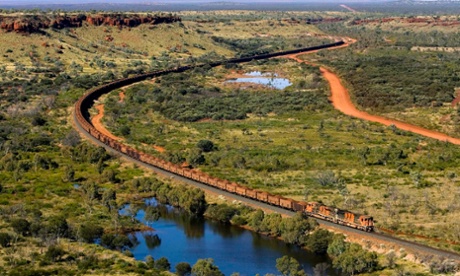
A train loaded with iron ore from a BHP Biliton mine makes its way through West Australia's Pilbara region in this undated handout photograph obtained August 12, 2009. BHP Billiton Ltd, the world's largest miner, reported a 30 percent slide in annual profit excluding writedowns, its first fall in seven years, pummelled by a slump in metals prices and demand.  REUTERS/BHP Biliton/Handout (AUSTRALIA BUSINESS ENVIRONMENT) FOR EDITORIAL USE ONLY. NOT FOR SALE FOR MARKETING OR ADVERTISING CAMPAIGNS :rel:d:bm:GF2E58C0HJ801
‘Public servants are dedicated to building important infrastructure such as roads, rail and ports – infrastructure we all use’. Photograph: Reuters

Once again, it looks like our public service is going to suffer after a federal election. After his 1996 victory, John Howard cut 30,000 public service jobs. In 2007, Kevin Rudd said he would take “a meat axe” to the public service. As a result, the ALP put Canberra in the firing line throughout their term. Most recently they increased the efficiency dividend to 2.25%, a move which looks likely to lead to a loss of 5,000 jobs.

This time around, the Coalition has promised 12,000 jobs will be cut from the sector, with 660 jobs to be lost per month in the first year of Abbott’s administration. On top of that, the Coalition will add anadditional 0.25% to the efficiency dividend, with potential other cuts on their way.

It’s amazing if you think about it. If the Coalition announced thousands of job losses in any other industry, it probably would have cost them the election. Whilst they based their campaign on adding two million jobs to the national economy, they have simultaneously proposed a policy that will potentially cost tens of thousands of jobs in the ACT.

But when we look at the way we treat the public service, it makes sense. Australians love targeting Canberra, and public servants are the best target of all. Rupert Murdoch provided the perfect example when hetweeted on the Sunday after the election:

Aust election public sick of public sector workers and phony welfare scroungers sucking life out of economy.

And that highlights the bigger issue here. Abbott’s plan, and the ALP’s previous moves, represent a deep lack of respect for what the sector does. And this lack of respect is something that hurts us all.

Let’s think hard about what the public service does for a minute. I used to work in the department of infrastructure and transport, where teams were dedicated to building important infrastructure such as roads, rail and ports – infrastructure we all use. Other teams were working on increasing safety on our roads and in our airports -– the kind of safety measures we all expect from the government.

Friends in the department of education are working to ensure our schools are well funded and others are enforcing proper regulation of education providers so students attending schools, TAFEs and universities get the best education possible. I have acquaintances who work in the Australian Bureau of Statistics (ABS), providing us with the research data that we need to ensure our programs are efficient and effective. In the department of broadband and communications, people are working to maintain and improve our digital infrastructure – from switching us all over to digital TV to building the NBN.

The list goes on and on. Across the sector, public servants are working hard to provide services and programs designed to help all of us. These are the services that define who we are: a compassionate society that looks after everyone.

And yes, it costs money to hire people to do that job. But the services this money pays for are essential to the well-being of our community. They are the difference between whether we can all access healthcare and education or not. They are the difference between whether we can bounce back when we hit hard times or not. They can be the difference between having a clean environment and climate or not. I really want highly-skilled, highly-qualified and well-resourced people to do that job, and am willing to pay for them to do so.

That is the crux of the problem: these cuts are not about making the sector better at what they do, nor about improving the services they deliver. They are blind attacks designed to make a political point. And in doing so, we are attacking the ability of the government to provide the services we need.

It seems very likely to me that Abbott’s plan will result in a loss of services. A loss of 12,000 jobs, the increase in the efficiency dividend, and any attack on public service workers rights will mean increase workloads for those who stay around and in turn a downgrading of the services and programs that are important for all of us.

Public servants are not some slackers who are sucking the Australian economy dry. Anyone who knows them will know that the majority are hard working people delivering essential services to our community. It’s time we recognised that and worked to ensure they have the resources they need to do their job, rather than continue to use them as a political punching bag.

September heat – we can expect more of this

In all my life I cannot remember a time when bushfire season has started so early. Only two weeks into September and on Tuesday fires raged across New South Wales. With a lack of rain, high winds, and temperatures rising to over 30 degrees (in September!), over 40 fires are made the way across the state, threatening homes particularly in Western Sydney. Sitting in Brisbane, temperatures have risen above 30 degrees over the past few days.

It’s not like we should be surprised though. This year Brisbane, Sydney, Canberra and Melbourne all recorded Winters near or above their hottest on record. The 12 months leading up to the end of August were the warmest 12 months on Australia’s record. This follows what the Climate Commission called Australia’s ‘Angry Summer’, with records smashed across the country over summer.

All year records have been broken. And it all points to one conclusion; the impacts of global warming are here and now. It is global warming that is bringing the bushfire season to September and it is global warming that is breaking temperature records across the country. And we now have the science to back us up on making this claim.

For example, in a paper released last year, NASA scientist James Hansen provided evidence that showed that we could directly link extreme weather events that are happening today with global warming. Hansen studied the European heat wave of 2003, the Russian heat wave of 2010 and the droughts in the United States in 2011, and showed through temperature models that these events would have very unlikely to have occurred if it weren’t for the warming trend.

As Hansen said: 

“We now know that the chances these extreme weather events would have  happened naturally – without climate change – is negligible.”

Recent research out of Australia came to similar conclusions. Researchers from the University of Melbourne earlier this year presented a paper that showed that it was extremely likely that humans played a role in last years ‘Angry Summer’.

The research showed that global warming increased chances of Australia experiencing record hot summers such as last year’s by more than five times. The study showed that it was possible to say with more that 90 per cent confidence that humans played a role in last year’s extremes. Sophie Lewis from the University of Melbourne, explained it bluntly:

“Our research has shown that due to greenhouse gas emissions, these types  of extreme summers will become even more frequent and more severe in the  future.”

And so whilst we can’t directly pin point the bush fires to global warming, we can now say one thing for sure; extremes like these are increasingly likely to be due to human induced warming and we can expect more of it in the future, but only worse.

And that provides us with a very stark choice. Because Australia is not only the highest per capita greenhouse gas emitter in the world, but we are also one of the world’s largest coal exporters. And our coal could be the difference between a safe climate and one no one wants to see.

Research from a couple of years ago showed that to stop the world from exceeding 2 degrees of global warming – the limit agreed by pretty much every world Government – we can only emit 565 Gigatons more of greenhouse gas emissions. The known carbon reserves in Australia make up a stunning 30% of that number. The Galilee Basin in Queensland, where coal companies want to construct nine new coal mines – five of which would be larger than any that are already in operation in the country – would make up 6% of that number in itself. And that is just one proposed area – that doesn’t include the massive plans for expansion in New South Wales, other parts of Queensland and Western Australia, as well as the proposed coal seam gas expansion all across the country.

Our fossil fuel industry is fueling bush fires like those that were sparked this week. They are fueling extremes like our hottest winter on record and our angry summer.

And I don’t say this to politicise these tragedies. I am not here to make gains on people’s suffering. We must do whatever we can to help the people in need in these tough times. But part of that has to be a process of asking how we can stop these disasters in the future. We already do this, whether it is through debates over back burning or through processes like the 2009 Victorian Bushfire Royal Commission.

The time has come to include our role in global warming in these debates. It is time to recognise the role our fossil fuel industry is playing in the extreme weather events we’re experiencing. If we don’t we must face a future much more like this. And that is a future I am so keen on seeing.

Abbott is elected: where to next?

Originally published in Sydney Star Observer, September 10 2013

Tony Abbott is our new Prime Minister. In what was a convincing (although not smashing) victory, Abbott has led the Coalition to at least three years in Government. The question, therefore, is what this means for LGBTIQ people.

Some are trying to place a positive spin on the results. In a media release titled “Marriage equality advocates encouraged by election result,” for example, Australian Marriage Equality said that they were “encouraged by yesterday’s election result, saying support has increased across both major parties”.

No matter how much spin we put on it, however, I don’t think that anyone could argue that this was a good result for LGBTIQ rights. This election has probably put the issue of marriage equality back at least three years as we replaced a Prime Minister in favour of the reform with one stridently against. Our new Government looks unlikely to work actively to make LGBTIQ issues a priority, and will definitely be keeping policies such as the rights of religious organisations to discriminate against LGBTIQ people in place. The party with the strongest position on LGBTIQ rights, the Greens, lost over 3 percent of the vote, and it now looks like the balance of power in the Senate will be held by bigots such as John Madigan.

It’s a blunt but realistic assessment. If you put LGBTIQ rights high on your agenda, this was not the result for you.

So what to do? Well, I think we’re all going to have to brace ourselves for a bit of a fight, and we’re going to have to broaden our agenda to do so. Because whilst same-sex marriage may stay at the top of people’s wishes, if recent LNP State Governments provide any indication we have other issues to deal with. In Queensland, for example, the Campbell Newman Government has slashed funding to essential health services such as the Biala Sexual Health Clinic and the Queensland Association for Healthy Communities (QAHC). With Abbott talking about a “budget emergency” in the Australian budget, there is a chance similar sorts of cuts could be coming our way. On top of that, there is a good chance that the very conservative elements within the Abbott’s party, and our new Senate, could push for the dialing back of LGBTIQ rights – something we have to be wary of.

And that makes the next three years tough. We will have to stand up and fight for what matters and we will have to do it well. The marriage equality movement has shown that we have the public on our side, and we will have to mobilise them to defeat any attacks coming our way. We have will have to be loud, vocal, and smart. But we can do it.