Is libertarianism the best friend of queer communities?

Libertarianism is often criticised for being the politics of the straight white male. But does it actually offer LGBT people freedom the state can’t deliver?
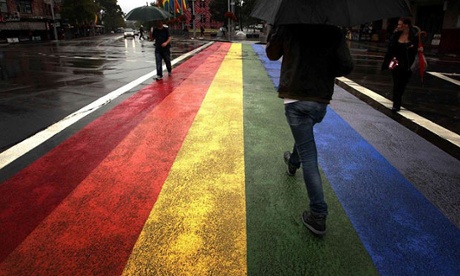
LGBT libertarianism
‘One could reasonably claim that every major advance in LGBT rights has been fostered by – or is at least consistent with – libertarian ideals.’ Photograph: David Gray/Reuters

The election of Liberal Democrat David Leyonhjelm to the senate and the appointment of the Institute of Public Affairs’ Tim Wilson to the human rights commission has placed libertarianism in the spotlight in Australia. Emphasising small government, individual liberties and the benefits of markets, libertarianism stakes a bold claim to be the true emancipating force at work in a world compromised by oppressive state power.

However, libertarianism, as both a politics and a “movement”, is often criticised for de-prioritising racial and gender diversity. Leyonhjelm’s first tweet, earlier this week, described the “gay lifestyle” as “reckless promiscuity” – eliciting disapproval from many LGBT Australians.

Is libertarianism a force for entrenching oppression of LGBT people, or is it the best friend of queer communities? We invited the IPA’s Julie Novak and Comment is Free contributor Simon Copland to discuss the issue.

Julie Novak: Libertarianism is the LGBT community’s best friend
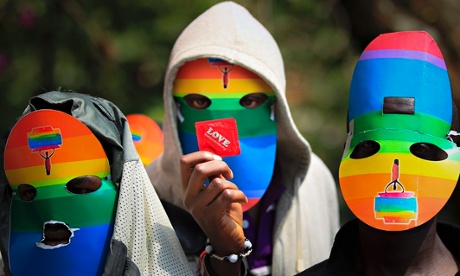
LGBT Kenya
‘Oppression of LGBT people is treatment is clearly incompatible with the principles of classical liberalism.’ Masked supporters of Kenya’s LGBT community protest in Nairobi. Photograph: EPA

The coercive state, often in concert with religious orders, has brutalised, ostracised and persecuted certain minorities over many centuries.

People physically attracted to those of the same sex and those who flouted conventional stereotypes surrounding gender identity have long been a ready target for ill‑treatment, with the worst cases including executions, imprisonment, or enforced medical treatments to override such allegedly deviant behaviours.

Such treatment is clearly incompatible with the principles of classical liberalism, often referred to today as libertarianism, with its emphasis on freedom of individual conduct, and the widespread toleration of such conduct so that freedom can be realised, insofar as it does not harm others.

This is not a widely held view. There are schools of thought, often associated with socialist and progressive movements, that libertarianism is incompatible with the attainment of greater freedoms and rights for LGBT people.

This suggestion seems patently absurd, and indeed, in contrast, one could reasonably claim that every major advance in LGBT rights has been fostered by – or is at least consistent with – libertarian ideals.

The decriminalisation of sodomy, first in South Australia in 1975 and, belatedly, in Tasmania in 1997, was an important step in a libertarian direction, since consenting adults performing certain sexual acts, in the privacy of their own homes, were not threatened by the police‑power when doing so.

The recent high court decision to allow Sydney activist Norrie to be legally classified as neither male or female is clearly another libertarian step in the right direction. The state was forced to relent imposing its gender identity preferences in favour of (in this case) an individual with non‑gendered preferences.

There is certainly still a fair way to go before the homophobic and transphobic state gets out of individual decision‑making on the basis of their sexual preferences and gender identities, or at least enshrine a basic equality of treatment under the law.

Therefore, matters such as adoption, equal age of consent (in Queensland), fertility access, and marriage equality still remain on the agenda for liberalising reform.

An aspect of libertarianism that has gone underappreciated is the profoundly beneficial impact of economic freedom for LGBT people, and for others. In economically freer countries LGBT individuals are more readily able to attain healthy incomes, helping them assert their self‑identities.

Less hampered markets also allow suppliers to creatively provide specialist goods and services for LGBT people, like safe meeting places, bars, cafes and nightclubs.

The promotion of civil, economic and personal liberties are at the forefront of libertarian philosophy, and this is why I subscribe to the view that, in the end, libertarianism is the best friend of people in queer communities.

Simon Copland: LGBT oppression is structural, not just personal
Gay marriage
While libertarians may argue against the coercive state, in reality it exists to prop up the other major coercive apparatus of our society – the “free” market. Photograph: Corbis

With its focus on individual liberty, it is true that on the surface, libertarianism is wholly consistent with the agenda of LGBT activists. Julie is correct to point out that many of the recent wins for LGBT are in line with libertarian ideals.

Yet these wins only scratch the surface of LGBT oppression. The structural issues that lead to queer oppression still need to be challenged and libertarians are not the people to do that.

Much of this structural oppression is imposed by the state; marriage being a perfect example. Marriage, as an institution, has not only been oppressive for women, but through social pressure promoted by a religious and state apparatus it also subtly reinforces a particular set of sexual and relationship rules.

This sort of oppression is common – from marriage and the military, to regulations about sex work and how we define our gender. It is for this reason that it is ironic that many libertarians focus their energies on marriage equality, instead of the abolition of marriage itself.

While libertarians may argue against the coercive state, in reality it exists to prop up the other major coercive apparatus of our society – the “free” market. Their advocacy for markets means libertarians are hardly the best friends of LGBT folk.

No matter how deregulated it becomes, the free market is in fact only so free. Like all other devices and structures it has rules that people must follow, in particular around the ownership and transferal of private property.

Importantly, for these rules to survive, the market requires full participation – something which impacts queer people in particular. In particular, it needs a society of couples in co-dependent monogamous relationships. It is only through these relationship structures that the transfer of property between generations can be ensured, protecting fundamental basis of our system.

It is potentially for this reason that libertarian politicians such as David Leyonhjelm find the “reckless promiscuity” of the “gay lifestyle” so offensive. Leyonhjelm knows that the “gay lifestyle” as he sees it won’t allow for the free market to operate as he would like. It is also for this reason that marriage equality is a focus for many libertarians. It brings people within the market system that is essential to their ideology.

All systems have rules that underpin them but for LGBT people it is the rules of the free market that are the most oppressive. It forces people into particular economic and social relationships that are diametrically opposed to the freedom of relationship structures and gender and sexual identity that LGBT advocates have been fighting over for decades.

Julie Novak: Economic freedom makes it expensive to discriminate

I agree with Simon’s characterisation of the structural oppression faced by LGBT people, and share his concerns about gender and sexual conformity exerted religiously, and politically, on behalf of moral, and voting, majorities, respectively.

It remains my firm view, though, that markets help economically emancipate LGBT people, and could even play a part in eliminating anti‑queer prejudice. Greater economic freedom makes it even more costly to discriminate.

But libertarians also appreciate that markets are one aspect of all non‑state interactions that individuals can voluntarily arrive at within our society.

If LGBT people feel a particularly strong aversion against profit‑making in product supply, they can “break the mould”, so to speak – for example by establishing not‑for‑profit cooperatives and building their local communities in that fashion.

It is unusual that Simon should depict the libertarian stance on marriage reform as being focussed upon “marriage equality instead of the abolition of marriage itself”.

It was almost a month ago I wrote an impassioned plea to my fellow lesbian women, and gay men, to consider a break to the state‑marriage nexus as a viable alternative to political pleading for our historical adversary – the government – to recognise our relationships.

Finally, I do not regard Leyonhjelm’s recent comments as representative of the libertarian position on LGBT people and their struggles, and hope his parliamentary record will demonstrate a genuine commitment to LGBT rights.

Simon Copland: It’s not enough to ask LGBT people to “break the mould”

I cannot agree that markets can play a part in eliminating anti-queer prejudice.

Recent evidence suggests that modern sexual and gender relationships are a direct consequence of the development of capitalism, seemingly confirming Friedrich Engels’ view that “The first class antagonism which appears in history coincides with the development of the antagonism between man and woman in monogamian marriage, and the first class oppression with that of the female sex by the male”.

That’s not to say there was no sexism or queerphobia before the arrival of capitalism, but the growth of the modern nuclear family – the modern “mould” which Julie would see LGBT people break – was formed under capitalism, and is certainly queerphobic. It demands gender, sexual and relationship structures that work in particular ways and then punishes those who break away from them.

In my view therefore we need a different mould, one that doesn’t require queer people to “break away”, but rather isn’t queerphobic in the first place.

I recognise both Julie’s work on marriage and her belief that Leyonhjelm’s statements don’t reflect mainstream libertarian ideal. But it’s hard for me to ignore this cultural conservative trend in libertarian circles, a trend that goes well beyond Leyonhjelm’s stray tweet.

It’s possible this represents some “delinquents” within libertarianism. More likely, it represents an inherent conservatism that is required for the survival of the ideology. So despite the work of people like Julie, I find it difficult to see how libertarianism can ever be a true friend of queer people.

It’s time for some real direct action

Originally published 13 May, 2014

In amongst all the massive cuts predicted in this week’s budget, the Government’s Direct Action climate policy will be one, rather isolated, piece of new spending. Despite threats from Clive Palmer that he will vote against the carbon tax repeal if he can’t vote against the policy, the Government has confirmed a commitment to include the $2.55 billion needed for the Direct Action in this year’s budget.

As the details have come out about Direct Action over the past few weeks it has confirmed everyone’s worst fears. As expected, the policy is, at best extremely weak, and at worst something that is worse than nothing. Time and time again Direct Action has proven itself to be expensive and ineffective; a system that effectively hands out cash to big polluters for very little gain.

In the fight against the billions of wasted money on Direct Action however it is important we don’t let its philosophy die with it. Because whilst Mr Abbott’s policy is a joke, he has introduced an extremely important concept to our climate debate – one that we need to use to reduce our carbon emissions.

Real direct action would go to source of our carbon emissions, cutting out any middle-man and stopping the possibly for pollution to happen in the first place. And in doing so we can save our budget billions – money that could then be redirected into cleaner and safer energy sources.

For years now, our climate policy debate has been focused on the use of market mechanisms as a tool to halt emissions. The theory has been simple. Put a price on carbon, and emitters will cut their pollution. It is a form of indirect action – change the mechanisms and hope the market reacts. Do not directly intervene in how the market is working.

This has become the faith of climate policy makers all around the world – to the point where it is seen as the only solution to the problem. But in doing so that has become a part of the problem.

Market mechanisms can only do so much. In a world where we need to make change quickly, they can often be used as a smokescreen for inaction. This is highlighted by the fact that despite the implementation of a price on carbon, both current and previous governments continued to offer mass subsidies to the fossil fuel industry. Australia’s carbon price has been in operation for well over two years now, and whilst we have witnessed a fall in domestic emissions, our exported emissions continue to soar as coal companies steam ahead with new coal mine operations – indicating that market based mechanisms alone are insufficient.

And so direct action is needed – and it is needed now. This is not Direct Action in Tony Abbott’s sense, but instead a form of direct action that takes on big polluters rather than solely hoping the market will solve the problem for us.

That means a lot of things. First should be a ban on all new coal mines and coal operations. As we get further down the rabbit hole of a warmer world, we can no longer afford to burn the coal we are already digging up, let alone any more. Building on this, we need a timeline to phase out all of our current coal operations, as well as our gas and oil mining.

And we can and should take direct action with our finances too. That can mean removing all subsidies from the fossil fuel industry, divesting from fossil fuel companies and investing more heavily in renewable energy. The IPCC for example argues that $30 billion needs to be divested from the fossil fuel industry whilst investment in renewable energy needs to be tripled. The Government’s plan for example to cut the diesel fuel rebatewould have been a good start to this process – a plan it seems like they unfortunately jettisoned due to pressure from the mining industry.

But this highlights the power of a real direct action policy. Real direct action would go to source of our carbon emissions, cutting out any middle-man and stopping the possibly for pollution to happen in the first place. And in doing so we can save our budget billions – money that could then be redirected into cleaner and safer energy sources.

Around the country the community has already recognised this is the sort of direct action we need. People are divesting their money and taking action at the coal face. But we need that to translate into real policy – a direct action policy that will actually work.

Direct action is essential to solving climate change. It’s just that Tony Abbott has got its details terribly wrong. Whilst the carbon price may be having an impact the relentless pace of the fossil fuel industry shows that it is simply not enough. We need to directly intervene. Our community is already doing so – it is time our Government did as well.

This article was originally published on SBS News. Click here to view the original. © All rights reserved.


Why Eurovision might be the most important show on TV

Originally published in Junkee.com, 8 May, 2014

In amongst all the glitz, glam, costume and key changes, Eurovision — the final of which is happening this weekend — is one again embroiled in controversy.

Petitions from Belarus, Armenia and Russia have called on the Austrian participant Conchita Wurst — a drag queen with a beard — to be removed from the contest or edited out of telecasts in their country. Russian lawmaker Vitaly Milonov has been one of the leaders of the charge, calling for a Russian boycott of the “Europe-wide gay parade” and “sodom show”, and invoking Russia’s controversial anti-gay propaganda laws. “The participation of the obvious transvestite and hermaphrodite Conchita Wurst on the same stage as Russian singers on live television is blatant propaganda of homosexuality and spiritual decay,” he said.

With its often very camp performancesdrag queens, and overt sexual politics, Eurovision has become known as “the gayest pop show on the planet” over the past few years.

Yet, behind the campness of the competition, there is something much more powerful going on. Something that, in 2014, Conchita Wurst highlights beautifully. Once again Eurovision has shown itself to be at the epicenter of challenging our gender, sex and sexuality norms — and in a much more radical way than any other event like it.

By © Markus Felix (talk to me) (Own work) [CC BY-SA 3.0 (http://creativecommons.org/licenses/by-sa/3.0)], via Wikimedia Commons

Eurovision And Sexual Progression: A History

Eurovision’s challenges to sexual norms might date back to 1957. That year, the Danish competitors Birthe Wilke and Gustav Winkler entered into a passionate 11-second kiss — quite a statement at the time. Wilke and Winkler broke all the rules of how sexually you could act in a public place, setting a standard for competitions to come.

And that standard has been met year after year. Eurovision has long been a hotbed for homosexual activism, with many openly gay competitors bringing with them both controversy and success in equal measure. Known for their overly sexual performances for example, Russian duo tATu had to be warned to tone it down during their 2003 performance. Whilst they relented, not even kissing during their act (which was odd for them at the time), the ensuing debate about sex and sexuality was important. In 2007, the Serbian entrant, lesbian Marija Šerifović, continued the homoerotic themes; surrounded solely by women throughout her performance (which is unusual for Eurovision), Šerifović won the competition with the song ‘Molitva’.

It’s not just LGBTQI artists flipping norms of sexuality; many straight artists have brought sexually progressive performances to the table, too.

Some of the challenges they present have been quite subtle, but they’re just as important. In 2004, for instance, Ukrainian entrant Ruslana won with the song ‘Wild Dances’. In her performance (which, while not overtly sexual, was still pretty damn sexy), Ruslana donned the clothes of an Amazonian warrior and surrounded herself by whip-wielding men. In doing so, she combated perceptions of gendered power and control: she was a woman taking charge, and she made it sexy.

And it’s not just women. Last year, male entrant Cezar sang the song ‘It’s My Life’ completely in falsetto, while wearing a large black cape/dress, covered in jewels. Other competitors have been more overt. In 1997 for example, leather-clad Icelandic entrant Paul Oscar sang whilst sitting on a couch surrounded by four women dressed as dominatrixes. The performance (of an unfortunately pretty bad song) opened the world of Eurovision to the leather and dom/sub community.

A similar attempt was made by German entrants Alex Swings Oscar Sings, with their song ‘Miss Kiss Kiss Bang’. The song featured burlesque dancer Dita Von Teese dressed in a corset and carrying horse riding crop, strutting on the stage as the lead singer Oscar Loya sang about her. The female participant was taking the dominant position again.

But as we’ve seen, challenges to gender go well beyond just costuming. Long before Conchita Wurst, transgender Israeli competitor Dana International won the competition in 1998 with her performance of the song ‘Diva’. Dana’s entrance caused uproar in Israel, particularly with Ultra-Orthodox Jews. Some even took to the streets to protest, and there were reports of death threats made to the artist.

In 2007, the Ukrainian entrant Verka Serduchka took it to a whole new level with ‘Dancing Lasha Tumbai’ (one of my favourite Eurovision songs ever). Performing in drag in a completely silver costume, Serduchka ignored all rules about gender presentation in a performance that almost won the competition. Where Dana International had brought the issue of transgenderism onto the main stage, Serduchka’s radical drag rejected set gender roles, in many ways making them irrelevant. 

Why Is This So Important?

These sorts of examples are littered throughout Eurovision’s history. What’s remarkable is how radical they are. Not in the ‘we have a gay person on stage and that makes us radical’ kind of way (noting, of course, that gay people being on stage was at one point very radical). No, we’re talking actual radicalism.

Eurovision goes well beyond any set standards we have of gender and sexuality. Being gay is pretty much passé in the competition now days — there are often gay competitors, and they often succeed without a meal being made of their sexuality. But Eurovision explores much more: transgenderism, drag, androgyny, and straight out sex. And it does so on one of the most mainstream, most-watched shows in Europe, and around the world.

In the midst of this year’s controversy, the Austrian performer Conchita Wurst said something quite beautiful. After the Armenian competitor Aram MP3 (yes that’s his name) declared that Wurst’s appearance was ‘not natural’ and that she needed to decide whether she wanted to be a man or a woman, she was quick to reply: “I told him I don’t want to be a woman. I am just a working queen and a very lazy boy at home.”

I can imagine Wurst has had to make this defense too many times, but in many ways it encapsulates some of the radicalism of Eurovision. In one statement Wurst not only challenged our gender and sexual norms, but managed to make her point in a very human way. Her declaration, her performance, her response to the controversy has not just been political, it has been also been about our everyday lives — the life of a working queen, and a lazy boy at home.

This is what Eurovision has somehow managed to do. It provides a space to challenge so many of the norms that dominate our society, and it does so through the living rooms of millions around the world. And that’s what makes it powerful.

The Eurovision Semi Finals will be broadcast on SBS One on Friday and Saturday at 8.30pm; the Grand Final happens on Sunday May 11, at 7.30pm on SBS One.


Read more at http://junkee.com/why-eurovision-might-be-the-most-important-show-on-tv/33913#LH3dcRF4XhT37YsR.99

A political culture of power and influence rotten to the core

Originally published in SBS News, 6 May, 2014

It is perfectly clear now that our biggest industries are going to be exempt from the budget pain Joe Hockey isexpecting us all to share in next week.

Yesterday the Government backed down on plans to cut the diesel fuel rebate. The rebate, which is expected to cost $2.4 billion this year, provides cheaper fuel for mining companies and farmers. The Government backed down on repealing the policy after pushback from big mining companies, essentially giving them an exemption from any budget pain.

This backdown is not about sound policy nor sound economics. It is about influence, pure and simple. Influence that is rearing its ugly head across our political system. Influence we need to attack at its source.

Politics has, at the most basic level, become a very dirty game. A game that benefits a very particular class – politicians who get support from big businesses and businesses who get the influence they need. A game whose rules are written by those who benefit most from it and a game that has become deeply disconnected from regular people in every way, shape and form.

The influence of big businesses, in particularly the mining industry, in our political system has become clearer every day over the past weeks – particularly through ICAC in New South Wales. Recent investigations have revealed shadiness connected to the mining industry. Evidence has focused around coal developer Nathan Tinkler and his plans for a new coal port in Newcastle. Revelations include evidence of huge donations to a Liberal Party slush fund and allegations that Tinkler tried to bribe an ALP MP for her support for the project.

These revelations – on top of the many others coming out of the commission – have rightfully caused outrage across the community. ICAC is slowly revealing a system of corruption that seems endemic within NSW politics. A system that many rightfully fear spreads well beyond the state. But whilst we should be outraged, unfortunately we shouldn’t be surprised.

Australia’s politics has become a game of dirty power and influence. The mining lobby provides a perfect example. This is a lobby that was credited with bringing down the Prime Ministership of Kevin Rudd over his proposed mining tax, and now seem to have complete influence over Liberal Party policy when it comes to the diesel rebate. It’s even got to the point where mining figures are literally writing policy for political parties, whilst ICAC is showing that this influence reaches out into straight out corruption. Revelations about the privileged access Treasurer Joe Hockey gives to business executives shows this influence (whilst not illegal in this case) goes well beyond the mining industry and into the far reaches of most of our business community.

In an odd way, Tony Abbott was right to defend Hockey over this donations system. Just like the the ALP is right to defend the access they provide for people who donate to them. These systems, just like many of the other parts of the power and influence game, are considered completely legitimate within our political game.

But that is exactly the problem. Politics has, at the most basic level, become a very dirty game. A game that benefits a very particular class – politicians who get support from big businesses and businesses who get the influence they need. A game whose rules are written by those who benefit most from it and a game that has become deeply disconnected from regular people in every way, shape and form.

It’s no wonder so many people are now feeling so disconnected. Dissatisfaction in our political system is probably higher than it has been for years – a real crisis in politics. People are looking at what is going on and rightfully find it revolting.

Something clearly needs to change. There’s a chance that what is happening in ICAC may force this – open up the crisis in politics to the point where it has to shift. Many are already making call policy shifts – whether it is changes to donations policies, or the establishment of a national ICAC equivalent. The problem with this approach however is that it puts the solutions into the hands of the very people who benefit from the current system. That’s why neither major party has agreed to either a national ICAC nor any significant changes to electoral funding.

That suggests that this goes well beyond basic policy. This is about our political culture – a culture of influence, power and money. A political culture that has become disconnected from real people. A political culture that needs changing – change that goes beyond basic legislation. Unfortunately, that is much harder to achieve.

But it is becoming clearer every day that we have to do it.

This article was originally published on SBS News. Click here to view the original. © All rights reserved. 

Rocky Horror Show: 40 years later, where is its world of ‘absolute pleasure’?

Originally published in The Guardian, 23 April, 2014

After months touring Australia, this Wednesday The Rocky Horror Showwill open in Melbourne for the final leg. Starring Craig McLachlan as Frank N’ Furter, the show has brought out its customary legion of fans donned in fishnet stockings, corsets, pearls and high heels.

As the show finishes its tour, it’s worth looking back on its 40-year legacy. First staged in 1973, Rocky Horror took audiences on a sexual journey like no other. The monogamous and virginal engaged couple Brad and Janet take refuge from a storm at the house of Frank N’ Furter – an eccentric, transvestite scientist who is hosting a party to unveil Rocky, his latest creation.

Frank challenges gender binaries from the moment he arrives. As the “sweet transvestite from Transexual, Transylvania” he is both masculine and feminine, dominant and submissive. He wears high heels and pearls, but is the authority of the house – creating Rocky for his own sexual needs, abusing his servants Riff Raff and Magenta, and seducing Brad and Janet.

The couple’s voyage of sexual discovery starts with their early infatuation during the initial party, and is followed quickly by their seduction by Frank, then Janet’s later seduction of Rocky). It ends with the final “stage show”, where Frank has dressed them both in fishnets and corsets, and in which Brad sings “I feel sexy”, and Janet shouts “I feel released”.

Coming from a conservative world, where sex is limited to the marital bed, they encounter a world that challenges their gender and sexual norms – a world of “absolute pleasure”. And they embrace it.

The Rocky Horror Show mirrors the sexual revolution of the early 70s, as feminist and gay groups challenged conservative sexual norms and argued that sex and gender should be expressed however we wish. So did those aspirations come to pass?

The answer is somewhat disappointing. At the most basic level, representation of trans people in the mainstream media is still poor.Research shows that trans people are rarely depicted, and that when they are they are normally portrayed negatively. This represents our broader society, where transphobia is still rampant.

But it’s not just about trans issues, but about how we treat gender in general. Even after the victories of feminism, we are still stuck in a society based on strict gender roles. Just look at some of our popular TV shows – from The Simpsons, Family Guy and American Dad to Modern Family, women are still placed into the role of housewife, while men work to support them.

The same can conservative trend can also be seen in our representation of sex. Many of the sexual themes Rocky Horror tackles are still taboo today. The idea of polyamory and polygamy is still largely shunned. Even gay and lesbian leaders actively exclude poly people from mainstream queer debates – often using similar arguments that were used against gay people in times past.

Sexual fluidity is hardly welcomed any more warmly than it was in 1973. Gay and lesbian community leaders insist that gays are “born this way”, even attacking those who make active choices about their sexuality. When we do represent sexual fluidity it is framed for the male gaze.Women are often depicted as willing to “try lesbianism” to satisfy straight men’s fantasies – not because it is a real thing. This represents an ongoing conservatism about our sex in our society – best highlighted bythe banning of the film I Want Your Love last year due to its unsimulated sex scenes.

Forty years after the sexual revolution, Rocky Horror’s ideals are dying, partly because of a conservative backlash, but also because the very leaders of that movement dumped their original ideals. As the gay and lesbian movement in particular grew older, many adopted a more assimilationist over revolutionary approach – with a particular focus on gaining gay and lesbian equality.

In doing the movement stopped challenging many of our sexual norms. This can be seen best through the debate on same-sex marriage – a debate that is not only about access to an institution, but also about an acceptance of the social norms behind it. Same-sex marriage is laced with the language of monogamy, sexual rigidity and set gender roles (even gay couples talk about who is man and who is the woman). The sexual revolution has been killed by those who started it.

This death is potentially forewarned in Rocky Horror itself. As the story ends Frank finds his pursuits more difficult, with the other inhabitants slowly turning on him. He eventually laments that “it’s not easy having a good time”. While this is partly a fair repudiation of his more extreme actions it is also a representation of a clamping down on sexual freedoms.

What’s disappointing is that the past 40 years have shown that so-called progressives have been just as involved in this clamping down as conservative forces. It is they who have killed off the sexual revolution.

What’s wrong with choosing to be gay, anyway?

Originally published in The Guardian, 21 April, 2014

With the election of Mike Baird as the new premier, New South Wales is potentially about to embark on a sharp social conservative turn. Baird not only opposes same-sex marriage and same-sex adoption, but is he also anti-abortion and against heroin injecting rooms. In other words, he is the antithesis of Barry O’Farrell’s social liberalism.

But it is one comment in particular which has got people riled up: a statement in which Baird implied that people “choose” the “homosexuality lifestyle“, a line which led comedian Tom Ballard to wonder whether Baird was drunk on a $3,000 bottle of wine. On a more serious note, NSW deputy opposition leader Linda Burney alsodemanded that Baird explain whether he still held this “backward” view, stating that:

People enter same sex relationships on the basis of love, not because of some lifestyle trend.

The question has long been a point of contention for lesbian and gay people, but the idea that we are “born this way” has become an article of faith in recent years. If we are “born gay”, we should not be discriminated against, since you cannot and should not discriminate against what is “natural”.

It is this argument that is forming the backbone of the reaction against Baird’s social conservatism. Unfortunately however, the attack buys very much into Baird’s philosophy.

It has to be acknowledged that the “born this way” theory is not necessarily exact. Research shows that people can and do actively choose their sexuality at times, and that sexuality can be fluid.

Anecdotal evidence points to this as well. Sex and the City star Cynthia Nixon for example has publicly stated that she actively chose to be a lesbian, Hunger Games star Josh Hutcherson has spoken about a potential willingness to date men in the future, and Olympic diver Tom Daley has described his experience of being a man who “fancied girls” but entered a relationship with a man.

By Freedom To Marry [CC BY 2.0 (http://creativecommons.org/licenses/by/2.0)], via Wikimedia Commons

All of these stories describe experiences, or at least a willingness, of people to change and adapt their sexuality and sexual practices throughout their lives. We all make active choices – whether it is who we decide to have sex with, how we have sex, and how much sex we have.

And herein lies the problem. When we attack Baird for saying people choose an homosexual lifestyle, we are implicitly saying “who would want to choose this lifestyle?” – something I’ve actually heard gay people say –, in turn buying into the very idea that non-straight sexualities are not desirable. In doing so, we open up those who make these sorts of active choices to discrimination. We open the opportunity for oppression (social or legal) on people’s legitimate sexual agency.

We can already see this playing out internally within the gay and lesbian movement. When Nixon said that she chose her sexuality, she wasruthlessly attacked by gay and lesbian advocates. When Daley announced that he had a boyfriend, many were determined to put him into the “gay” or “bisexual” box, even though that wasn’t how he described himself. Quite simply, they were told they had to accept that their sexuality is all biology.

This is not the way it should be. We shouldn’t discriminate against people’s sexuality or sexual habits not because they’re “natural”, but because there’s nothing wrong with them.

The people of NSW deserve to be worried about the conservative trend Baird may now be poised to take the state on. Many of his positions deserve to be fought against, but his belief that people choose their sexuality is not one of them. Next time we hear him say it, our only response should be “yes, and what’s wrong with that?”.

March in March doesn’t offer credible alternatives

Originally published in The Guardian, 13th March, 2014

This weekend, protesters will be heading to the streets to participate inMarch in March across the country. Organisers have said the weekend of protest “signifies the people’s vote of no confidence in policies of the government that go against common principles of humanity, decency, fairness social justice and equity, democratic governance, responsible global citizenship and conserving our natural heritage.”

With the election of Tony Abbott to the lodge, the left seems to have adopted many of the right’s oppositional tactics. There is the same heavy focus on “lies”, “broken promises” and “secrecy” – a focus on Abbott’s character and not much in the way of presenting new policies. These are linked to similar destabilisation tactics – highlighted by a recent petition which has gained over 60,000 signatures – calling on the governor general to sack the government.

All of this is based on an ongoing claim, yelled very loudly, that the Abbott government is illegitimate due to his apparent reliance on the Murdoch media to get elected. This argument, whilst as weak as Abbott’s claims that the Gillard government was illegitimate, but seem to be just a fervently believed.

Image: https://farm6.staticflickr.com/5568/15284586426_db684f6e2e_o.jpg

Instead of licking our wounds and creating an alternative approach, we have focused on tearing the government down, and using whatever arguments and tactics we can find to do so. After years of hammering Abbott for this brand of politicking, one could ask why the left is following suit – it seems like a rather hypocritical move.

Investigate further though, and you can see that the use of these tactics is a worrying symptom of a fundamental crisis in politics. Over the past decades the left has lost its social base, leaving it weak as it faces the Abbott government. Union membership is at an all time low, a drop in numbers that is being met with a significant drop in influence. The environment and climate movement is facing similar problems,struggling heavily to deal with recent political realities. The neoliberal agenda is slowly crushing progressive politics, leaving us stuck with these sorts of attack-based campaigns to beat our opponents.

The crisis represents an overarching general dissatisfaction with politics and politicians, and a strong dislike of our political system and processes. A recent Newspoll survey highlights this really well: on nearly every issue both major parties have gone backwards in recent months, signifying a shift away from any trust of our political leaders. And the left has been just as culpable.

And this is where adopting Abbott’s tactics becomes problematic. In the short term, it seems like a good strategy, but the long term damage will be real. In using this strategy, the left have failed to understand this anti-politics sentiment. We have in fact bought into it – playing an insider game focusing on broken promises, parliamentary tactics and media games, whilst effectively ignoring any real and substantive issues.

A new approach needs to be found. We need to recognise that this dislike of politics is actually a good thing: the rejection of a system that now largely serves the interests of the upper classes. The left now needs to tap directly into this sentiment.

There are plenty of successful examples of this. Russel Brand’s comments last year, for example, struck a chord largely because of his anti-establishment or anti-politics tone. The same can be said for the success of the Occupy movement. A bit closer to home and the climate movement has managed to gain significant momentum recently through going around standard political channels and directly taking on the power of the fossil fuel industry. The asylum seeker movement is also shifting its course – with the successful boycott campaign over the Sydney Biennale growing new energy for the campaign.

These tactics are about tackling the system from a different angle. They’re about challenging the power systems that are stacked up against us, and building a sustainable social base to do so. They are about doing the hard work of rebuilding our social movements, and rebuilding them to take on the systems that underpin our political system.

March in March doesn’t do this. Neither does attacking Abbott’s broken promises, calling for him to be sacked, or claiming his government is illegitimate. We have to do better than this.

The carbon price should be closing down these industries

As big companies have been announcing plant closures and jobs cuts over the past few months – from QANTAS’ slashes to Holden, Toyota and Alcoa’s closures – progressive and environmental activists have been quick to try and ensure the carbon tax is not given any of the blame. Whilst the Coalition has regularly pointed their fingers at the policy (check out their views on QANTAS and Alcoa for example) many on the left have argued that it isn’t the cause of this destruction, and certainly isn’t the cause of any job losses.

Importantly, each time the left has been backed up. Look again at QANTAS and Alcoa and there is clear evidence that the carbon tax has had little to do with their losses and closures. Alcoa even put out a statement arguing the carbon tax had nothing to do with the closure of their aluminium smelter in Geelong. Each closure has been due to other factors – the rising dollar, internal competition etc etc.

And with that once again Tony Abbott has been caught out in a lie – or at least a massive exaggeration. He has, as he has for years, greatly over-exaggerated the impact of the carbon price.

But whilst Abbott and the Coalition deserve to be called out for their exaggerations and lies, one question has to be asked. Doesn’t the fact that these statements still count as exaggerations or lies highlight that the carbon price is much weaker than it should be?

Let’s go back to the theory of carbon pricing to see what I mean. It’s pretty simple. You put a price on the carbon emissions of our biggest polluters. The extra cost of polluting provides enough of a disincentive to stop companies from polluting, leading them, in theory, to shut down their polluting plants, mines and operations, and in doing so foster a shift towards cleaner energy sources.

That last sentence is key. The very point of the carbon price is to see polluting companies shut down their polluting operations. There’s little middle ground here – many of these industries are inherently polluting and therefore the only way to solve climate change is to transition away from them. Closure have to happen.

And when you look at that fact you can see the climate benefits of some of the recent closures. For example, the Alcoa Aluminium Smelter in Geelong was a highly polluting plant that used the equivalent of 1/4 of the Hazelwood power station’s output. The smelter used so much coal energy that its closure is likely to see a subsequent closure of the Anglesea coal mine and power plant – a pretty decent win for the climate.

The same can be said for our transport industry. For example, air travel plays what can be said to be a relatively small, yet still significant, role in our carbon pollution. A reduction in services and flights, which was part of QANTAS’ announcement, would clearly reduce this impact. The same can be said for cars. Cars obviously play a major role in our transport system and within that the emissions coming from how we get around. Any decline in demand for car use therefore can only be seen as a good thing for our climate. In fact it has been a long goal of environmental activists to see both a shift away from air travel and cars and one towards more use of public transport.

And herein lies the problem. QANTAS, Alcoa, Holden and Toyota are not necessarily the first targets of an effective carbon price. We want to take on the biggest and most impactful polluters if we want to tackle our emissions, and these companies don’t necessarily fit the bill. But even if we’re not targeting these companies specifically, either way a good carbon tax should be designed to see the sorts of closures and shifts we have seen over the past few months. It’s what good climate policy should be about – closing down polluting industries to be replaced by cleaner ones. And that will mean that some jobs will have to go – a tough reality but one we have to deal with.

Of course that doesn’t make these things easy, as the impacts on communities of these closures have shown. But that is the reality of the situation we face – we need to make some hard decisions and face some hard questions. We need to deal with the fact that some things have to close, some jobs have to be lost. And we need to deal with it in a way that helps people in this transition, rather than deny the reality of it.

And therefore if, after a year and a half in operation, the carbon price is not actually leading to the closures and transition it should be designed for, we have to ask the question, is it actually doing its job? If all our polluting industries are staying open – or only closing due to other factors – is it a potential that the carbon tax simply too weak for us to be able to call it an effective climate policy? Or that any carbon price is an ineffective, and ideologically problematic tool, to solve the problem?

This is a difficult conversation to have, but it is an essential one. It is one that is essential to solving climate change and leading ourselves to a clean energy future. It is one that is essential to lead us to a world where making the big changes we need seem possible and doable.

There’s a good political point to be made when calling out Tony Abbott for his alarmism about the carbon tax. It highlights his tendency for exaggeration and outright lying. It can also take away some of his attacks. But in doing so we have to actually ask ourselves, are we forgetting the desired outcomes of such a policy? Closing high polluting plants and industries is the goal of good climate policy. We have to remember that.

We should drop the racism when talking about gay rights

Originally published in Archer Online, 3 March, 2014

NEW LEGISLATION WAS recently passed by the legislature in the US state of Arizona that would allow businesses, under the pretence of religious beliefs, to refuse service to gays and lesbians.

The bill, which was eventually vetoed by the Governor, would have created segregation within the state. We could have easily seen “NO GAYS ALLOWED” signs popping up all over Arizona.

It is ironic that this bill has surfaced at the end of the Winter Olympics in Sochi, after months of western campaigning over Russia’s anti-gay legislation. Particularly if you look at how some gay rights campaigners talked about the Russian laws.

Hypocrisy and homophobia

Stephen Fry, for example, had this to say about Russia: “An absolute ban on the Russian Winter Olympics of 2014 on Sochi is simply essential…at all costs Putin cannot be seen to have the approval of the civilised world.”

The language feels like it belongs in the early 1900s, in a world in which the west is still colonising the east, and we still talk about ‘civilising the savages’. But the sentiment is not new. Islamophobia for example is very common within much of the gay and lesbian movement; an assumption that all Muslims are homophobic, and that the Arab world is an inherently homophobic place.

Similar sentiments can be found regarding eastern Europe, Africa, Asia and South America.

It’s ironic when you look at what is happening in the US. The Arizona bill, which is being replicated in states across the country, is akin to the laws passed in Putin’s Russia. Yet we are not calling for a boycott of the US from “the civilised world”.

And that’s because much of the gay and lesbian movement unfortunately has a racist tinge. We have created a perception of the west as being enlightened on gay and lesbian rights, while the rest of the world threatens to throw us back to the dark ages.

Sexuality in eastern cultures

This assumption forgets the vast history of sexuality in all parts of the world – a history that is often much more diverse than that of western societies – and in doing so ignores the many LGBTI people who live and fight within these places. This assumption isolates those working in countries like Russia, leaving them to fight on their own while we take a moral, yet racist, high ground.

It is an almost colonial approach to gay and lesbian rights. We picture an entire country as being homophobic and then argue that it is up to us, the white people, to save them from their homophobia.

It is also ironic given that some of the increasing conservatism in places such as Russia comes from a perception of homosexuality being a western import. Queerness and queer rights can be seen to represent the antithesis of a traditional culture, in which case the anti-gay backlash is part of a broader anti-western backlash. Therefore, talking down to countries outside the western world could potentially lead to a more serious anti-queer backlash.

The Arizona bill shows one thing: when it comes to gay and lesbian rights, it’s not really up to western queers to lecture those in other countries. Our battle is global, and in realising that we must drop the racism when we talk about international rights.

Wake up and smell the coal smoke

Originally published in SBS News, 27 February, 2014

For two and half weeks now a huge fire has been burning at the Hazelwood coal mine near the town of Morwell in South-East Victoria. It’s ironic if you think about it. With global warming increasing the risk of severe fires in Australia, the fires have now taken on the very cause of the problem itself.

Behind the irony though lies and ongoing tragedy, and one that is largely being ignored. As the fire has burnt it has spewed toxic gasses into the region, and with awful consequences. To give you a sense of the impact, on Monday morning air quality ratings in the township of Morwell hit a peak of 872. 150 is considered to be “very poor” air quality. The pollution has caused a range of health problems, in particular hitting young children with asthma.

The pollution has hit those fighting the fire as well. By last week nineteen firefighters had to be admitted to hospital after falling ill from fighting the blaze. The burning coal releases high levels of the poisonous carbon monoxide, making fighting the blaze extremely difficult.

It is no wonder therefore that Victoria’s Chief Health Officer, Rosemary Lester, has recommended that people living with small children leave Morwell if they can, something that is obviously very difficult for most people.

It’s amazing how little attention this has gotten. For over two weeks now poisonous gas has been spewing into the air in Victoria and yet we’ve heard very little about it. Fires tend to make national headlines, are cause for high-profile Prime Ministerial visits, and for the pouring in of support for those who have been affected. Yet this fire, one that has been burning for over two and a half weeks, seems to have been met with a national ‘meh’.

An image obtained Wednesday, February 26, 2014 of firefighters battling a blaze at the Hazelwood open-cut mine in Melbourne. Police fear the firebug who lit the blaze that’s burning at the Victorian coal mine will strike again on high fire-danger days.

It’s an amazing response, yet not really surprising. In fact it is one that simply highlights an ongoing and willful political ignorance of the health impacts of coal.

The mining and burning of coal has long been known to hurt our health. Particles release from coal mining for example have been blamed for a number of diseases, including asthma, emphysema, heart disease and stroke. Responding to this a bipartisan Senate Committee last year recommended a range of new policy measures, including introducing buffer zones between mines and residential areas and the covering of train wagons carrying the product. The result of this inquiry however, have been basically nothing. Our politicians have ignored the evidence, allowing coal production to hurt communities across the country.

This is in sharp contrast to how we treat other forms of energy. At the start of this year for example, Tony Abbott called for a new independent enquiry into the health impacts of wind farms. This was despite there being a review already being conducted by the National Health and Medical Research Council; a review whichagain blew away claims of negative health impacts of wind turbines.

When it comes to an unproven theory about wind energy, the Government is all on board with as much research as they can find. For proven health effects of coal though, their response is nothing. With the fossil fuel industry deeply in the pockets of both our parties, the impacts of coal are largely being ignored, and with terrible consequences.

The Hazelwood fire should be a wakeup call. It should be the time we realise the health effects of coal mining are simply far too much to bear. But as entire towns suffer under the smog of the fire, our Governments continue to ignore the reality. Hazelwood is burning and we’re sleeping through the fire.

This article was originally published on SBS News. Click here to view the original. © All rights reserved.