The great thing about writers’ festivals is that you end up in situations you would never expect, talking to people you would never think you were going to meet.
I have never had a book published in my life (although I certainly intend to change that in the future) but somehow on Saturday evening I ended up sitting around a table having a drink at an event designated for ‘mid-listers’. I’d never heard of this term before but apparently a mid-lister is someone who has been published a couple of times, but hasn’t yet made it on to the best-seller list. Having never been published myself I was the odd one out around the table, but I thought, why not? Maybe I could learn something?
Looking back on those drinks – and the party and events that followed – I cannot help but think of how…well…terrifying it all was. I am someone who wants to achieve that goal; to spend my life writing and getting published. Listening to those who had though, I could see how easily people can be turned off the idea.
I heard stories from those who were making barely any money off their writing at all – $10,000 in the years you were lucky enough to get published. This is a fiscal fate I’ve faced myself, working in politics, (another industry that seems to have no money in it). But still, ouch!
And then there’s the question of how we define success? One of my co-drinkers told the story of a writer who was deeply disappointed as, even after a large amount of publicity, she only sold 1,500 copies of her first book. The others around the table, however, were amazed – 1,500 is great, apparently, for a first book. I couldn’t help but feel a little disappointed, though, and disheartened at the thought that the piece I am working on now – the thing I am putting my guts and soul into – may only be read by 1,000 people.
Talking to writers can be disheartening. . . for a writer.
Yet here’s the funny thing: none of the writers sitting around the table was disheartened at all. And neither, dear reader, was I. In fact, after all that chatting and drinking I was more enthused then ever about continuing my work.
That’s the great thing about a writers’ festival. It’s not just about the money or the career – although most writers would love to have both. It’s also about the love for the art. Writing isn’t just a thing you do – it’s a passion. It’s a thing you can’t live without. It’s something I don’t think I could ever give up.
Sitting around that table I thought that I could pursue another career – one with more money and fewer problems. I could pursue something that was more secure – that would guarantee me a job with an income for life. But I, like most people at this festival, can’t do that. We’re not going to give up. I’m not going to give up. This festival is all about that kind of passion – and that’s what makes it so wonderful.
Is AIDS dead? Could we ever ‘end HIV’? Facilitated by writer Dion Kagan, and featuring long-term AIDS activist Colin Batrouney and epidemiologist Elizabeth Pisani, these were the questions addressed in the provocatively titled session ‘AIDs is Dead! Long Live HIV!’.
But what do these questions actually mean?
To answer we need to start with some quick statistics. As pointed out by the panel, in Australia in 2012, only nine people were reported to have died of AIDS. This contrasts markedly with the many hundreds who were dying of the disease only twenty years ago. As AIDS deaths have dropped however, HIV infections are once again on the rise – with stark increases reported in Australia over the past years. AIDS is slowly disappearing as a public health issue, whilst HIV seems to be coming back with a vengeance.This reality, however, remains largely undiscussed in our public sphere – and it is easy to see why. Despite recent publicity over the AIDS2014 conference in Melbourne this year, HIV/AIDS has largely dropped off the public agenda. Batrouney described this perfectly, noting a discussion he once had with his hairdresser. Telling him he worked on the issue his hairdresser responded with, “Oh AIDS! Whatever happened with that?”This is particularly true for those who are most ‘vulnerable’ to contracting the illness – particularly young gay men. Living within the gay community I see at times a significant lack of understanding regarding the issue, and more importantly an increase in the numbers of those who no longer see HIV, in particular, as a major risk to their sexual health.For many, the story of HIV/AIDS has been completed. It the beginning there was the discovery of an illness that shocked the world, then the horrifying consequences of a global pandemic and the campaigns that arose around that, and then, with the development of an effective treatment that has meant it is no longer an issue, it ended. HIV/AIDS became a thing we no longer need to worry about – a horrific story of the 1980s, but one that is no longer a concern for many.
It is easy to understand how this has become the case. Effective anti-viral treatment means that contracting HIV is no longer a death sentence – in fact, with the right drugs, you can now live a long life in relative health. This treatment has contributed significantly to the drop in AIDS deaths we’ve seen over the past twenty years. New ‘PREP’ treatments – which could effectively amount to the equivalent of the pill for HIV – are now seen as potentially providing a ‘silver bullet’ for prevention of the disease. As these treatments have become more widely available the public health message has become much more difficult to deliver – we are struggling to convince people that HIV is still an illness you do not want to catch.
As Pisani said, during this session, this is a very good thing! We should be celebrating that effective treatment means we can no longer run the sort of ‘scare campaigns’ that say that if you don’t wear a condom you are going to die. Those campaigns would be patently false today and that is a sign of the success of our movement.
Yet, as this panel pointed out, it also creates a quandary. Despite the progress, the impacts of HIV are still real – whether it is the long-term health risks, the potential side effects from drugs, or the very real threat of the development of drug resistant strains (i.e. strains of HIV that don’t respond to treatment). And that doesn’t even take in to account the costs to our public health system. HIV is still real, and very serious.
Yet, our perception has gone the other way. As AIDS has started to die the story has been seen as completed – leaving those who are living with HIV, and those who at risk of catching it, in many ways left out in the cold.
This is the enduring challenge we are left with. The era of AIDs may be leaving us, but the era of HIV seems – at least for the moment – here to stay. The question is how do we deal with this shift? How do we convince people that the story is not yet over?
This panel didn’t answer these questions – in the short time they had they hardly managed to scrape the surface. But they got us on the right path – they got us asking the right questions. And in this new era of HIV that is exactly what we need.
Our approach does this opposite – it puts transport – an essential part of living in the modern world – solely into the hands of the individual. If you can’t afford a car, and the parking associated with it, then tough luck.
The system is a huge shift that will fundamentally change the way we think about public transport. Meshing the entire transport system into one efficient model, it has the potential to make individual cars in the city centre pointless within the decade. In doing so, it will significantly reduce congestion, helping Helsinki’s environment and its community.
I can’t help but feel very jealous. While Helsinki is planning a system that will fundamentally shift our understanding of public transport, Australia is still stuck in the era of the car.
That’s what it comes down to. This is about who we want to be as a society – whether we want to be a collective community or a society of individuals. While Helsinki’s plan is about providing the best individual options for its citizens, it is also one that is fundamentally community focused. It’s provides a community-based solution, which gives everyone the same access to transport options as everyone else. And it does so in an easy and efficient manner.
Our approach does this opposite – it puts transport – an essential part of living in the modern world – solely into the hands of the individual. If you can’t afford a car, and the parking associated with it, then tough luck.
When I look at these two options I know which sort of place I’d rather live in. In its own way decisions about public transport come down the heart of who we want to be – a community that works together and looks after each other, or one of individuals fighting it out for survival. I know which I’d prefer.
Helsinki is about to undergo a massive visionary project. One that will transform the capital, with significant benefits for the environment and the residents of the city. One that goes to heart of who they are – a city for everyone, not just the few who can afford it. It’s a shame we can’t even conceive of something so grand here in Australia.
Please be advised: the following article contains political cartoons that may be offensive or distressing to some readers.
On Wednesday, respected Sydney Morning Herald columnist Mike Carlton resigned from his post after he was reprimanded by his editors for attacking some readers who responded to a column of his on the Gaza conflict. After initially receiving a slap on the wrist, Carlton resigned after he was informed he would be suspended for four to six weeks over the incident.
On the face of it, the SMH has a decent case to make for Carlton’s dismissal; while Carlton received significant abuse for speaking out against Israel’s crimes, his responses clearly went against many of the paper’s policies. As editor-in-chief of the SMH and Sun Herald, Darren Goodsir, argued that “in dealing with our readers, it is a basic principle that our staff, columnists and contributors should always behave with respect and courtesy.”
Dig a little deeper however, and there’s something wrong. This sort of behaviour isn’t actually new from Carlton. He has never been one to shy away from engaging with his readers, with a long history of telling readers to ‘piss off’, ‘fuck off’ and ‘go fuck a pineapple’. All this time, the SMH has let him go, letting his writing speak for itself. The question is, therefore, why now?
To give us an answer it’s worth looking at the other scandal that embroiled the paper this week. On Monday the SMHpublicly apologised for publishing a cartoon from Glen Le Lievre showing an old man sitting on a couch with a remote control in his hands, casually overlooking explosions on the Gaza strip.
The cartoon, which accompanied the very column Carlton has lost his job over, was criticised for having strong resemblance to images circulated during Nazi Germany, mainly because the man was drawn with a large nose, wearing a kippah and with the Star of David emblazoned across the back of his chair. On top of this, it invoked an inappropriate element of religion in its criticism of the violence in Gaza. In other words, it criticised Jews for the violence against Gaza, rather than criticising the Israeli state for it.
There is little question that the SMH was right to apologise in this instance; the cartoon was offensive and shouldn’t have been published in its original form. The bigger question, however, is why The Australian has not undergone similar critiques. Around the same time as Le Lievre’s cartoon appeared, Australian cartoonist Bill Leak published a cartoon titled “How the West Was Won Over” depicting a Palestinian man sending his child out into the warzone with the caption “There! Now you go out to play and win the PR war for daddy.”
While it lacked much of the religious symbolism of Le Lievre’s work, the mere image of a Palestinian person sending out their child to die is extraordinarily racist. It is an image of the ‘savage’ that is willing to sacrifice his own children for his cause — an image we would never accept if the person was white. Yet while the SMH was attacked ruthlessly for its cartoon and has since apologised, The Australian has gone largely untouched.
This highlights an extreme double standard that runs through our media and society when it comes to the treatment of the Israeli/Palestinian debate, and the broader Arab World: bigotry towards Jewish people is still taken far more seriously than bigotry towards Arabic people in our society.
A significant chunk of this is due to a strong Islamophobia that still exists in Australia. As Jeff Sparrow has pointed out, while Le Lievre’s cartoon was the subject of a vigorous campaign, including intervention from Attorney-General George Brandis, highly racist cartoons depicting Muslim people are ignored on a regular basis, leaving racists free to attack Muslims in the most awful kind of way and get away with it.
The most nauseating example of this came earlier today, when the Daily Telegraph apologised for Photoshopping Carlton’s head onto a picture of a man running from the Boston bombing, adding a keffiyeh, a traditional Palestinian headscarf, for good measure.
But when it comes to Israel, there’s more at play. We’ve heard about the influence of the Israel lobby before; earlier this year, former Foreign Minister Bob Carr spoke out about the lobby’s role in politics, claiming it wielded “extraordinary influence” on Australian policy during his time in government ranging from intense political lobbying, donations to election campaigns and sponsored trips for politicians and journalists to the region to show the Israeli government’s perspective.
What this past week shows is that this sort of influence has extended into our media as well. Both the SMH’s cartoon and Carlton’s column have been subject to intense campaigns from the Israel lobby, with Mike Carlton directly associating his suspension to a co-ordinated campaign either by the Israel lobby, or on their behalf.
Oh, of course, we’re told Carlton’s offence pertained not to his column but rather his salty interactions with aggrieved readers … but if you believe that, there’s a nice bridge in Sydney you might want to buy. Had Carlton produced the usual liberal boilerplate on Palestine (“really, they want Israel to drop bombs on their kids”) and then cussed out a reader who objected, does anyone really suppose he’d now be on the unemployment queue?
With the power of the lobby behind it, criticising Israel (unlike criticising the Muslim world) as a journalist has become extremely difficult. Write a column like Carlton’s and you should expect a coordinated campaign against you, both professionally and personally.
Of course the lobby has the right to do this sort of work, and when it came to Le Lievre’s cartoon they had every right to speak up. But it becomes extremely problematic when media outlets succumb to their power, instead of sticking to journalistic principle.
It is laughable to think that Carlton’s sacking was because of his emails – if his abusive language was a problem he would have been gone a long time ago. Carlton is another scalp for a powerful Israeli lobby. And that is something that should worry all of us who care about a brave and rigorous free press.
Read more at http://junkee.com/mike-carltons-sacking-is-terrible-for-australian-democracy-and-press-freedom-heres-why/39267#jJfvomMvtGfPmlsh.99
Let’s call it what it is: the Royal Commission into Trade Union Governance and Corruption is nothing more than a witch hunt.
Documents have revealed the Royal Commission into Union Corruption is asking federal departments todisclose any contact they’ve had with unions over the past decade. The order will require a mass undertaking for the public service, one that amounts to a statement that any interaction with unions from Government employees is illegitimate.
In doing so, the purpose of this Royal Commission has become clearer than ever. It has nothing to do with tackling corruption but is rather about attacking unions for the sake of it.
The Government has talked tough on corruption ever since it was elected into office. Setting up the Royal Commission into union corruption, Prime Minister Tony Abbott stated:
“Honest workers and honest unionists should not be ripped off by corrupt officials and honest businesses should be able to go about their work without fear of intimidation, corruption (and) standover tactics.”
It seems like a noble cause. But as the Commission continues it is clear the Government actually has no real concern about corruption at all. Despite the coercive powers the Government has given the Commission, so far it’s failed to find evidence of the corruption Tony Abbott believes is so systematic. Whilst scandals such as those that plagued the Health Services Union have made headlines, they seem to be the exception to the rule.
And in doing so, the Government is ignoring the real forms of corruption that are plaguing our society.
Yet, despite the allegations, the Federal Government has done nothing. Attempts to establish a federal ICAC have been rejected, with legislation presented by the Greens being dodged by both the ALP and Liberal Party.
There are also recent revelations of fraud and corruption in our financial sector. A Senate report released earlier this year presented evidence that a group of financial planners at the Commonwealth Financial Planning (CFPL) – a subsidiary of the Commonwealth Bank – put client’s money into risky investments without their permission, forged documents to do so, and in turn earned significant commissions. The Bank has then been accused of covering up the scandal.
Once again the Government has done basically nothing. The Federal corporate regulator, ASIC, has been widely implicated in the scandal, with evidence that they missed or ignored the signs of wrongdoing and then were complacent in dealing with the accusations. Despite calls from the Senate Inquiry that there should be a Royal Commission established to investigate the scandal, the Government has consistently refused to do so.
This is what it boils down to. With this Government corruption seems to be okay if it’s your friends who are doing it. Whilst business operators and political operatives are engaging in serious corruption in New South Wales, and as evidence of serious fraud builds against the Commonwealth Bank and ASIC, the Coalition is turning a blind eye – letting them get away with it.
Any whiff of corruption – even one with little evidence behind it – from your enemies however and the Government will come down on you like a tonne of bricks. The latest development in the Union Royal Commission highlights this more than ever – it’s a witch hunt designed to take out the Government’s enemies. It would be funny if it weren’t so serious.
With Gold Logie winner Scott Cam once again at the reins, the latest series of The Block exploded onto our screens on Sunday night. Touted as the “biggest Block ever”, it gave contestants the challenge of renovating a dilapidated office block in Prahran, Melbourne into five stylish new apartments.
It was an explosion that, well, fizzled. I can’t help but feel the show has become as dilapidated as the building they’re renovating. With Channel Nine airing five episodes each week, the premiere offered none of the excitement I expect in my reality TV.
There were no real challenges for the contestants. The most suspense came from them being unable to sleep because it was windy during the night. And it didn’t make up for this by doing any character development, probably because the contestants don’t seem to have any stories to tell. Middle class, heterosexual and largely white, there was no diversity – resulting in few distinct story lines for the producers to pursue or for me to care about.
However, there is still something really interesting about The Block. This one TV program manages to epitomise one of the strongest undercurrents in Australian society: our property obsession.
A foundation stone of the “Australian dream”, property ownership was originally part of a desire to enhance wellbeing and improve stability in our lives. Yet, in recent years, our homes have become an obsession that is taking hold of our politics, our workplaces, and our free time.
No longer is it just about owning a home, it has become about having a bigger and better one. A culture of consumerism – fed by demands for economic growth – has led us to demand more. We have to have the McMansion and if we don’t have it just yet, we will renovate to get there. We can see this best in our TV. The Block is just one of a long string of renovation shows, from classics such as Better Homes and Gardens, Backyard Blitz and Hot Property to newer versions such as The Living Room. We have become a renovation nation.
Unfortunately the consequences of this go beyond Channel Nine. We have headed down the path where we spend all our weeks working, only to spend our weekends obsessing over our houses. Statistics show that in 2012, Australians spent $6.35bn on home renovations. Our paychecks have gone down the property drain, leaving us working longer hours every week to spend money on a house that we no longer have time to actually live in.
And in doing so we’re pricing people out of our property market. As we renovate to create bigger and better houses we’re pushing up property prices, making it more and more difficult for people to buy in. It’s why I couldn’t help but feel a little ill when I saw the size of the apartments in The Block. The office block is huge, but will only have five apartments built into it. Each will have three bedrooms, three bathrooms as well as ample living space. They are massive.
But it’s happening in cities all around Australia: huge apartments being built in the inner city, which only a very select few can afford. Head to the suburbs and, unfortunately, it isn’t much different. McMansions have popped up all over the place, extravagant houses that have left people with massive mortgages they’re unlikely to ever pay off. It’s bad enough that our renovation obsession is eating up all our money and time; worse still that for many others, it is making home ownership an unachievable dream.
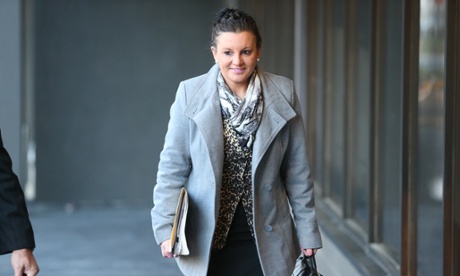
When asked about her dating life on the Hobart radio show Heart 107.3, Tasmanian senator Jackie Lambie explained that she had two criteria for dating a man: “they must have heaps of cash and they’ve got to have a package between their legs”. When a 22 year-old man asked her on a date live on air, she asked him whether he was “well-hung”.
What has happened in recent years? Our parliament now has politicians who are asking young men if they are well endowed on live radio, others are slinging poo at their friends on video, whilst more still are making props in to the Senate to have a go at their colleagues who are wearing a different type of prop. It feels like it’s all become a bit of a circus – one that holds the future of our country in our hands.
While it would be easy to get annoyed and even worried about what’s going on, I think we should take a different approach. It’s time we embrace our politicians’ eccentricities.
It’s odd: we want our politicians to be “real people”. Yet, when they act like it, we hate it. When they talk about sex, or swear on TV, we get outraged. When they stuff something up – “make a gaffe” – we’re quick to jump on their backs, and say they’re not taking their job seriously enough. We want politicians to be real, but a cleaner, nicer, and more sanitised version of real.
No wonder there’s something liberating about watching Lambie do her thing (although it should be noted that it would be different if a man made those comments, and that a double standard is at play here). I don’t agree with a lot of what Lambie has to say, and certainly would prefer someone else in her place. At the same time, I don’t think she deserves to be criticised or attacked for being “unpolished”, or even at times quite crass.
In fact, that is the whole point. Our political debate has become almost entirely focused on style over substance. There are plenty of things I would criticise Lambie for – many of her policies, I believe, are extremely destructive. Yet we’ve become so focused on style that it seems we are completely unable to delve into those issues. Meanwhile, politicians act like as long as they are acting within the rules, they will be able to get away with whatever they want. And they’re right – we’re so focused on how they talk we can’t get into the real debates we should be having.
That’s where someone like Lambie is actually important. Politicians like her are seen as a response to the sanitised politics we’ve become accustomed to. We don’t have to agree with them, but nor should we judge them for not being perfect. In fact, it should probably make us like them more. It shows they haven’t been sucked in to the political vacuum – one dominated by elites and one clearly disconnected from the lives of people our politicians are supposed to represent.
Our politicians need to take their job seriously. And it is important they have the brains and skills needed to do their job properly. But being a bit unpolished, a bit crass, or even a bit human, doesn’t stop them from doing that. I don’t care if my politicians get on radio and talk about sex, or if they stuff up in a press conference. They’re the kind of things people do. And it’s great that our politicians do it too.
“Scrapping this toxic tax” was meant to be a slam dunk for the Prime Minister. What happened?
It wasn’t supposed to be this way.
After more debate yesterday the vote on the repeal of the carbon tax was delayed once again. It seems likely the bill will limp through the Senate today. As the Government celebrates however the victory must feel bittersweet.
More than anything the 2013 election was supposed to be the mandate on the carbon tax. Just like the 2007 election resulted in Workchoices being ‘dead, buried and cremated’, 2013 was supposed to see the end of carbon pricing for good.
As the repeal bill makes its way through the Senate however, it has become clear the mandate the Coalition received has slowly slipped away. The bills have been stripped of much of their infrastructure – with the survival of the Clean Energy Finance Corporation (CEFC), Renewable Energy Target (RET), The Australian Renewable Energy Agency (ARENA) and the Climate Change Authority (CCA). In doing so, each are making it through with significant opposition – opposition that seems to refuse to back down.
This is the problem for the Government. Whilst it will pass the repeal it has done so with none of the authority required to have a long-lasting impact. It has temporarily gotten rid of the carbon price but it has not gotten rid of the debate – and in fact made it worse for Tony Abbott and his cabinet over the past months.
“The Coalition’s campaign on the carbon price has failed. Now in Government, their authority on the issue has quickly vanished – leaving an emboldened opposition and climate movement – even in spite of the major set back coming today.”
This is best highlighted by the reaction of Opposition to the legislation. In the lead up to the vote, Opposition Leader Bill Shorten accused the Prime Minister of “sleepwalking his way into a major climate policy disaster, a disaster for the Australian economy and for our environment, a disaster that guarantees that forever more Tony Abbott will be remembered as an environmental vandal”. For a leader that at one point actively considered voting to support the repeal this is a massive turn around.
This sort of belief has been reflected in the broader community as well. Whilst there was basically no discussion of climate change in the 2013 election, debate on the issue has exploded once again. Tony Abbott’s position has taken Australia’s role onto an international level, activism on the ground is growing, and more people are now in favour of the carbon price. This is quite a remarkable turn around in just ten months.
The Coalition’s campaign on the carbon price has failed. Now in Government, their authority on the issue has quickly vanished – leaving an emboldened opposition and climate movement – even in spite of the major set back coming today.
This means that climate change is definitely not going to be leaving the agenda any time soon. With the upcoming debate on the bills to repeal the other parts of the legislative infrastructure, the UN Climate Summit in September and the G20 in November, in fact it is just going to get stronger. While this was supposed to be a good thing for the Coalition – an opportunity to slam the Opposition for refusing to pass the repeal legislation – this is no longer the case. The Government has showed a weakness on the issue – one that has allowed the cross-bench to define its agenda and that has lost them the narrative on climate change.
Herein lies the biggest problem of all. If the Government can’t win on the carbon price, it shows how weak it truly is. This was supposed to be its slam dunk – Tony Abbott’s easy and major victory. But instead it has been the opposite – a shambolic process that has highlighted many of the Government’s weaknesses.
That shows lots of worrying signs for the next two years.
This weekend, thousands of people will take to the streets in the next round of ‘Bust the Budget’ rallies. The events will coincide with the sitting of the new Senate and organisers want to use the moment to turn up the heat on the Abbott government.
The latest round of rallies highlights the growth of left-wing activism since the election of Tony Abbott. Progressives quickly moved against his administration. In early 2014, for example, activists railed against Abbott’s position on industry assistance, particularly through the ‘SPC Sunday’ social media activities. This year, campaigners have taken to the streets for rallies to save Medicare, the March in March protests, and the recent Bust the Budget protests. At the end of last month the intensity picked up even more with the ‘J24’ movement, a ‘call-out for a 24-Hour National General Strike & Mass Rally to be held in every Australian capital city on the 24th of June, 2014 as a show of popular opposition to both the Prime Minister Tony Abbott, his government & the brutal Federal Budget recently handed down by his lying & corrupt crony Joe Hockey.’ A similar page calling for a vote-of-no-confidence in the government received over 100,000 likes on Facebook.
In many ways, the rise of this ‘anti-Abbott’ movement has been remarkable. After the dearth of activism during the Rudd and Gillard years, the Left has come out in force to oppose Abbott’s agenda. Even more remarkable is how this movement has brought so many new faces into the scene. While some of the largest progressive organisations in Australia – such as the ACTU and GetUp! – have been present in all of these events and campaigns, they have, to a large extent, played second fiddle. The largest of these recent mobilisations, March in March, ‘was organised by named members of the concerned public, remains unassociated with any political party or organisation and is devoted to total transparency’. The same can be said for the upcoming Bust the Budget events.Many of these events are supported by large progressive organisations – in particular, unions – but they do not seem to be driven by them so much as by community members. The anti-Abbott movement represents a genuine and grass-roots progressive force that seems to be gaining in numbers every month.
This is something that Left and progressive forces should be celebrating. For the first time in years there seems some form of momentum – a real grass-roots movement challenging our government’s right-wing agenda. It is exciting.
Nonetheless, we need to ask the critical question – are the strategies being used the best approach to achieve our goals, a shift to a progressive Australia? Because, while we should be excited about the growth in campaigning on the left, there are also some serious issues of concern.
Underpinning this movement are arguments similar to those Abbott used during his time in opposition.
The anti-Abbott movement has become all about being anti-Abbott. In so doing, it has taken a very oppositional trend. The Bust the Budget rallies are a perfect example, a movement that is being built solely in opposition to Abbott’s budget proposals. The organisers of the Sydney rally, for example, describe their event like this:
Tony Abbott & Joe Hockey have ‘hurt their way into history’ with a ‘slash and burn’ budget that has been called ‘inequitable’, ‘painful’, and full of ‘broken promises’. Their false claim that Australia needs to get back in the black has us seeing red – and we’re not taking it laying down.
It’s time to fight back against Abbott’s budget attacks. The first step? A huge show of force as concerned citizens all across our state turn out for a massive rally on July 6th, the day before the new Senate sits for the first time, taking a stand to make clear we won’t accept Abbott’s budget attacks on seniors, students and working families!
The movement has been built solely in opposition to Abbott: his budget proposals, his climate policies, his treatment of refugees, amongst other things.
Of course, on its own, this isn’t a problem. Abbott’s policies deserve to be opposed, and it is important we build strong movements to ensure much of his agenda is blocked. But, in the context of the other elements of the campaign, it is extremely problematic.
For instance, many on the Left have used tactics similar to those that Abbott used himself. There has been a focus on ‘lies’, ‘broken promises’ and ‘secrecy’, and campaigners have obsessed about Abbott’s intelligence, jumped on gaffes such as when he called Canada ‘Canadia’.
The Left has been using the tactics for which it derided Abbott for employing – personal attacks and the constant destabilisation of a government to force an opportunity to oust the prime minist as soon as possible. This has been particularly focused around the budget, with campaigners calling for oppositional parties to block supply to force a new election. Other activities such as the J24 protests have taken a more direct approach, calling for a vote in no confidence in Abbott or his resignation. One Change.org petition,which has gained over 100,000 signatures, has even called for the Governor General to sack the Prime Minister.
Much of this is based on an ongoing claim that the Abbott government is illegitimate, on the basis that the Murdoch media alone that got Abbott elected. The argument has been perpetuated by reference to Abbott’s ‘broken promises’ – activists have argued that the government lied its way into office.
But it’s impossible not to notice the hypocrisy. After years complaining about Abbott’s politics of destabilisation, the Left is doing the exact same thing itself.
And it’s not just the hypocrisy. In focusing solely on opposition, the Left may potentially succumb to the fate of Abbott himself by successfully bringing down a government only to replace it with one just as unpopular.
There is one real reason for this trend. The Coalition’s victory was one based largely on a vote against the ALP, not on a vote for the Coalition. The Coalition came in to government in a very weak position, a weak position exacerbated as it stumbles through its first year.
There are many lessons the Left might draw from the quandary in which Abbott now finds himself. Whilst Abbott did provide an alternative to the crisis-driven Labor government, it was not the broader alternative that people wanted. Abbott bought in to the crisis of politics we are seeing today – what can be described as a hatred within our community of the political class and everything associated with it, highlighted by recent polling that shows that Australian politicians are more unpopular than ever.
Indeed, Tony Abbott epitomises that crisis. From his negative style to his government’scosying up to vested interests has done everything possible to build the crisis rather than to resolve it.
Which is why the Left needs to be careful. While in the short term the focus on ‘broken promises’, ‘lies’ and ‘secrecy’, as well as the moves to destabilise the government, may seem like a good strategy, in reality they represent the continuation of the political games of which so many people are sick. That is why, for instance, we should be so careful of blocking the budget. Moves like that have the potential to significantly backfire, as they seem like the movement’s playing political games at the expense of real people’s lives.
This is particularly relevant given the alternative – or, really, the lack thereof – that the Left is presenting. In opposition to Tony Abbott, the Left is not focused on shifting or even challenging our political discourse, but instead simply engineering the return of the ALP.
We have become so heavily obsessed with getting rid of Abbott that we have forgotten to think about a real alternative.
This blissfully ignorant campaign is built on part on a nostalgia for the ALP years. Many look back in fondness at the Gillard government in particular, forgetting about the right-wing policy she implemented. With our rose-coloured glasses on, we have forgotten that the ALP is woefully incompetent at shifting Australia to the Left.
This is potentially a major failure for progressive movements. In a time in which people are turning against our political classes, the Left – the movement that is supposed to represent ‘ordinary people’ – is focusing its energies on propping up one element of that class rather than presenting an alternative to it. In so doing, we are failing our own progressive ideals, settling for a right-wing agenda instead of fighting for a true progressive alternative.
We need to take a new approach. We need to use the anti-Abbott energy that many have so skillfully gathered but we also need to develop and present a real alternative, not only to the Abbott government but to the entire political system. We have an opportunity to build a new discourse that changes not only our government but our entire approach to politics. Tim Hollo explains:
Now is our moment to actually build change! Tony Abbott has made it easier for us by making this so explicitly about values and culture, about the kind of country we want Australia to be. Now is our chance to have that conversation, to shift the discourse, to demand the space to talk about making education more important than war planes, research and innovation more important than coal exports, people more important than the ‘economy’ we ostensibly constructed to serve us but have now allowed to overshadow and overpower all other goals.
More importantly, we have an opportunity to highlight the effects of our political class on society, to highlight how disconnected that political class – both Liberal and Labor – has become from our community and how it serves its own interests instead of ours.
There are many people who are already out there doing this work. Russell Brand’s comments last year, for example, struck a chord because of the way he took on the political class. Much can be said about the Occupy Movement in the United States as well. If we turn to Europe, in the latest European elections, two left-wing parties – Syrzia in Greece and Podemos in Spain – gained significantly through a specifically ‘anti-politics’ narrative. The rise of Podemos in Spain is particularly relevant. After only existing for a few months, the party took a remarkable 8% of the vote. Built out of theIndignados movement, Podemos campaigned on a range of issues, including establishing a guaranteed minimum income, lowering the retirement age to 60, and regaining public control of ‘strategic sectors of the economy’ (including telecommunications, energy, food, transport, health, pharmaceutical and education). These are the sorts of policy prescriptions that are hardly ever touched in the Australian political debate – even from the Left.
Importantly Podemos built itself through a direct rejection of many of the perks of the political class, with candidates donating much of their income to charities, refusing to travel business class, and publishing the details of lobby groups with whom they met. The party not only presented a left-wing policy agenda but one that was disconnected from the mainstream political class. In doing so, it aimed to be part of the rise of ‘citizen politics’. Its leader Pablo Iglesias argued:
It’s citizens doing politics. If the citizens don’t get involved in politics, others will. And that opens the door to them robbing you of democracy, your rights and your wallet.
This is the sort of work the Left needs and should be doing. We have already taken the first steps. The anti-Abbott movement is involving citizens in politics in ways many have not seen before. But it is also potentially disempowering these citizens at the same time. The movement has become about replacing one element of the political class with another, and so cutting out the community once again when that change occurs. This is largely because we have become so focused on attacking Abbott himself, instead of politics as a whole. We have ignored the need to build a new alternative.
This is a key opportunity for us. If we don’t take it, we will be sorry for years to come.
The fallout from the Todd Carney photo ‘incident’ is continuing apace. After a drunken photo of the NRL star pissing into his own mouth, or ‘bubbling’, surfaced online last week, Carney was quickly sacked by his club, the Cronulla Sharks, and has now been effectively banned for life from the NRL. In sacking him, Cronulla stated: “the photograph that appeared last night on social media does not meet the values and standards the club is looking to uphold and take into the future.”
It feels like this sort of scandal in our sporting clubs is becoming far too common. In the last few years (and this is in no way an extensive list), we’ve had Brendan Fevola, who engaged in an all-night bender after the Brownlow medal, Raiders players Josh Dugan and Blake Ferguson, who got in trouble after images of them appeared online of them drinking on the roof of a Canberra home, and then Nate Myles, who was suspended for six weeks after he got drunk and defecated in the corridor of a hotel.
Image Comes First: Alcohol, Moral Panic And Double Standards
When looking at all of these incidents, it feels hard not to feel as though the NRL’s treatment of Carney has been a massive over-reaction. Whilst Carney has a long history of drunken behaviour, this photo did not really hurt anybody in any way, shape or form. Whilst we may find it a bit weird, or a bit gross, there is really nothing wrong with Carney’s behavior this time round. He did what lots of young men and women do — he got drunk, took a stupid photo, and then probably regretted it the next day.
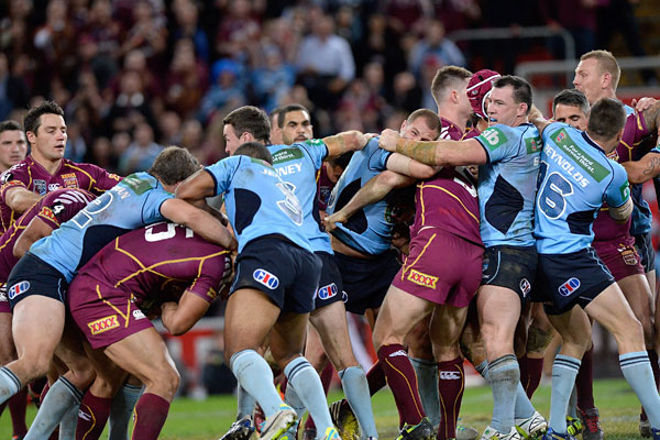
Carney was not sacked because the photo caused any harm to himself or to others, but rather because it hurt the image of the code itself. In a piece for The Guardian last week, Russel Jackson pointed out that ”the brawls that frequently break out on sports fields across Australia every week” are far more damaging to young minds than the Carney photo, and that “any child with the access to a smartphone they’d need to see the Carney image has most likely seen far worse”.
This highlights an interesting double standard that we’ve placed on our sports stars. They’ve become a scapegoat of sorts — an opportunity for our society to define its moral compass as one in which young people do not get drunk, do stupid things, or take sexual photos, as happened during the ‘moral panic’ about alcohol use which exploded over the debate about ‘coward punches’ earlier this year. In the case of Todd Carney this culture has been quite prudish, with days of moral outrage and calls for the NRL to ‘fix its image’ over what is, really, just a crude photo.
But it’s impossible not to recognise how our culture has, in many ways, set our young sportspeople up to fail.
–
A Broader Cultural Problem: How Lionising Our Sporting Heroes Comes Back To Bite Us
We have a society that chooses young people — sometimes very young people — puts them into large and often isolated groups of other young people, and then gives them huge amounts of money, fame and opportunities to travel. We’ve created leagues of boys’ clubs; what Steve Mascord in the Herald called “an Orwellian ‘Animal Farm’ that has arisen as a result of a male-only workplace, too much money, too much time and countless troubled childhoods.” And then we treat the members of these boys’ clubs as if they are God-like — we place them on a pedestal and effectively tell them they can and should be able to do as they please.
Why do we act surprised when these men then go out, get drunk, and do stupid things? Why do we get angry when they break their unasked-for position as role models in our society? And whilst in Carney’s instance it just led to a player taking a stupid photo that has grossed some people out, this boys’ club culture is not just one of drunkenness and stupidity, but one connected to sexual assault, rape and violence.
In discussing the book ‘Night Games’ by Anna Krien, Erin Riley highlights ”a connection between sexual assault allegations, a culture of heightened masculinity, and a ‘culture of servitude’ that reduces female participants to playing only supporting roles…what happens in the boardroom and the media is a result of the same culture the leads to these off-field incidents.”
A sporting culture that treats sportspeople as effective gods can in many ways be directly connected to the multitude of incidents of sexual assault and rape by sporting stars — they are part of a culture that treats women as servants to their male betters. When male sportspeople are still placed well above their female counterparts, it isn’t hard to see how this eventually translates into the way they (along with other men) treat women more broadly.
–
A Dangerous Culture
That doesn’t absolve these individual players from what they have done. Whilst he probably didn’t deserve the sack this time, Todd Carney must have known he was on thin ice and that more stupid incidents like this would lead to his downfall. The men who engage in more serious acts — brawls, setting people on fire, committing sexual abuse and rape — need to be accountable for those actions and punished appropriately.
But just like sexual and other forms of violence in our society, we have to acknowledge that these problems are systematic. They are cultural. And in our sporting codes they are related to a culture of boys’ clubs and hero worship.
Maybe instead of getting outraged at the scandals that now seem to happen every week, we could start to challenge the culture that automatically makes sports stars role models and treats them like they’re somehow above the rest of us. We could challenge the culture that places men above women in the sporting world. We could challenge the boys’ club mentality that still exists, inside the change-rooms and out.
Carney has probably been mistreated in this instance, but his behaviour highlights something much more sinister — a sick, dangerous culture that desperately needs tackling.